Window Shades Modern: A Londoner’s Guide to Style & Function
If you're staring at old aluminum blinds, bent vanes, or yellowed vinyl and thinking your living room deserves better, you're not alone. A lot of London homeowners reach the same point after a renovation, a move, or just one too many afternoons dealing with glare on the TV.
The tricky part is that “modern shades” can mean a few different things. Sometimes people mean a cleaner look. Sometimes they mean better light control, better insulation, or motorization. Usually, they mean all of it at once.
That's a big reason demand has kept climbing. The global window shades market reached $8.5 billion in 2023 and is projected to grow at a 3.9% CAGR through 2030, with North America holding 40% of market share, driven by demand for energy efficiency, light control, and automation, according to window shades industry market data.
For a London, Ontario home, that matters in real life. We get bright summer sun, cold winter nights, and a mix of housing styles that range from older brick homes in Old North to newer builds with oversized windows and open-concept main floors.
Table of Contents
- Tired of Your Old Blinds? Here Is What Comes Next
- What Makes Window Shades Modern
- A Guide to Popular Modern Shade Styles
- Performance Features That Transform a Room
- The Convenience of Motorized and Smart Shades
- Choosing Shades for Your London Ontario Home
Tired of Your Old Blinds? Here Is What Comes Next
Most outdated blinds fail in the same ways. They look busy, they don't sit tightly to the window, they rattle, they twist, and they never quite give you the mix of privacy and daylight you want.
Modern shades fix that by simplifying the whole window. The profile is slimmer, the operation is smoother, and the fabric does more of the work.
In practice, a good modern shade usually solves one of these problems first:
- Too much glare: common in south- and west-facing living rooms.
- Not enough privacy: a big issue in denser neighbourhoods or homes with larger front windows.
- Heat gain and winter draft discomfort: especially noticeable near older glass or wide patio doors.
- Clunky appearance: old blinds can make a renovated room still feel dated.
Practical rule: Pick the problem before you pick the product. The right shade for glare control isn't always the right shade for insulation.
A lot of homeowners start by focusing on colour. Colour matters, but function should lead. If the room gets hard afternoon sun, if the TV is impossible to watch, or if the front bedroom feels exposed at night, your shade choice should answer that first.
London homes also have a mix of window conditions that generic guides rarely address. A Wortley Village home might need something that suits original trim and older openings. A newer home in the suburbs may need a cleaner cassette and motorization for tall windows over a staircase or two-storey great room.
That's where window shades modern as a category starts to make sense. It isn't one product. It's a shift toward cleaner design, better fabrics, cordless operation, and a more custom fit.
What Makes Window Shades Modern
Modern means clean lines plus performance
A modern shade isn't defined by trend alone. It's defined by low-profile design, restrained fabric choices, cleaner hardware, and a stronger focus on how the covering performs every day.
Roller and shade systems have come a long way. The first patent for a spring-loading roller mechanism was filed in 1855, which helped turn shades from awkward manual pulley systems into more user-friendly products, as outlined in this history of roller shades.
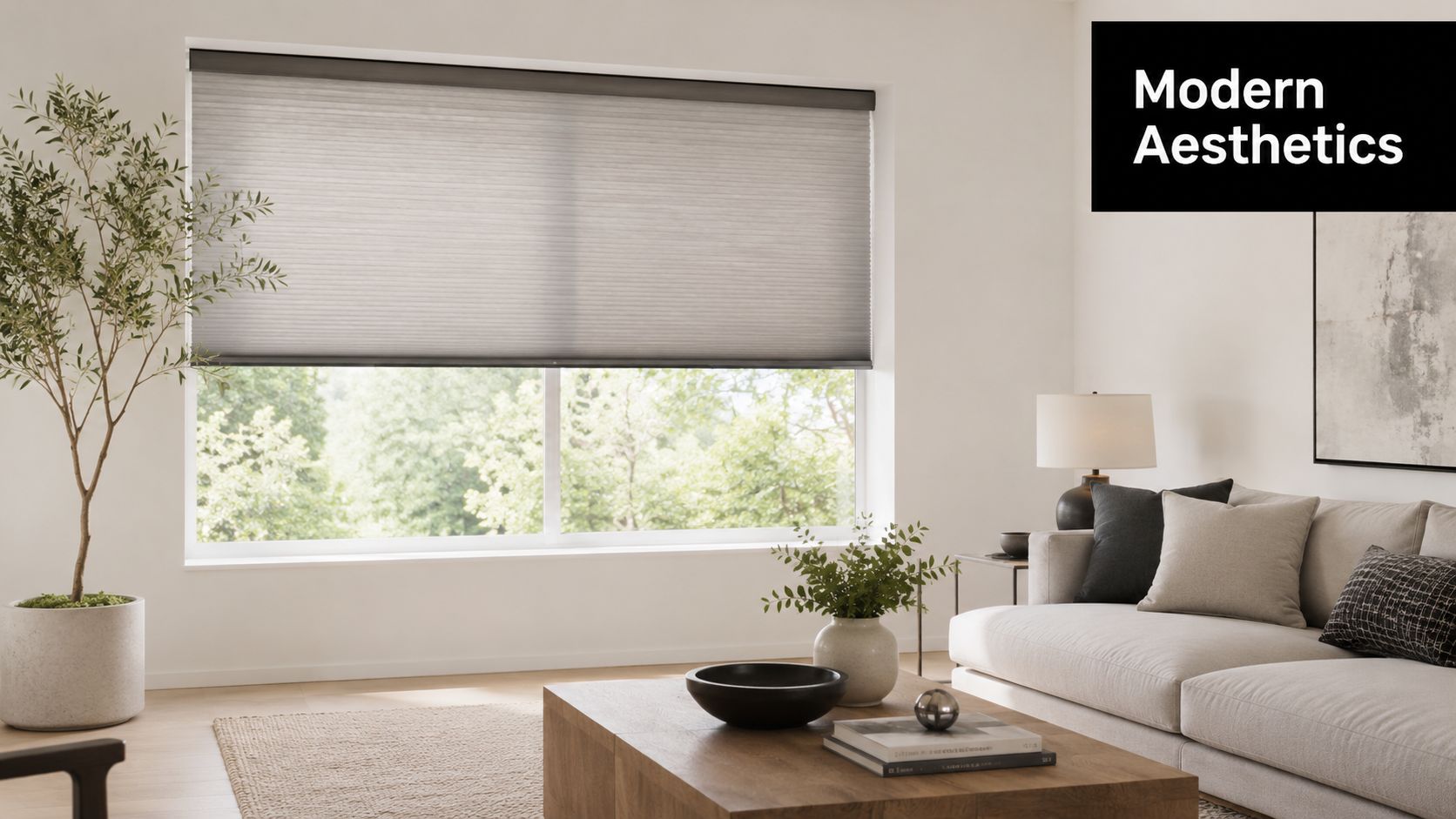
That history matters because older window coverings were mostly about basic coverage. Modern ones are expected to do more. They need to manage daylight, protect privacy, fit tightly, and look organised when fully raised or fully lowered.
You can usually spot a modern shade by a few details:
- Cleaner stack or roll: less visual bulk at the top of the window.
- Cordless or concealed operation: better lines and a tidier look.
- Straight drop and precise fit: especially important on large modern windows.
- Technical fabrics: materials designed for blackout, filtering, UV control, or insulation.
Older coverings worked harder to do less
Traditional blinds often rely on slats, visible cords, and thicker hardware. They still have their place, but they tend to create more visual noise.
Modern shades do the opposite. They flatten the look of the window so the room feels calmer.
A room can have great flooring, fresh paint, and updated furniture, and still look unfinished if the window covering fights the architecture.
That's why roller shades, solar shades, cellular shades, and updated Roman styles show up so often in current homes. They don't demand attention unless you want them to. They support the room.
For London homeowners, that's useful in open-concept spaces where the kitchen, dining area, and living room all share sightlines. One bulky or dated treatment can throw off the whole main floor.
A Guide to Popular Modern Shade Styles
The styles most homeowners compare
If you're shopping for window shades modern options, you'll usually end up comparing five styles. They can all work well, but they solve different problems.
Roller shades are the cleanest visual choice. Solar shades are built for sun control and view retention. Cellular shades focus on insulation. Zebra shades offer flexible privacy and light adjustment. Modern Roman shades add softness without going fussy.
The broad design direction is clear. Roller shades and solar shades are often treated as the backbone of modern window shade design because they keep a low profile and let you match the fabric to the room's daylight needs.
Modern Window Shade Comparison
| Shade Type | Best For | Light Control | Aesthetic |
|---|---|---|---|
| Roller | Bedrooms, living rooms, offices | Light-filtering to blackout | Clean, minimal, flat front |
| Zebra | Front rooms, family rooms, multi-use spaces | Adjustable between sheer and privacy bands | Contemporary, layered, a bit more visible |
| Cellular | Bedrooms, drafty windows, energy-focused rooms | Light-filtering to room-darkening | Soft, tailored, slightly textured |
| Solar | Sun-heavy living rooms, offices, condo-style windows | Reduces glare while keeping view | Sleek, technical, very modern |
| Roman | Dining rooms, bedrooms, finished living spaces | Depends on fabric and liner | Softer, more decorative but still neat |
Where each style works best
Roller shades
Roller shades are often the safest pick if you want a sharp, uncluttered look. They work especially well in renovated London homes where the trim is simple and the room already has enough texture from flooring, cabinetry, or furniture.
They also give you a wide operating range. You can choose light-filtering fabric for a warm glow, room-darkening for stronger privacy, or blackout for sleep-focused spaces.
What doesn't work? Homeowners sometimes pick a very sheer fabric in a room that needs privacy at night, then feel disappointed. A roller shade is only as good as the fabric specification.
Zebra shades
Zebra shades, sometimes called dual shades, alternate sheer and solid bands so you can shift between filtered light and more privacy without fully raising the shade. They're popular because they feel modern without looking stark.
They suit front living rooms nicely, especially when homeowners want daytime light but don't want the room fully exposed. If you're comparing local options, custom zebra blinds in London are worth looking at for that balance.
Their trade-off is visual activity. Some people love the layered banded look. Others prefer the simpler face of a roller shade.
Cellular shades
Cellular shades are the performance pick. Their honeycomb structure traps still air at the window, which is why they're widely treated as the shade style optimised for insulation and temperature regulation in guidance on shade types and performance.
They're especially useful in homes with noticeable winter discomfort near glass, or in bedrooms where you want a softer finish with practical value. For tighter thermal performance, inside mounting and close side coverage matter.
Solar shades
Solar shades are ideal when the main problem is sun, not privacy. They reduce glare and help protect interiors from UV exposure while still preserving much of the outside view.
That makes them strong in home offices, living rooms with large windows, and spaces where people want to see the yard. They're less ideal in rooms where full nighttime privacy is the main priority.
Modern Roman shades
Roman shades are still a modern option when the fabric and fold style stay simple. Flat or minimally structured Romans work well in bedrooms, dining rooms, and living spaces that need softness.
They do have a fuller visual presence than roller or solar shades. In a very minimalist room, that can either warm up the space or feel a little heavier. It depends on the fabric and the trim detail around the window.
Performance Features That Transform a Room
Light control is more specific than most people think
While the request for “something that blocks light” is common, there are levels to that need. Light-filtering, room-darkening, and blackout fabrics all behave differently, and the right choice depends on what you do in the room.
Light-filtering fabric softens daylight and adds privacy without making the room feel closed off. Room-darkening cuts much more light and usually works well for bedrooms and TV areas. Blackout goes further, but installation details still matter because side gaps can let light in.
A media room needs a different fabric than a breakfast nook. A front office may need glare control on screens more than total darkness. Good shade selection starts with those day-to-day habits.
Why cellular shades perform so well
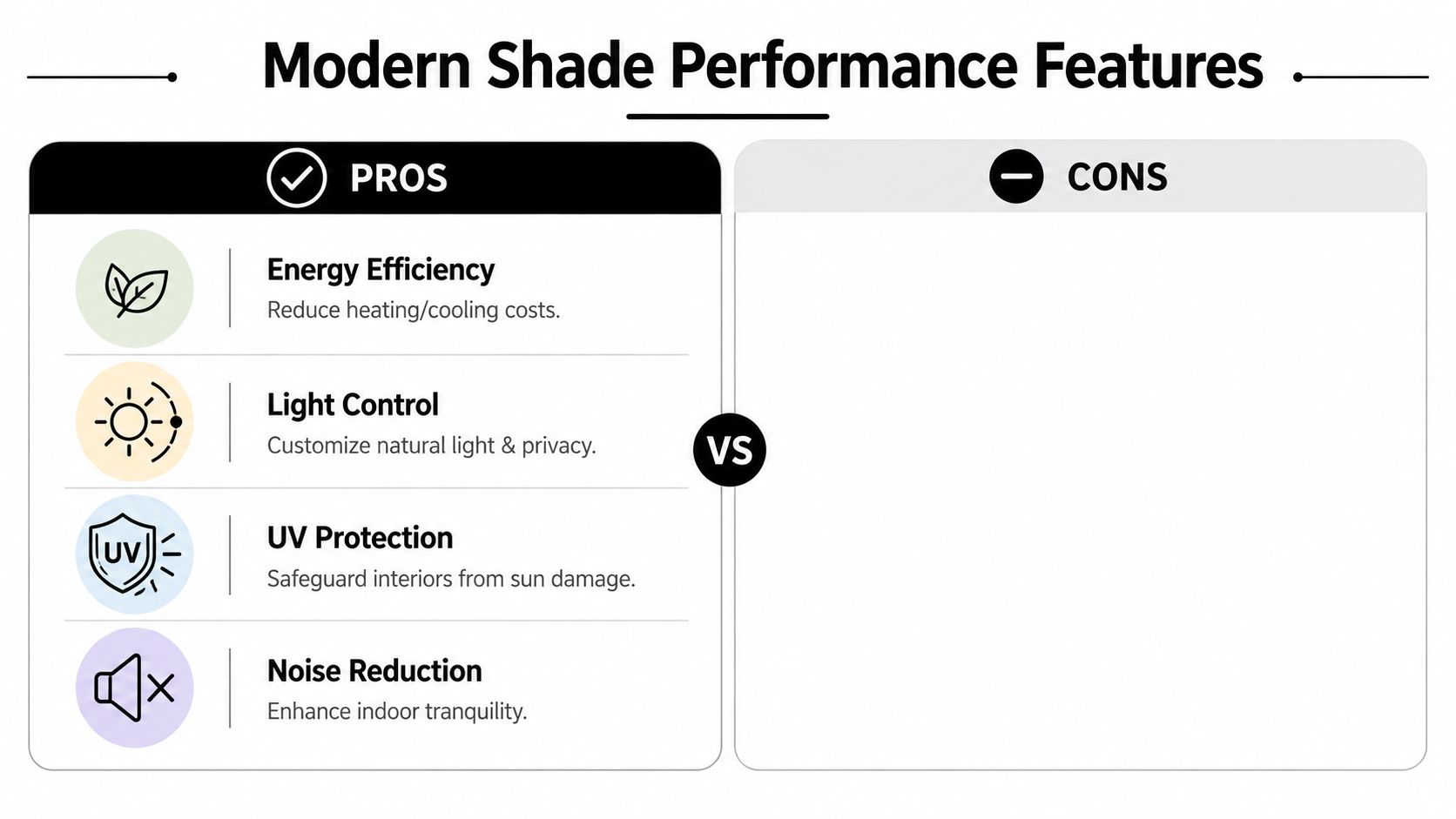
In Canada, shade choice is often a comfort decision as much as a style one. Buyer guidance on energy-focused window treatments frames the upgrade as a performance decision because the right shades help reduce solar gain in summer and heat loss in winter.
Cellular shades stand out because of their structure. The honeycomb pockets trap air at the window surface, which improves resistance to heat flow more effectively than styles focused mainly on appearance.
That doesn't mean every room needs them. In a heavily shaded north-facing room, you may care more about softness or privacy than insulation. But on windows with bigger temperature swings, cellular shades often make the most practical sense.
If a room feels cold when you stand near the window in January, don't choose based on showroom appearance alone.
Comfort includes sound and screen glare
Performance isn't only about temperature. The right fabric can also make a room feel quieter and easier to use.
A few examples:
- For home offices: Solar fabrics help reduce eye strain and monitor glare without shutting the room down.
- For nurseries and bedrooms: Room-darkening or blackout fabrics support more consistent sleep conditions.
- For family rooms: Softer fabric constructions can take some edge off echo, especially in spaces with hard floors and large glass areas.
- For furnished spaces with art or wood floors: UV-managing fabrics help reduce sun-related fading over time.
A room feels better when the shade matches the way the room is used. That's the part homeowners notice every single day.
The Convenience of Motorized and Smart Shades
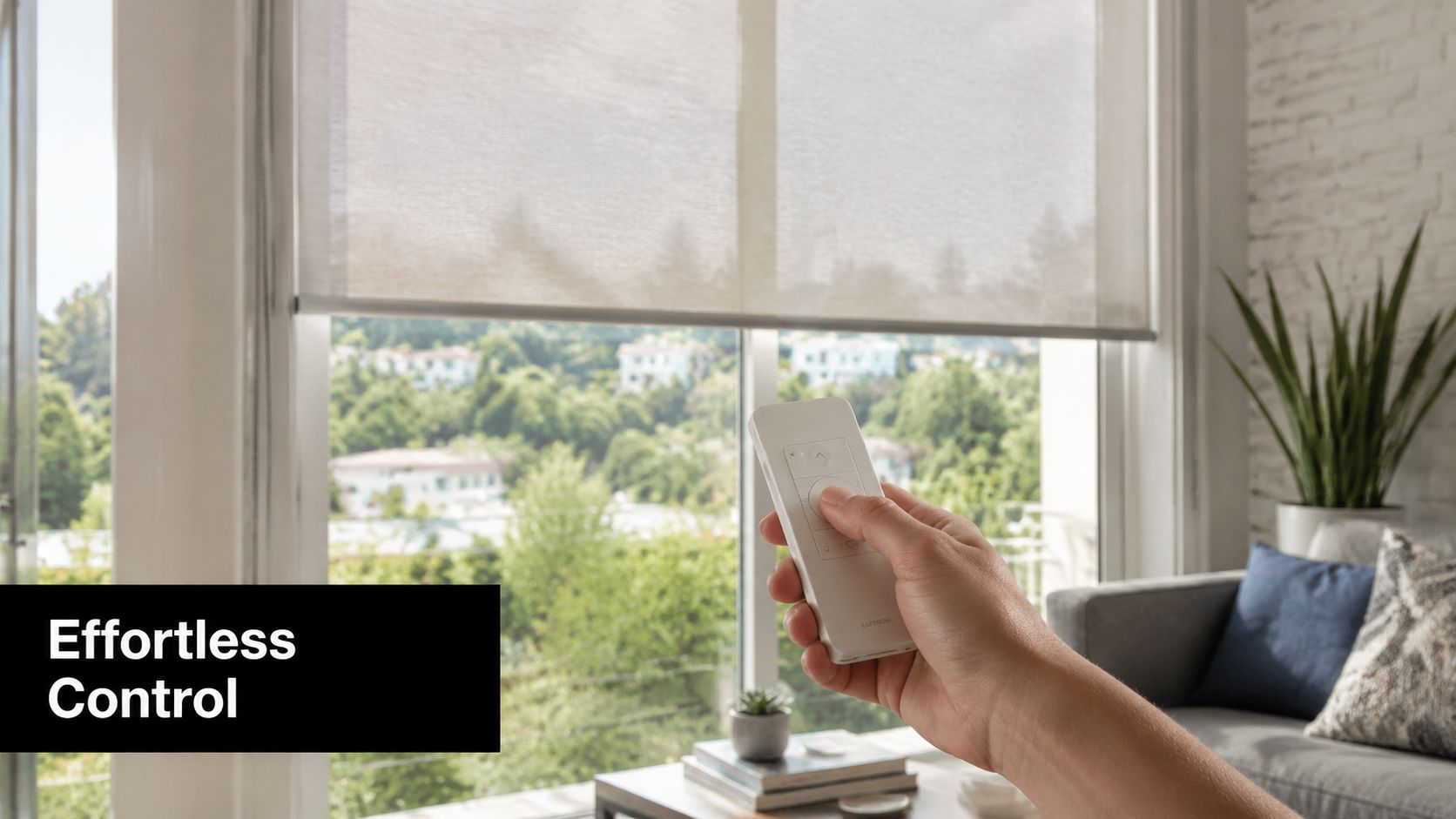
Motorization used to sound like an add-on for luxury homes. Now it's often the most practical solution for real window problems.
Tall foyer windows, patio doors, awkward over-sink windows, and large banks of glass are all easier to live with when you can adjust them with a remote, wall control, or phone. Cordless operation also gives the window a cleaner finish.
Where motorization solves real problems
There are a few situations where motorized shades make immediate sense:
- Hard-to-reach windows: stairwells, vaulted living rooms, and windows behind tubs or furniture.
- Wide grouped windows: one-touch control keeps multiple shades aligned.
- Homes with children or pets: no dangling cords to manage.
- Rooms with changing sun exposure: scheduled movement can reduce afternoon glare without you thinking about it.
A lot of homeowners first want motorization for convenience, then end up keeping it for consistency. The shades get used more often because they're easy to use.
If you want to compare what's available locally, smart blinds in Canada through Blinds Hut are one example of a made-to-measure option that fits this category.
What smart control looks like day to day
Smart shades work best when they disappear into routine. Open in the morning. Lower during peak afternoon sun. Close in the evening for privacy.
That kind of control is especially useful in homes with large west-facing windows, which many newer London layouts have. The room stays more comfortable, and you don't need to walk around adjusting every shade one by one.
Here's a quick look at motorized shade use in action:
Motorization isn't a gimmick when the window is too high, too wide, or too exposed to manage properly by hand.
The best setups are usually simple. A handheld remote for one room. A wall switch for a main area. App control if you like automation. You don't need a fully connected home for motorized shades to make sense.
Choosing Shades for Your London Ontario Home
Room by room advice for local homes
For living rooms in London, the right shade usually depends on sun direction. South- and west-facing spaces often do well with solar or roller shades that control glare without making the room feel dark.
Bedrooms usually need stronger privacy and better light control. If comfort is also a concern, cellular shades made for Canadian homes are often a sensible direction because they combine privacy with insulation-focused design.
Home offices need screen-friendly daylight. A solar fabric or a carefully chosen light-filtering roller shade often works better than going straight to blackout.
For angled or rake-top windows, custom fitting matters a lot more than style trends. Industry guidance on these specialty shapes notes that custom-fitted cellular or motorized shades are often the most effective way to keep operability, light control, and a clean look on sloped windows, as explained in this guide to angled window shade options.
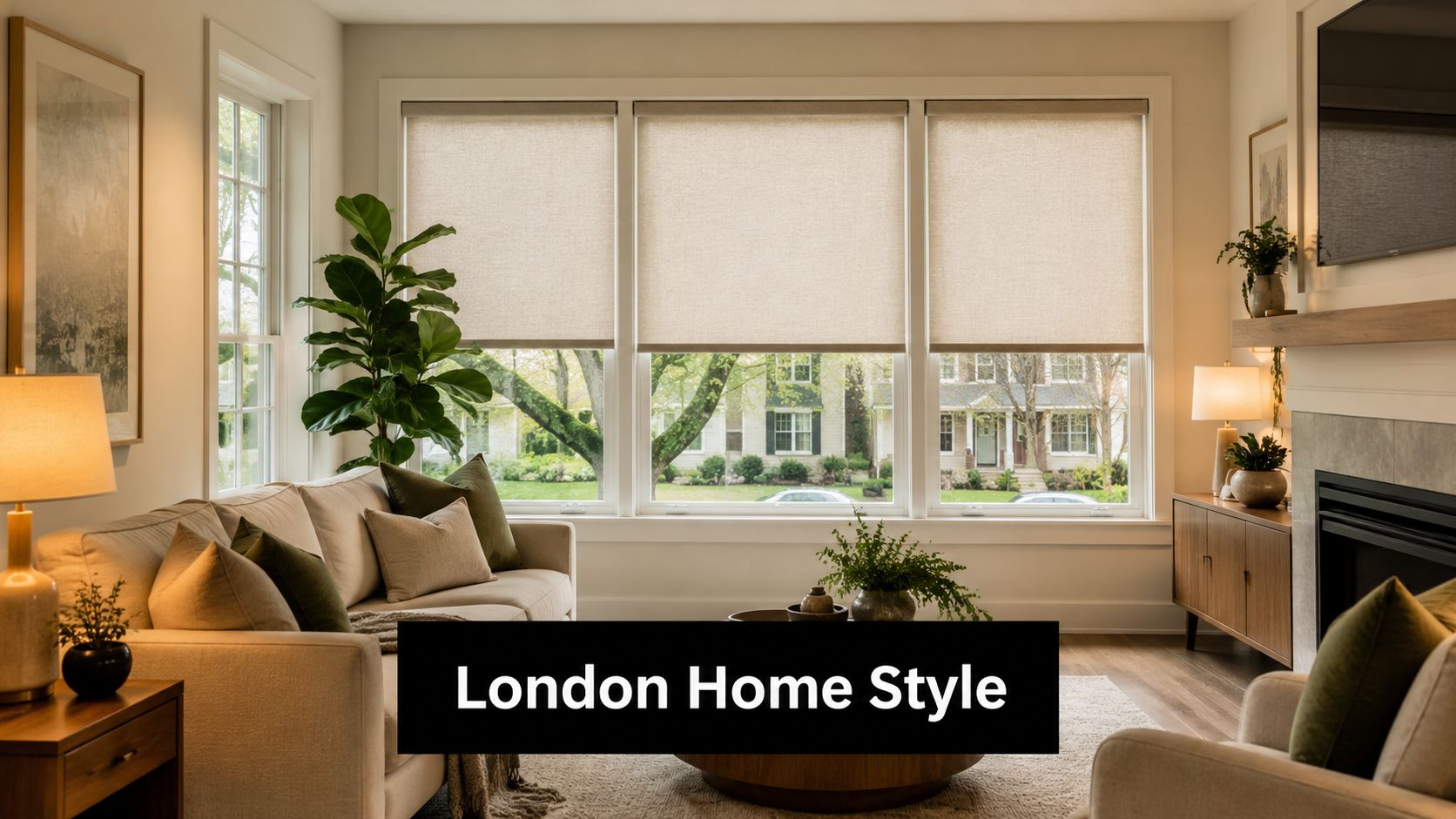
What happens during a proper local install
This part gets overlooked. A modern shade only looks modern when it fits properly.
A good local process should include:
- In-home consultation: fabrics look different under your own light than they do in a showroom.
- Accurate measurement: especially important for inside mounts, large windows, and tight reveals.
- Installation that matches the product: solar, zebra, roller, and cellular shades all have little fitting details that affect the final result.
- Removal of old coverings: it saves time and keeps the finished room clean.
In London homes, trim depth, casing condition, and window squareness can vary more than people expect. That's why custom measurement and installation are worth taking seriously. It's often the difference between “that looks pretty good” and “that looks like it belonged there all along.”
If you want help sorting through roller, zebra, solar, cellular, or motorized options for your home, Blinds Hut offers in-home consultation, measurement, and installation for London-area homeowners who want a clean fit and practical advice, not a generic showroom pitch.