
Smart Blinds Canada: Your 2026 Home Guide
If you're reading this, there's a good chance you're tired of tugging on cords, fighting glare in the morning, or realising the front room is fully exposed after sunset because nobody closed the blinds. That's usually the point when smart blinds start to feel less like a gadget and more like a practical home upgrade.
For Canadian homes, that upgrade isn't only about opening and closing shades from your phone. It's about making daily light control easier, dealing with winter comfort, and finding systems that work in older houses, condos, rentals, and renovation projects.
Table of Contents
- Tired of Your Old Blinds? Here's Why Everyone is Going Smart
- What Exactly Makes Blinds Smart
- Finding Your Style Roller Cellular and Zebra Blinds
- Smart Blinds for Canadian Climate Challenges
- Powering Your Blinds and Understanding Costs
- How to Buy and Install Smart Blinds in Your Area
- Frequently Asked Questions About Smart Blinds
Tired of Your Old Blinds? Here's Why Everyone is Going Smart
A lot of people start in the same place. One bedroom gets blasted with early sun, the living room TV wall gets afternoon glare, and the blinds on the tall window over the stairs almost never get adjusted because they're annoying to reach.
That's where smart blinds start making sense. Instead of walking room to room, you can set routines that fit how the house is used. Open the kitchen shades in the morning. Close the street-facing ones at dusk. Keep the nursery dim without waking anyone up.
This shift isn't niche anymore. The global blinds and shades market is projected to reach about US$13.7 billion by 2030, and smart-enabled products are forecast to grow at a 10.72% CAGR through 2031, according to ResearchAndMarkets market coverage reported by Business Wire. For homeowners, that usually means better product availability, better control options, and more styles that don't look overly technical.
Practical rule: Smart blinds are worth a closer look when you adjust the same windows every day, avoid adjusting some windows because they're hard to reach, or want better privacy habits without relying on memory.
What works well is matching automation to a real problem. Bedrooms benefit from scheduled blackout control. Front rooms benefit from privacy routines. South-facing rooms benefit from timed shading during strong sun.
What doesn't work is buying smart blinds just because the app looks slick. If the fabric is wrong, the fit is off, or the motor choice doesn't suit the window, the tech won't save the result.
What Exactly Makes Blinds Smart
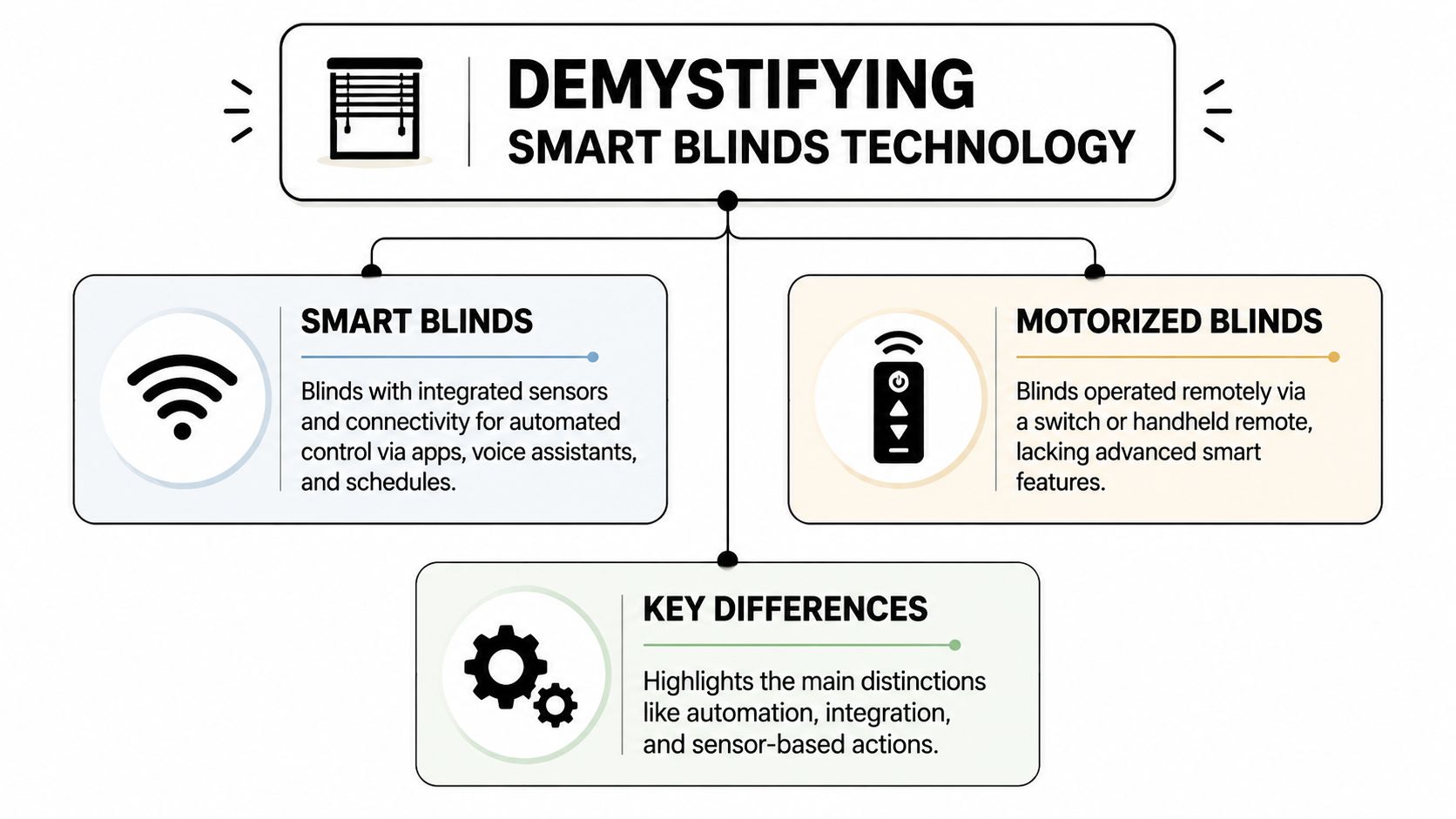
A lot of shoppers use motorized blinds and smart blinds as if they mean the same thing. They don't.
A motorized blind has a motor. That means it moves without cords and can usually be controlled by a wall switch or handheld remote. A smart blind does more than that. It connects into a control system so you can automate it, group rooms, set schedules, and often use voice control.
Motorized is not always smart
The easiest way to think about it is this. A remote-controlled blind is like a garage door opener. Press a button, and it moves. A smart blind is closer to a home lighting system where you can create routines and let the system handle repeated tasks.
In Canada, smart blinds are typically battery-operated, which makes them easier to install in finished homes. True smart blinds also go beyond a simple remote by supporting app-based control, timers, and integration with Alexa or Google Home, as described by Select Blinds Canada's motorization guide.
The control options that matter
When people ask about smart blinds Canada options, they usually care about control in three ways:
- App control lets you move one blind, a room, or the whole house from your phone.
- Voice control is useful when your hands are full or when you want quick scenes like “close living room shades.”
- Schedules and routines are where smart blinds become genuinely useful. You stop reacting to the sun and start setting the home to respond on its own.
A few practical points matter more than flashy features:
| Control type | Good fit | Watch for |
|---|---|---|
| Remote only | Single room, simple use | No real automation |
| App control | Daily use across several windows | Some systems need a bridge or gateway |
| Voice plus schedules | Whole-home routines | Compatibility matters before you buy |
Some homeowners don't need the full smart stack. A remote-only setup can be perfectly fine for a media room or one hard-to-reach window. But if you want privacy at dusk, better routine-based light control, or away-from-home operation, smart features are the essential value.
If you already use Google Home or Alexa, check blind compatibility before choosing fabric and colour. It's easier to swap a fabric than rebuild a control plan after installation.
Finding Your Style Roller Cellular and Zebra Blinds
The smart part gets attention, but style is what you live with every day. The right blind has to suit the room, control light properly, and still look clean when it's open or closed.
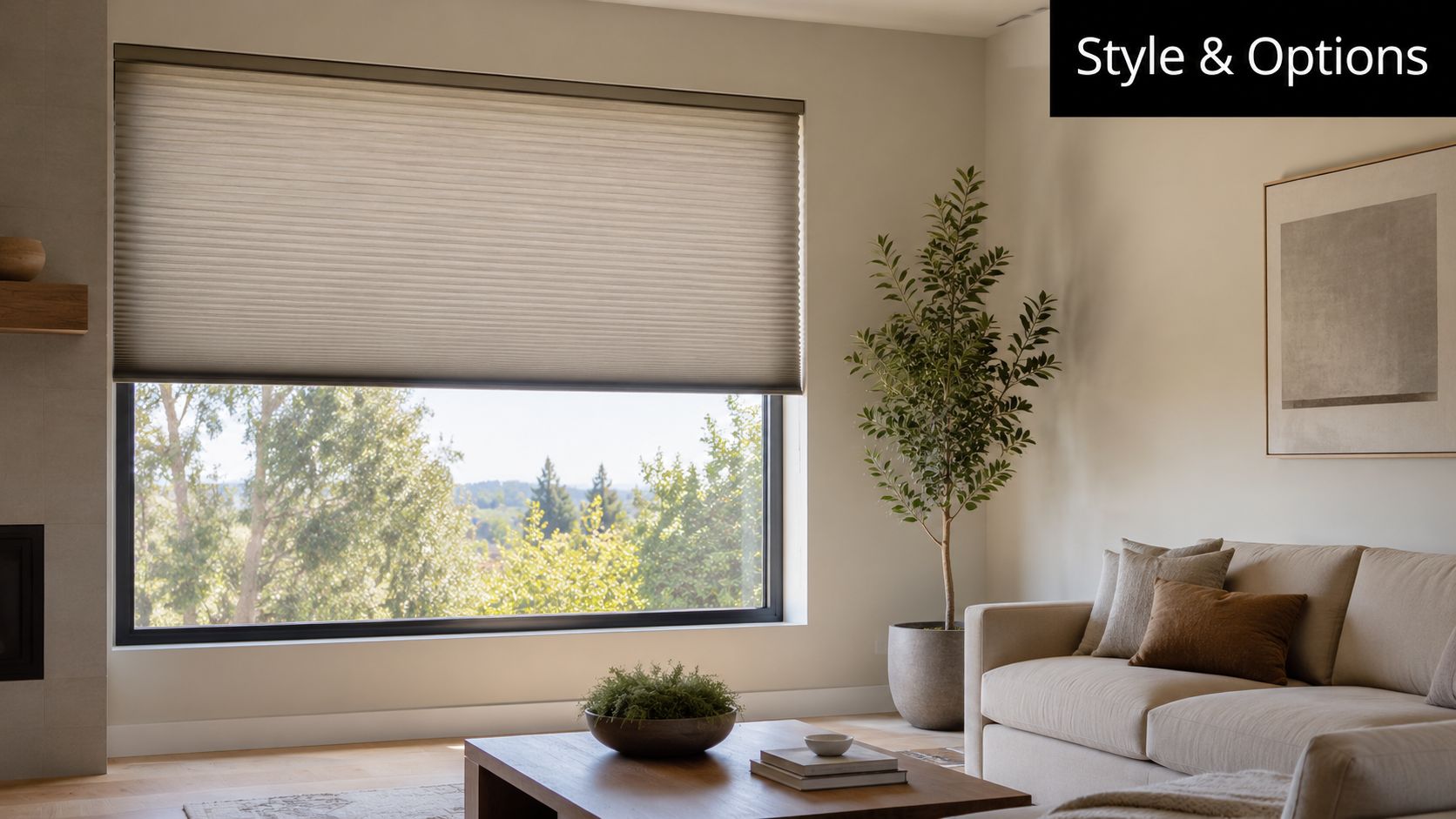
Roller shades for clean lines
Roller shades are usually the easiest style to recommend when someone wants a modern look. They sit neatly, work well with motorization, and come in blackout, light-filtering, and screen fabrics.
They're especially good in condos, renovated main floors, offices, and rooms with large windows where you want a tidy finish. If you want softer daylight without losing a clean look, light-filtering roller shades are often the sweet spot for living rooms and kitchens.
What works:
- Blackout rollers in bedrooms, nurseries, and media spaces.
- Light-filtering rollers where you want privacy with daylight.
- Screen fabrics for rooms with strong glare and a view you don't want to block completely.
What doesn't:
- Roller shades aren't always the first pick when insulation is the top priority.
- Very sheer fabrics can disappoint homeowners who expect full evening privacy.
Cellular shades for comfort-focused rooms
Cellular shades, also called honeycomb shades, are popular for a reason. Their pocketed design is built around comfort, and they're often the style people choose when a room feels cold near the glass.
They suit bedrooms, street-facing rooms, home offices, and older homes where comfort matters as much as appearance. If you want a smart blind that does useful work in winter, this is usually one of the first styles worth comparing.
Here's a quick way to think about it:
| Style | Best for | Main trade-off |
|---|---|---|
| Roller | Minimal look, easy motorization | Less soft texture |
| Cellular | Comfort and light control | More functional appearance |
| Zebra | Flexible daylight/privacy balance | Not a blackout-first product |
A short demo helps when comparing movement and fabric behaviour:
Zebra blinds for flexible light control
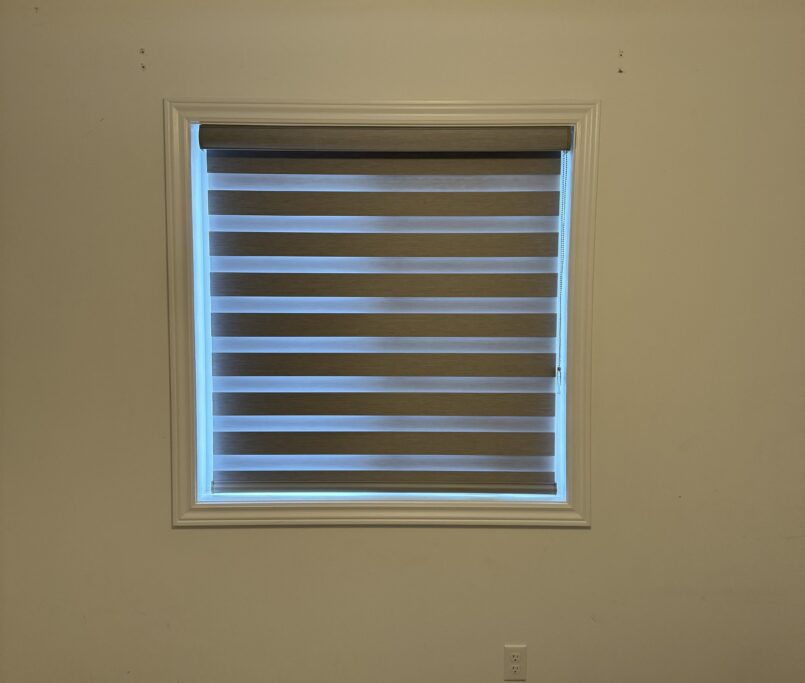
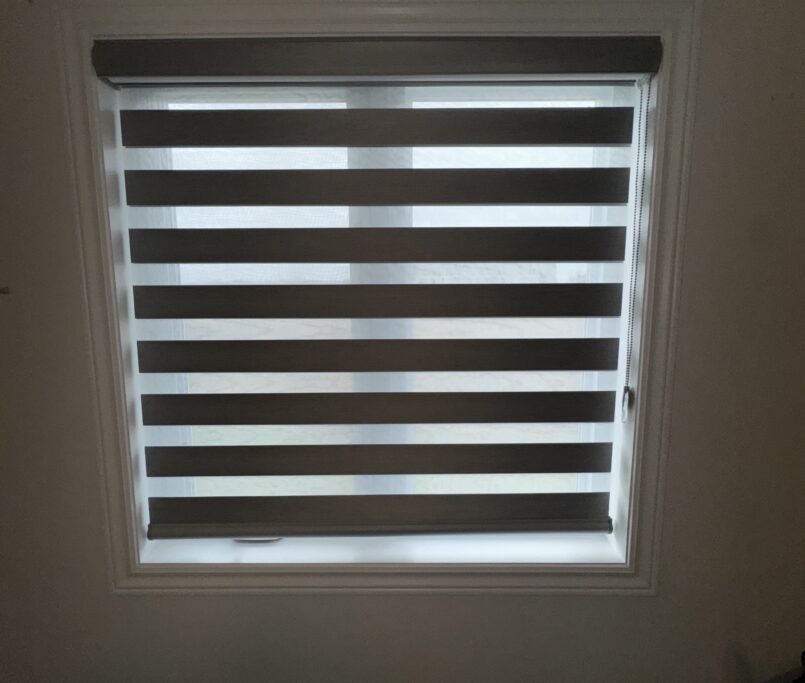
Zebra blinds have alternating sheer and solid bands, so you can shift between filtered light and more privacy without fully raising the shade. They're a strong fit for front rooms, dining rooms, and spaces where people want a more decorative look than a plain roller.
They look sharp, but they need the right expectations. Zebra blinds are excellent for adjustable daylight and a polished finish. They aren't usually the first recommendation for someone chasing full blackout or maximum insulation.
The fabric choice matters as much as the blind style. Homeowners often shop by look first, then realise later that glare, privacy, and room comfort were really the bigger issues.
Smart Blinds for Canadian Climate Challenges
Most smart blind content leans hard on convenience. That's useful, but it misses a big Canadian issue. Windows affect comfort in January just as much as they affect glare in July.
Winter matters more than most guides admit
A frequently missed aspect in Canadian smart blinds content is winter performance. Most guides focus on app control, but there is still little Canada-specific evidence comparing how different fabrics handle heat-loss management in real homes, as noted in this Canadian smart blinds discussion.
That gap matters because the wrong product choice shows up fast in colder months. A stylish shade that controls glare nicely may still leave a room feeling cold beside the window. A better-matched product can improve comfort by giving you more consistent coverage at the right times of day.
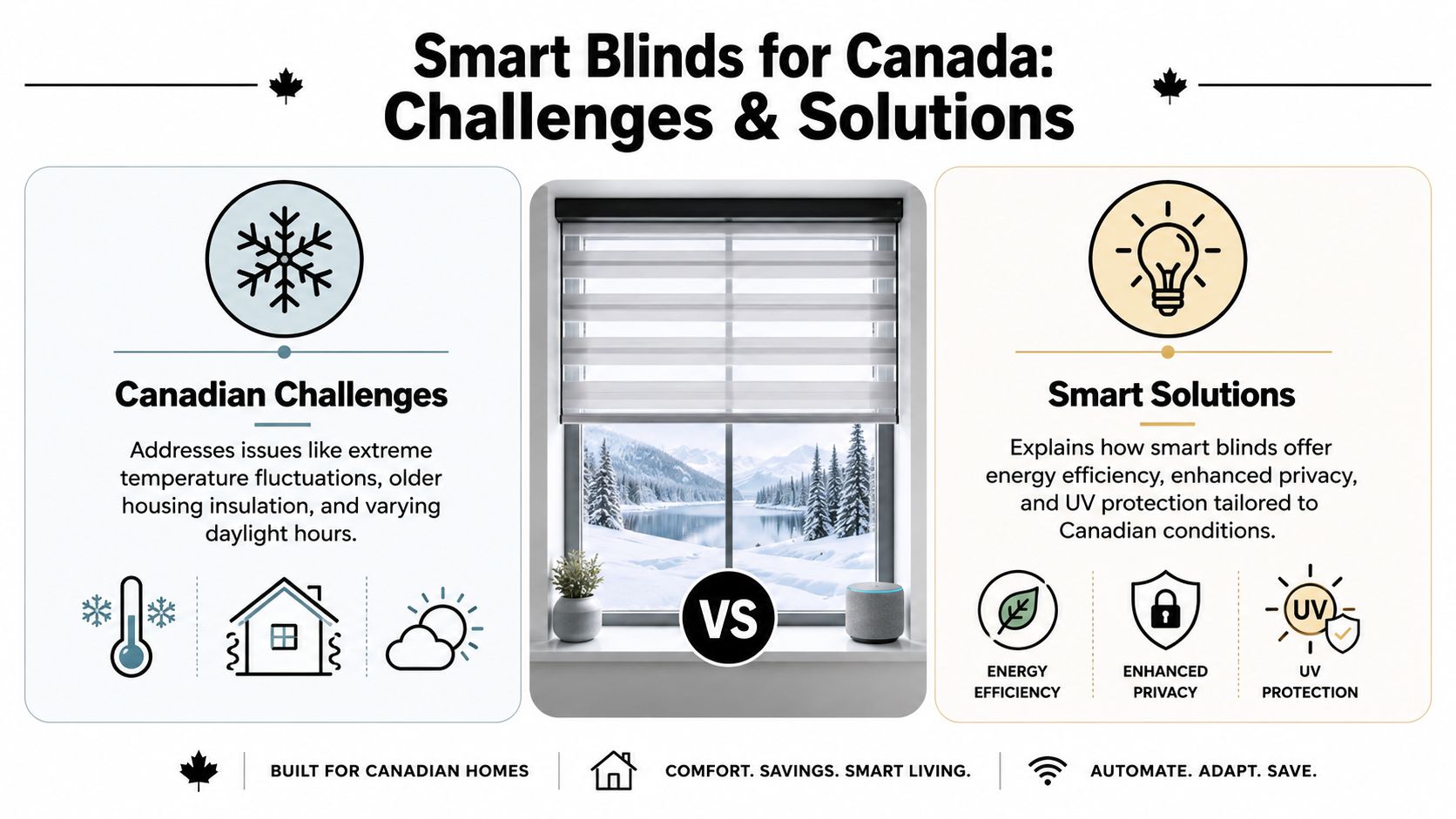
A practical setup often looks like this:
- Morning sun rooms may benefit from scheduled opening to bring in daylight when wanted.
- Cold evening rooms often feel better when shades close before the chill settles at the glass.
- Rooms with strong seasonal glare may need a fabric that handles brightness without making the space gloomy.
For harsh sun exposure, solar roller shades can make sense in certain rooms. They help with glare control and daylight management, but they aren't the answer for every winter comfort problem. That's why room-by-room planning matters.
Older homes change the decision
Canadian housing stock isn't all new builds with easy wiring and square openings. Plenty of homes have deep window frames, trim that limits mounting space, plaster walls, older electrical layouts, or non-standard shapes.
That changes what works. Battery-powered systems are often the simplest retrofit path because they avoid opening walls. Hardwired systems can be excellent, but they make more sense when wiring is already part of the renovation plan.
Common retrofit trouble spots include:
- Deep or narrow frames that limit bracket placement
- Arched or angled windows that need custom planning
- Older plaster or masonry surfaces that need careful mounting
- Weak Wi-Fi in certain rooms that can affect app-based control
A smart blind that's easy in a new build can become fussy in a century home. The hardware has to fit the window first. The automation comes second.
Powering Your Blinds and Understanding Costs
The first practical question is usually simple. How are these things powered?
The second one follows right behind it. What's this going to cost once you include the motor, controls, fabric, and installation?
Battery hardwired and solar-assisted options
In Canadian homes, battery-powered motorization is often the easiest place to start because it avoids major electrical work. It suits retrofits, condos, rentals, and finished spaces where nobody wants walls opened.
For motorized shades sold in Canada, a useful benchmark comes from Bali's Canadian motorization page. It states that a rechargeable battery pack charges fully in about 5 hours and lasts for about a year, which makes scheduled operation easier to live with over time, as shown on Bali's motorization information page for Canada.
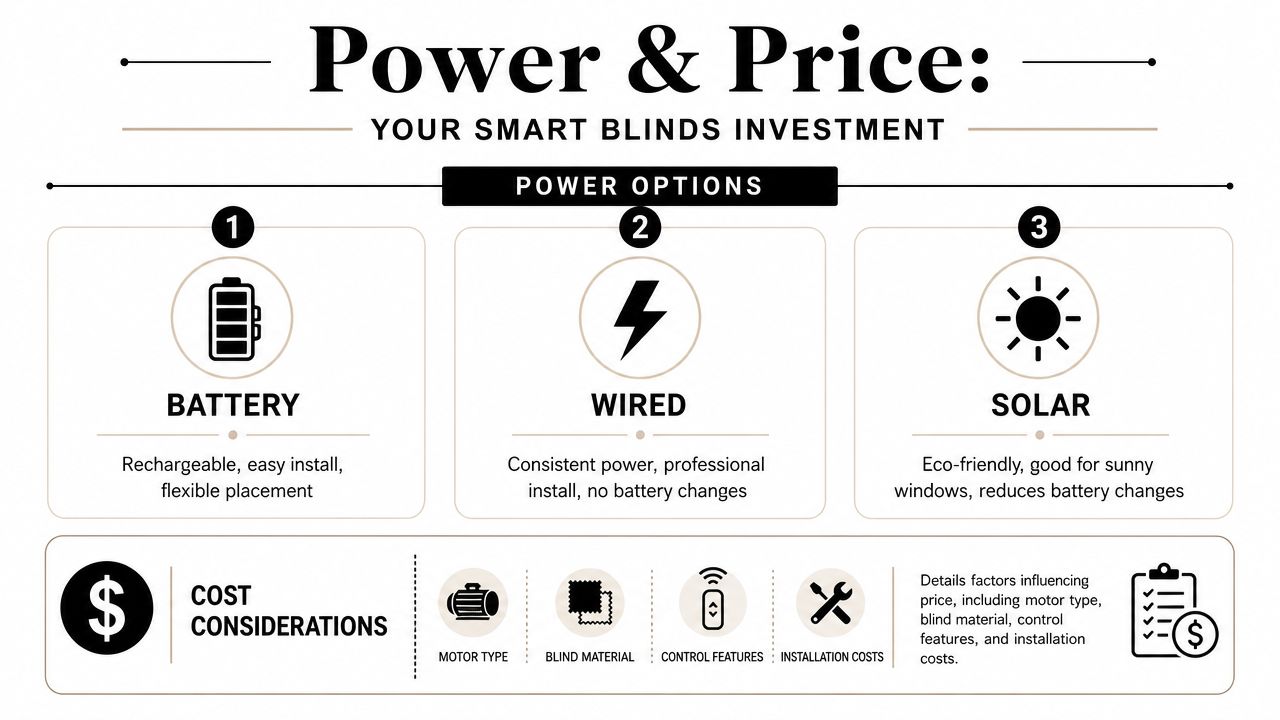
A simple comparison helps:
| Power option | Where it works well | Trade-off |
|---|---|---|
| Battery rechargeable | Existing homes, quick retrofit | Needs periodic charging |
| Hardwired | New builds, major renovations | More installation planning |
| Solar-assisted | Sunny exposures | Depends on window conditions |
Battery is often the most forgiving. Hardwired is often the cleanest long term. Solar-assisted options can be useful on the right exposure, but they're more situational than many homeowners expect.
What changes the final price
There isn't one standard price for smart blinds because the product is custom. The final number changes based on the window, the fabric, the motor system, and how the blinds will be controlled.
The biggest cost drivers are usually:
- Window size and weight because larger shades need more support from the system
- Blind style since zebra, roller, and cellular products differ in construction
- Fabric selection because blackout, screen, and designer fabrics don't price the same way
- Control setup including whether you want remote-only operation or app and gateway control
- Installation complexity especially on tall, wide, recessed, or older openings
If you're budgeting, the smart move is to separate the project into two decisions. First, choose what each room needs functionally. Then decide where smart control is worth paying for. Not every window needs the same motor package.
One mistake I see a lot is treating all windows equally. The high, awkward, daily-use, and privacy-sensitive windows deserve the automation budget first. A rarely used basement window usually doesn't.
How to Buy and Install Smart Blinds in Your Area
Buying smart blinds online can work for a very straightforward window. It gets riskier when the openings are older, wider, deeper, out of square, or part of a whole-home plan.
That's why the local buying process matters more than people expect. Retrofit feasibility depends on power access, hub compatibility, and precise measuring for non-standard windows, which is why professional consultation is so useful, as discussed in this guide to complex and non-standard blind applications.
What a good buying process looks like
A solid process usually starts in the home, not on a checkout page. You want to see fabric samples in your own light, on your own wall colours, and against the actual trim and flooring in the room.
A good consultation should answer practical questions like:
- How will this blind mount on this exact window
- Is battery or hardwired power the better fit here
- Will this system work with the smart platform already in the house
- Does the fabric give enough privacy at night
- Will the cassette, hem bar, and brackets look clean in the space
For homeowners in Southwestern Ontario looking at motorized blinds in London, Ontario, one option is to work with a company like Blinds Hut that handles consultation, measuring, and installation as one process.
Why professional measuring saves trouble
Smart blinds are less forgiving than people think. If the fit is tight, the headrail clearance is off, or the mounting surface isn't right, the whole system can feel clumsy even if the motor itself is good.
Professional measuring matters most when you're dealing with:
- bay windows
- patio doors
- extra-wide openings
- layered treatments
- non-standard trim
- older homes where “square” is more of a suggestion than a fact
A clean install also affects the day-to-day experience. Cables, battery access, charging access, and bracket placement should all be considered before the order is placed, not after the blinds arrive.
Measure the window, but also measure the installation experience. Access to charging, signal reliability, and how the shade stacks when open all affect whether homeowners end up liking the system.
Frequently Asked Questions About Smart Blinds
A few questions come up in almost every consultation. Here are the ones that usually matter most once homeowners move past the basic idea and start choosing a system.
| Question | Answer |
|---|---|
| Do smart blinds need Wi-Fi to work? | Not always. Some systems can still operate by remote even if app features depend on connectivity. The key is checking whether your chosen setup uses a hub, gateway, or direct app connection. |
| Are smart blinds a good fit for older homes? | Often, yes. Battery-powered systems are commonly the easiest retrofit choice because they avoid hardwiring. The real test is the window condition, mounting space, and whether the opening has any unusual shape or trim detail. |
| Which rooms should get smart blinds first? | Start with windows you adjust every day, windows that are hard to reach, and rooms where privacy timing matters. Bedrooms, front rooms, stairwells, and large living room windows are common first priorities. |
| Are smart blinds hard to maintain? | Usually not. The main maintenance issue is power access and occasional charging on battery systems. Fabric care depends more on the shade material than the motor. |
| Are they worth it if I only want one or two windows done? | They can be. One difficult-to-reach window or one bedroom that needs reliable blackout control can justify motorization on its own. Not every project needs to be whole-home. |
| Can smart blinds help with privacy when I'm away? | Yes. Scheduled closing and opening can make the home look occupied and can save you from forgetting street-facing windows at night. |
| What should I ask before ordering? | Ask about smart-home compatibility, charging access, mount depth, light gaps, warranty coverage, and who handles installation if something needs adjusting later. |
The long-term value usually comes from daily use, not novelty. If the blinds solve a repeated annoyance, improve privacy habits, or make a difficult room easier to live with, most homeowners keep using the smart features long after the excitement of the app wears off.
If you're comparing smart blinds for a Canadian home and want help sorting out styles, motor options, and tricky window conditions, Blinds Hut can walk you through the practical side with custom recommendations, in-home measuring, and installation support.