The Complete Guide to Light Filtering Roller Shades
If you're staring at a bright living room window and thinking, “I want the light, just not the glare,” you're in the right category. Light filtering roller shades are the option many homeowners land on when blackout feels too heavy and bare glass feels too exposed.
They work especially well in real homes where the goal isn't total darkness. It's comfortable daylight, better screen visibility, softer rooms, and a level of privacy that feels right for how you use the space.
Table of Contents
- What Exactly Are Light Filtering Roller Shades
- How They Master Light and Privacy Day to Night
- Light Filtering Shades vs Other Options
- The Best Rooms for Light Filtering Shades
- Customizing Your Shades for Style and Function
- Why a Custom Solution from Blinds Hut is Better
What Exactly Are Light Filtering Roller Shades
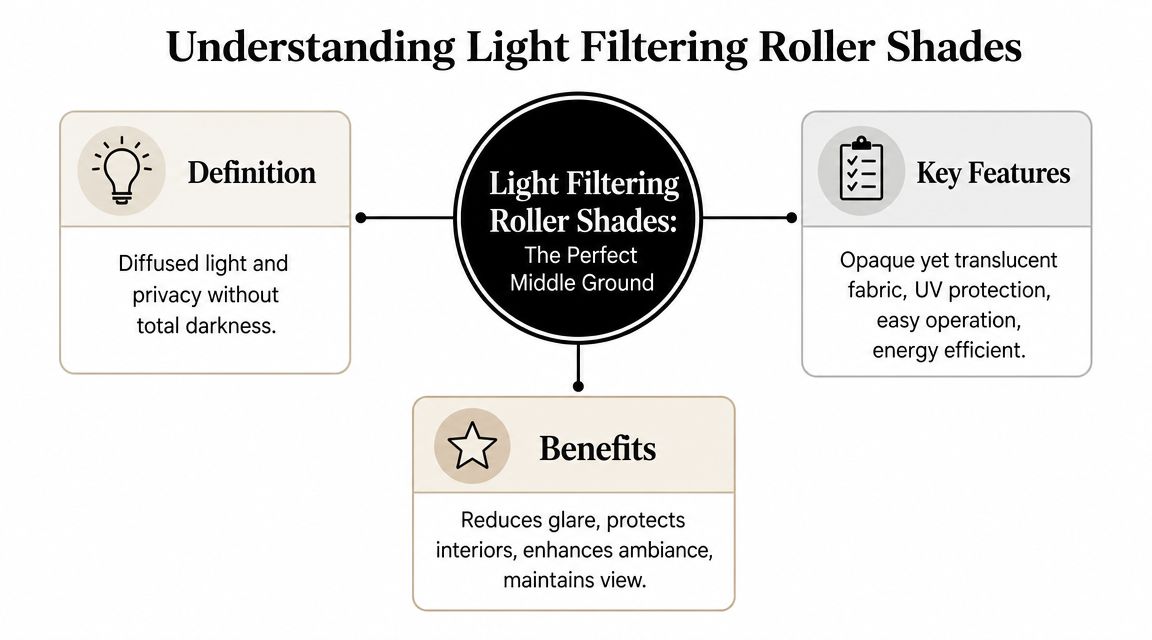
Light filtering roller shades sit in the middle. They don't black out a room, and they don't leave your windows feeling exposed the way very sheer materials can.
The fabric softens incoming daylight so the room feels brighter without feeling harsh. A lot of homeowners describe the effect as calmer, and that's a good way to think about it. The window still works for the room, but the sunlight stops bossing everything around.
Fabric openness is the term that matters
When you're comparing fabrics, the key spec is fabric openness. In Canada, light-filtering roller shades are commonly specified this way, and the most common range is 1% to 5% openness according to this guide to blackout vs light filtering roller shades.
That percentage tells you how much daylight passes through the weave. A 1% openness fabric is denser, so it gives stronger glare control and more privacy. A 5% openness fabric lets in more light and keeps a clearer outward view, which is why it often feels like the easiest all-around choice for everyday living spaces.
If you're new to roller shades, it helps to stop thinking in labels like “light” or “semi-private” and start thinking in performance. Openness gives you a more useful way to compare one fabric to another, especially when two shades look similar in a sample book.
For a broader overview of style and mechanism options, this roller shades guide from Blinds Hut is a helpful starting point.
What they feel like in a room
Light filtering roller shades are good at taking the edge off. On a sunny afternoon, they can make a room feel less sharp without making it gloomy.
Practical rule: If you want to read, work, cook, or relax in a room with daylight but don't want strong glare across the floor or TV, this category usually makes more sense than blackout.
They also suit homes that want a clean look. The profile is simple, the fabric stack stays tidy, and the shade can disappear visually when the colour and texture are chosen well.
How They Master Light and Privacy Day to Night
The biggest mistake shoppers make is assuming one shade behaves the same way at noon and at night. It doesn't. Light filtering roller shades are very good at some jobs, and only okay at others.
In this context, honest expectations matter most.
What they do well during the day
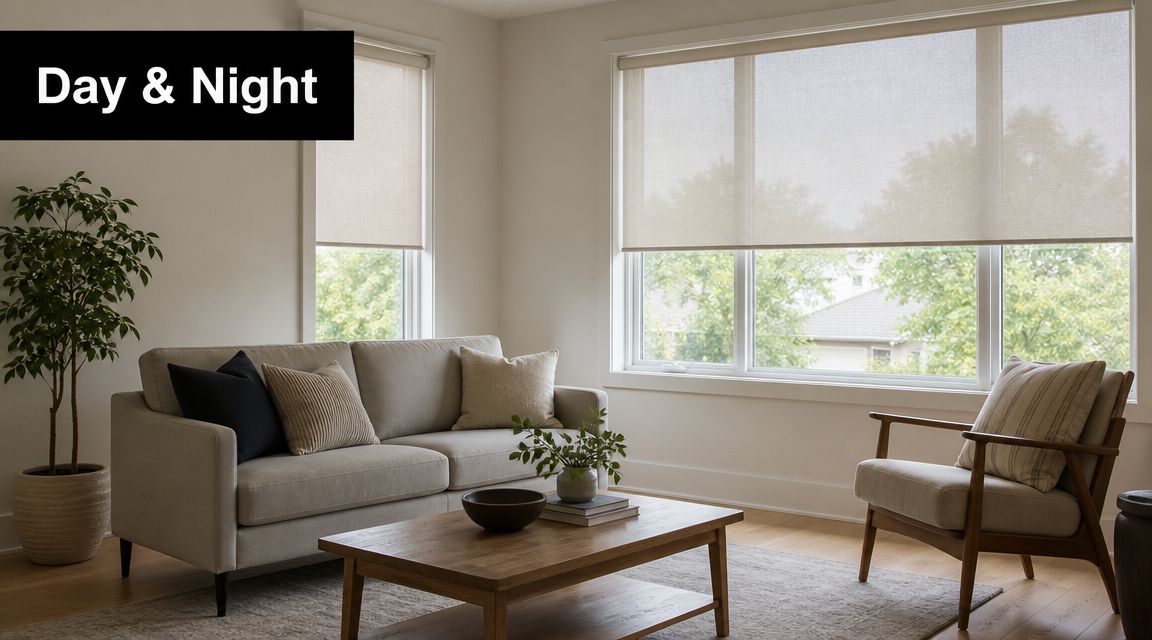
During daylight hours, these shades help tame bright windows without shutting the room down. They diffuse direct sun, make screen use easier, and help reduce the washed-out feeling that happens when sunlight hits interior surfaces too hard.
One independent product specification for a light-filtering roller shade with 3% openness says it blocks about 40% to 50% of incoming light while also providing UV protection, as shown on this product spec page. That lines up with what many homeowners want: less glare, less strain, but still enough natural light for the room to feel open.
A good daytime setup often depends on window direction. South- and west-facing rooms usually need more control. East-facing rooms tend to need softer morning management. North-facing rooms often need less intervention and can handle a brighter fabric.
What changes after dark
Night is the trade-off people don't always hear about soon enough. Most light-filtering fabrics improve daytime privacy, but they are not the same thing as true nighttime privacy.
The issue is simple. When it's dark outside and your interior lights are on, the room becomes the brighter side of the glass. According to The Shade Store's light filtering window treatments page, light-filtering fabrics can still allow shadows and movement to be seen from outside after dark.
If nighttime privacy is a top concern, don't choose a light-filtering fabric expecting blackout-level seclusion.
That doesn't mean they're the wrong choice. It means they need to match the room and your comfort level.
For living rooms, dining rooms, and many offices, homeowners are often happy with that trade-off. For bedrooms, street-facing bathrooms, or a front room with lots of evening use, I usually suggest thinking about layering, a dual-shade setup, or moving to a more opaque solution.
A quick visual can help if you're still weighing the feel versus the function.
Light Filtering Shades vs Other Options
A lot of confusion comes from comparing products that solve different problems. Sheer, light filtering, blackout, and solar-style fabrics can all look clean and modern, but they don't behave the same way once they're on the window.
The fastest way to sort them out is to compare performance, not marketing language.
Roller Shade Opacity Comparison
| Shade Type | Light Control | Daytime Privacy | Nighttime Privacy | Best For |
|---|---|---|---|---|
| Light filtering | Softens daylight and reduces glare without fully darkening the room | Good for many everyday spaces | Limited once interior lights are on | Living rooms, dining rooms, home offices |
| Sheer | Keeps the room bright and airy | Lower | Lower | Spaces where the view matters more than privacy |
| Blackout | Blocks outside light as fully as possible | High | High | Bedrooms, nurseries, media rooms |
| Solar | Helps manage glare while often preserving view | Openness dependent | Often limited after dark | Sun-facing rooms and workspaces where outside view matters |
Where light filtering fits
Light filtering is the middle-ground choice. That's exactly why it works so often. It softens a room without making it feel closed off.
Compared with blackout shades, it keeps more usable daylight in the space. Compared with sheer options, it usually gives a stronger sense of privacy and a more controlled glow. Compared with solar shades, it tends to feel less technical and more decorative in living spaces.
For many homeowners, the deciding question is this: do you want to live with the light, or block the light? Light filtering is for living with it.
If you're deciding between light filtering and a darker room setup, this guide to blackout shades and privacy helps clarify where blackout makes more sense.
Reality check: No single roller shade type is perfect in every room. The right pick depends on whether glare, privacy, sleep, or view matters most on that specific window.
One more practical note. If you like the clean look of roller shades but need flexibility, a dual setup often solves the conflict. Use the light-filtering layer during the day, then switch to the darker layer at night. It gives you the appearance people want without forcing one fabric to do every job badly.
The Best Rooms for Light Filtering Shades
Some window products are all-purpose on paper but fussy in real life. Light filtering roller shades aren't like that. They have a clear sweet spot.
They do their best work in rooms where you want daylight to stay part of the design.
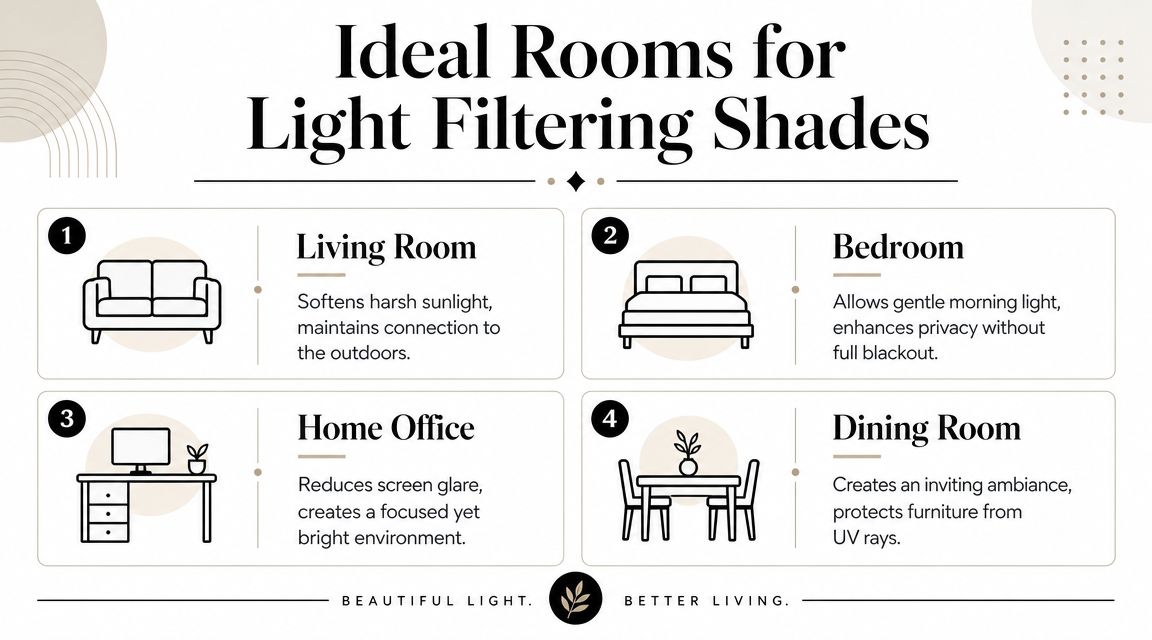
Rooms where they usually make sense
Living rooms are a natural fit. You still get a bright room, but the sunlight feels softer and more controlled. That's especially useful when afternoon sun hits seating areas, floors, or the TV wall.
Dining rooms also suit this fabric well. The light stays pleasant, and the room feels finished instead of exposed.
Home offices can benefit a lot when windows create screen glare. You still keep a daylit workspace, but the shade tones things down enough to make the room easier to work in.
Ontario homes add another layer to the decision. A light-filtering roller shade can block about 60% to 80% of UV rays depending on colour and fabric, according to this light-filtering roller shade product page. In south- and west-facing rooms, that matters for furniture, flooring, and general comfort in summer, while still letting in natural light during darker parts of the year.
Where you may want layering instead
Bedrooms are where people often hesitate, and for good reason. If you enjoy waking with soft natural light, light filtering can be lovely. If you need a dark sleep environment, it probably won't go far enough on its own.
Street-facing spaces also need a harder look at privacy. If the room is heavily used at night, layering usually makes more sense than hoping one fabric will cover every situation.
Here are the rooms where I'd pause before choosing light filtering alone:
- Primary bedrooms: Great for a soft morning glow, not ideal if you want a darker sleep setup.
- Nurseries: Some families like gentle daytime light, but many want stronger darkening for naps and early evenings.
- Front rooms close to the street: Daytime privacy can feel fine, but night use changes the equation.
- Media spaces: Better than bare glass, but not the right choice if glare control is the main goal.
In Ontario, the same window can feel completely different in July and January. The right shade has to handle both the bright season and the dark one.
Customizing Your Shades for Style and Function
Roller shades get more interesting. Two light-filtering shades can look similar online, yet perform very differently once they're installed.
Fabric, colour, control type, and window size all change the result.
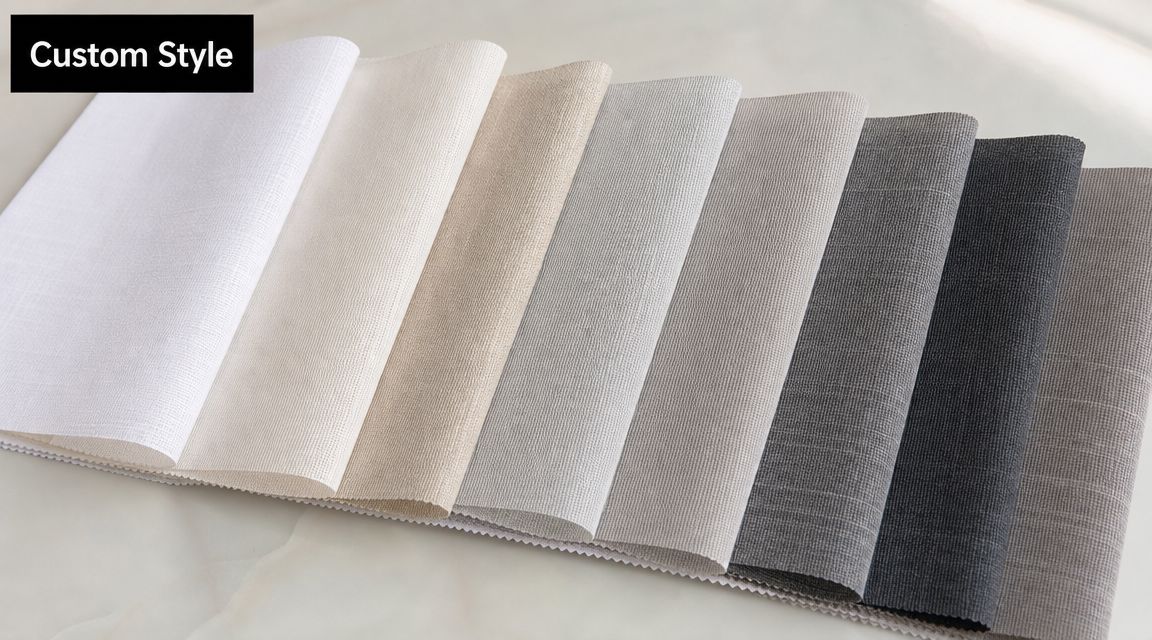
Fabric and colour choices matter more than most people expect
The fabric controls the mood of the room. Some light-filtering materials read smooth and modern. Others add texture and feel warmer, softer, or more architectural depending on the weave.
Colour affects the experience too. A bright white can make a room feel crisp and airy. Warmer neutrals can soften the light and sit better with wood floors, painted trim, or earth-toned interiors. Darker fabrics usually feel moodier and more grounded.
I always tell homeowners to judge samples in the actual room, not just under store lighting. Morning light, afternoon sun, wall colour, and flooring all shift the way a fabric reads.
Control options change how the shade lives day to day
Operation matters as much as the fabric. A shade that looks right but is annoying to raise and lower won't feel like a good decision for long.
Cordless is popular because it keeps the look clean and simple. For wider windows, though, the mechanism can affect what size is possible. One major custom specification lists cordless light-filtering shades with a minimum width of 20 inches and a maximum of 78 inches, while cord-loop versions range from 14 inches to 120 inches, as shown on this custom roller shade specification page.
That matters on large picture windows, patio doors, and commercial-style openings. The lift system isn't just a convenience feature. It directly affects whether the shade can be built for the opening you have.
A few options to think through:
- Cordless: Clean look and easy everyday use for many standard windows.
- Cord loop: Worth considering on larger shades where size capacity matters.
- Motorized: Useful for tall windows, hard-to-reach areas, or homes that want scheduled light control.
- Smart controls: A practical step if you want shades to respond to routines rather than manual use.
Motorization isn't only about convenience. In sun-heavy rooms, it can make good shade habits more consistent because you use the product the way it was meant to be used.
Why a Custom Solution from Blinds Hut is Better
Roller shades look simple, which is why people often underestimate what can go wrong. The problems usually show up after the box is open.
The width is slightly off. The bracket placement feels awkward. The fabric looked warmer online. The finished shade works, but it never quite looks settled in the room.
What usually goes wrong with off-the-shelf shades
Off-the-shelf products can work for basic windows, but they leave little room for correction. If the fit is off, the gaps are more noticeable. If the room needs a specific privacy level, the fabric choices can feel too broad or too vague.
DIY measuring is another common issue. Roller shades are less forgiving than people expect because even small fit problems become visible along the edges.
Then there's coordination. A homeowner has to choose the mount, fabric, control style, hardware finish, and installation method without seeing how those choices interact in the actual space.
What a custom process fixes
A custom process narrows those risks. Real samples let you compare texture and colour in your own lighting. Precise measuring helps the shade sit correctly on the window. Professional installation usually gives you a cleaner line, smoother operation, and a better-looking finish.
For homeowners in London, Ontario, Blinds Hut's custom blinds and shades guide shows how a made-to-measure process can help when you're balancing privacy, light control, and style across different rooms.
This is also where good advice matters most. A strong consultation doesn't just ask what looks nice. It asks when you use the room, what direction the window faces, whether privacy changes after dark, and how often the shade will be operated.
A window treatment should solve a room problem. If it only matches the paint colour, it isn't doing enough.
Custom is usually the better route when your windows are oversized, your privacy needs change from day to night, or you want multiple rooms to feel coordinated without looking identical.
If you're weighing light filtering roller shades for your home, Blinds Hut can help you sort through fabric openness, privacy trade-offs, room-by-room use, and control options with real samples and made-to-measure guidance. It's a practical way to get shades that fit your windows and the way you live with them every day.