Blackout Blinds Canada: 2026 Guide to Styles & Savings
You're probably here because the label said blackout, but the room still isn't dark.
That happens all the time in Canadian homes. Summer sun shows up early, streetlights spill into bedrooms, and a nursery or shift-work bedroom can still glow around the edges even when the fabric itself looks solid.
The fix usually isn't “darker fabric.” It's a better blackout system. In real homes, fit, mount style, cassette design, and side control decide whether you get a dim room or a room that feels properly dark.
Table of Contents
- What Are Blackout Blinds and Why You Need Them
- Not All Blackout Is Created Equal
- Choosing Your Blackout Blind Type and Material
- The Energy-Saving Advantage in Canadian Climates
- Motorization and Smart Controls for Modern Homes
- Benefits of Buying Canadian and Professional Installation
- Your Canadian Blackout Blind Buying Checklist
What Are Blackout Blinds and Why You Need Them
At 6:30 a.m. in July, a bedroom can already be bright enough to wake a light sleeper. In a nursery, that can mean an early nap that ends too soon. For a shift worker trying to sleep after sunrise, it usually means the window covering is not doing the full job.
Blackout blinds are designed to stop light from passing through the material so a room stays much darker for sleep, rest, and screen use. Homeowners across Canada choose them for bedrooms, kids' rooms, media spaces, and street-facing windows where privacy is just as important as light control.
What matters in real homes is the result, not just the label on the fabric.
Blackout fabric and true blackout are not the same thing
A lot of shoppers assume blackout means total darkness. Sometimes it does. Sometimes it only means the fabric itself is opaque.
That difference matters in Canadian homes, especially in summer when dawn comes early and daylight lasts late. A blind can use light-blocking fabric and still leave enough glow around the edges to disturb sleep. If the goal is a darker room for daytime rest, a baby's nap schedule, or better movie viewing, the better question is not "Is this blackout fabric?" It is "Will this window setup block light at the edges too?"
A true blackout solution is built around the full opening. The fabric matters, but so do the measurements, the mount, and the way the blind sits inside or over the frame.
Why homeowners ask for blackout blinds
The reasons are usually practical, not decorative:
- Better sleep for primary bedrooms, nurseries, and daytime sleepers
- Less glare on TVs, monitors, and projectors
- More privacy at night with interior lights on
- Better comfort near windows that get strong sun or feel cooler in winter
Blackout blinds can also help the room feel more stable through the seasons because they add coverage at the glass. In Canada, that matters. Windows are often the first place homeowners notice heat gain in summer and cold radiation in winter.
From years of in-home consultations, one pattern comes up again and again. Homeowners are happiest with blackout blinds when they solve two problems at once: they darken the room properly, and they make the space more comfortable to use every day.
Not All Blackout Is Created Equal
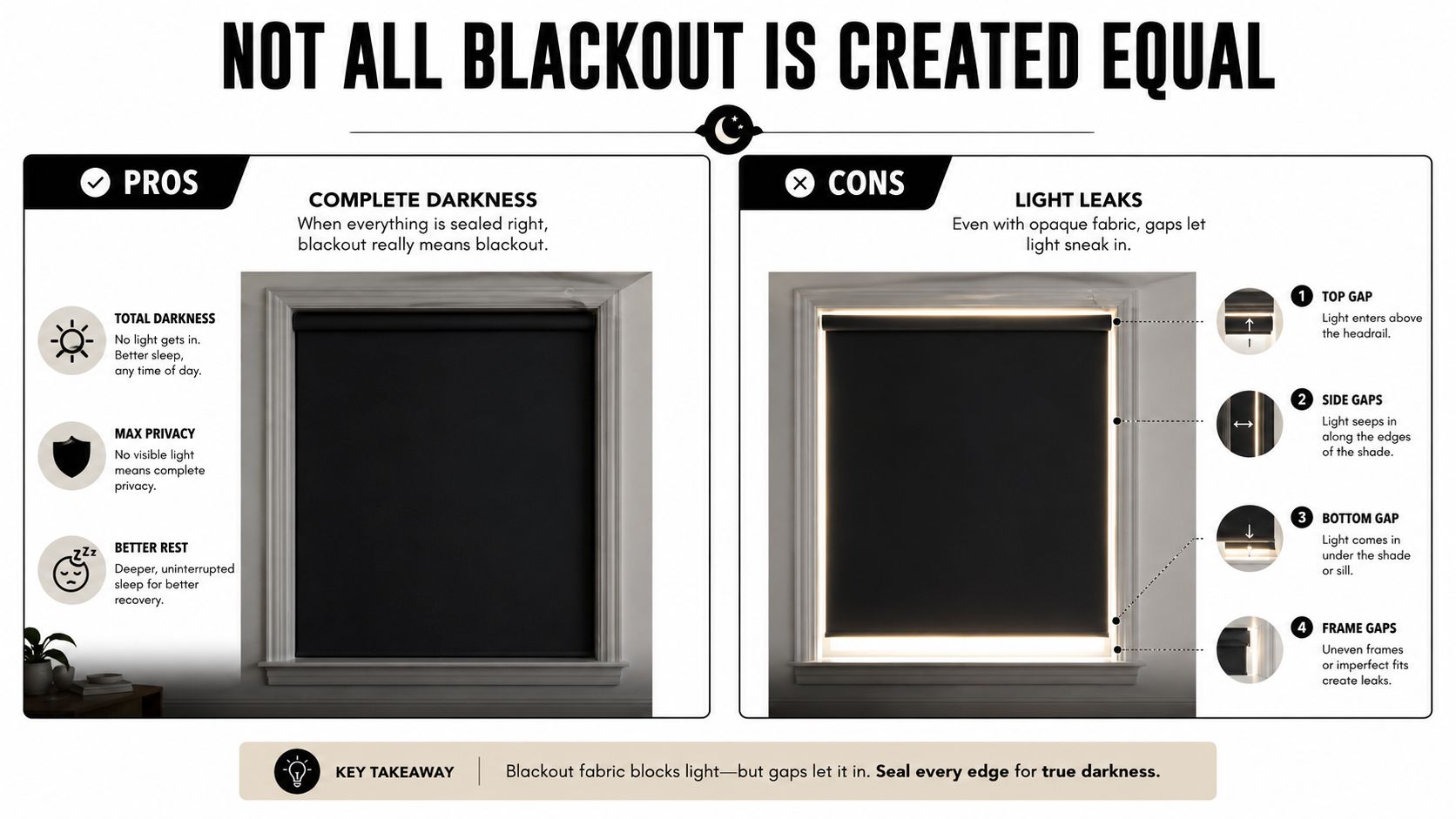
A lot of disappointment with blackout blinds comes from one simple misunderstanding. People assume the word blackout refers to the whole room result, when it often only describes the fabric.
Canadian guidance makes this clear. Blackout shades are designed to block 100% of incoming light, but room darkening still depends heavily on frame fit, edge gaps, and installation precision, which is why custom measuring and professional installation matter in bedrooms, media rooms, and shift-work sleep spaces (Canadian guidance on blackout shade fit and installation).
Blackout fabric is only part of the job
Think about a standard inside-mount roller shade. The material may be fully opaque, but the shade still needs room to move up and down. That small clearance creates visible slivers of light along the edges.
That's the halo effect homeowners notice first thing in the morning. The centre of the blind looks dark, but the perimeter glows.
Common leakage points include:
- Side gaps where light slips between the fabric and the frame
- Top light if the headrail or cassette doesn't close the upper edge well
- Bottom light when the sill is uneven or the blind stops short
- Out-of-square windows that make one side gap wider than the other
A blackout blind can fail at the edges even when the fabric itself is doing its job perfectly.
What actually improves blackout results
For a room that needs serious darkness, the details matter more than most showroom samples suggest.
A stronger setup usually includes some combination of:
- Outside mount installation so the blind overlaps the opening instead of sitting inside it
- Side channels or light-blocking trims to reduce edge glow
- A cassette or enclosed top treatment to cut top-line leakage
- Accurate custom measuring so the overlap is intentional, not guessed
- Professional installation to keep the unit level and close to the surface
Here's a quick way to understand:
| Setup | Light control result | Best use |
|---|---|---|
| Standard inside mount | Good fabric coverage, more edge glow | General bedrooms, casual use |
| Outside mount blackout roller | Better perimeter coverage | Bedrooms needing stronger darkening |
| Blackout system with side channels | Strongest control over side leakage | Nurseries, media rooms, shift workers |
Custom service earns its keep. A local installer can look at frame depth, trim, sill shape, and how much overlap the opening allows. That's hard to judge from a product page.
Choosing Your Blackout Blind Type and Material
Once you know the difference between opaque fabric and a real blackout setup, the next question is style. The right choice depends on how dark you need the room, how much insulation you want, and whether the look of the blind matters as much as the function.
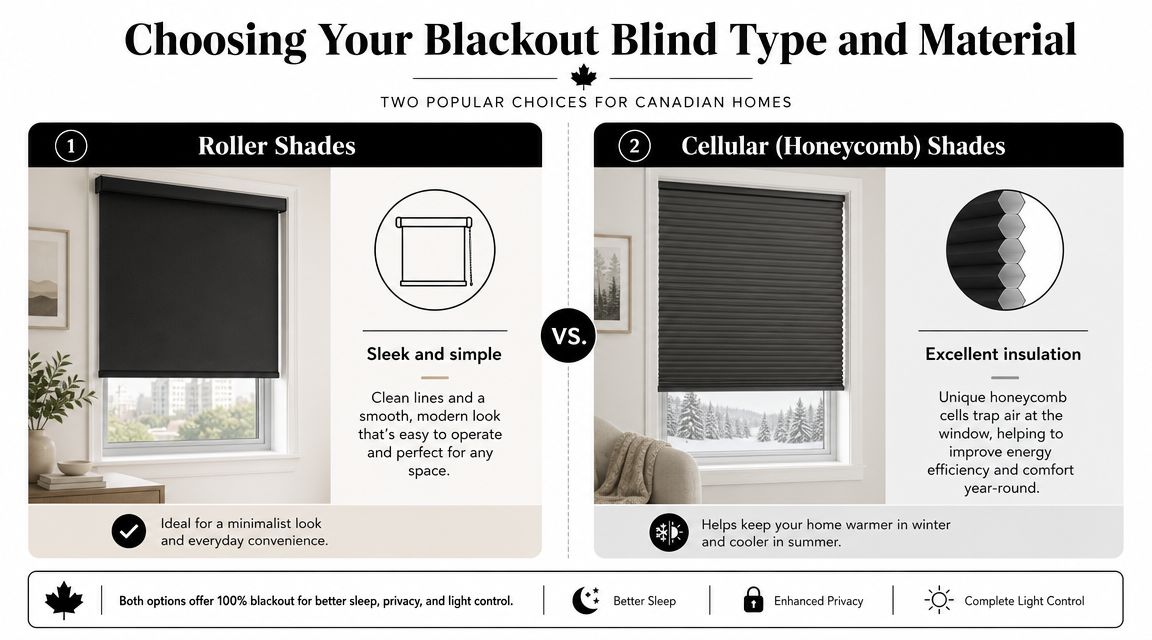
Roller shades
Roller shades are the cleanest-looking option. They suit modern spaces, stack neatly, and work well when you want a simple face fabric without visual bulk.
For blackout use, they perform best when the system is designed to address edge leakage. A plain inside-mount roller is often where people notice those side slivers most.
If you want a deeper look at this style, this guide on roller shades for Canadian homes is a useful starting point.
Good fit for:
- Primary bedrooms
- Basement media rooms
- Contemporary interiors
Watch for:
- Side gaps on standard inside mounts
- Top leakage if the headrail area is exposed
Cellular honeycomb shades
Cellular shades are the practical choice when you care about both darkness and insulation. Their structure creates an extra buffer at the window, so they're often a smart fit for colder rooms and draft-prone windows.
They don't automatically solve every blackout issue, but they usually bring stronger comfort performance than looser coverings. If energy efficiency matters as much as darkness, this style is often the one I'd tell homeowners to look at first.
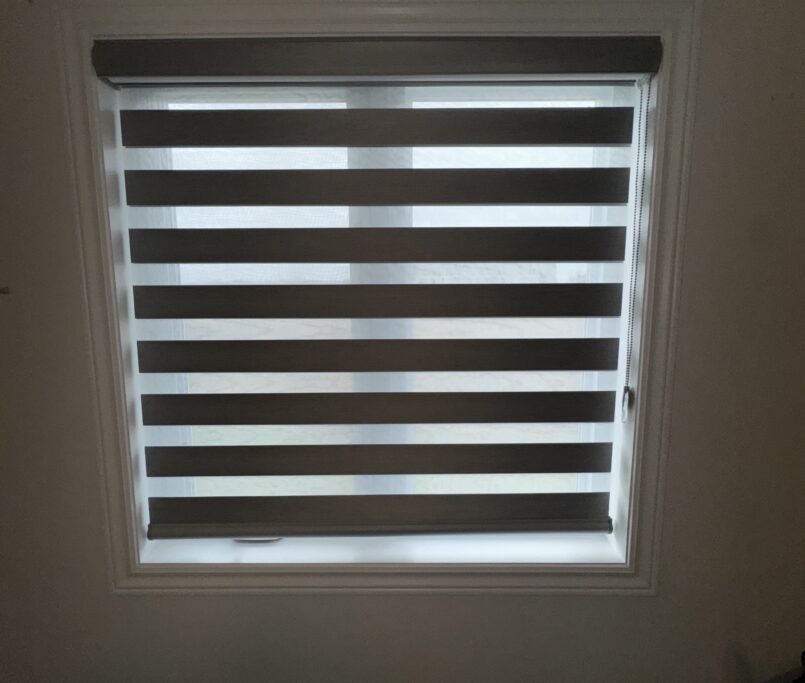
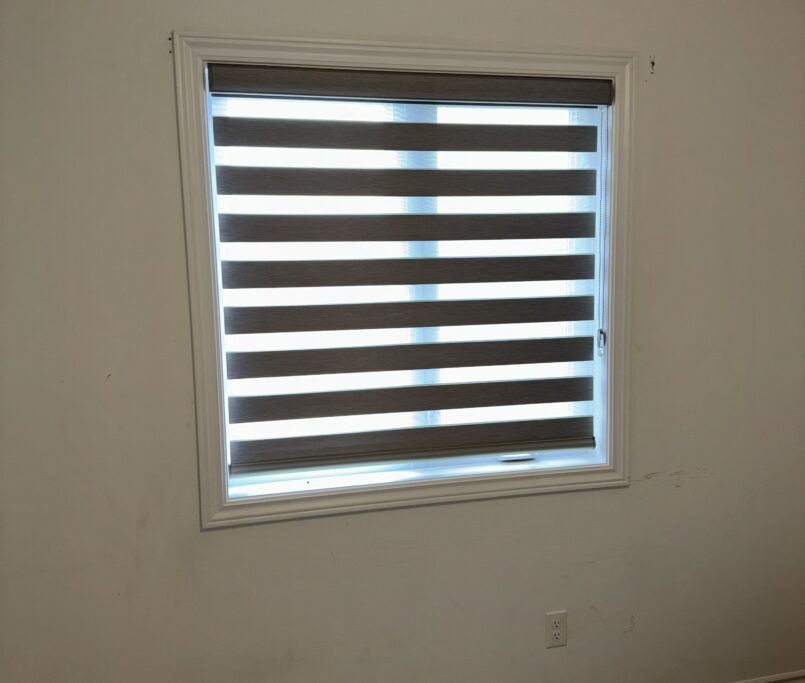
Zebra blinds
Zebra blinds are excellent for adjustable light control, but they need careful specification if blackout is the goal. Their layered band design is attractive and versatile, though they're usually chosen more for flexibility and style than for the most aggressive blackout result.
That doesn't make them a bad product. It just means they're better for homeowners who want privacy and variable daylight control, not the darkest possible room for daytime sleeping.
What works best: For pure blackout performance, roller systems with stronger edge control and well-fitted cellular blackout shades usually beat decorative-first options.
Here's a straightforward comparison:
| Blind type | Blackout potential | Insulation value | Style feel |
|---|---|---|---|
| Roller | Strong with the right mount and edge control | Moderate | Sleek and minimal |
| Cellular | Strong, with added comfort benefits | Strong | Soft, practical, clean |
| Zebra | Better for adjustable light than full blackout | Moderate | Modern and layered |
Material matters too. Dense blackout fabrics, enclosed cassettes, and tighter overall fit usually perform better than looser, decorative treatments. If the room is for a baby, a nurse on night shifts, or a home theatre, lean toward function first and style second.
The Energy-Saving Advantage in Canadian Climates
A bedroom can feel dark and still be uncomfortable. I see this a lot in Canadian homes, especially in second-floor rooms over garages, west-facing bedrooms, and older houses with draftier windows. Homeowners start by asking for blackout because the light is bothering sleep, then realize the room also swings from too hot in summer to too cold in winter.
That comfort problem usually starts at the glass. Windows lose heat in January and pick up solar heat fast in July, and a loose shade does little to slow either one. A better blackout setup adds a layer between the room and the window, but the true difference comes from fit. If the blind sits tight to the opening, covers the edges properly, and suits the window size, it does a better job holding the room temperature steady.
This is also where the difference between blackout fabric and a true blackout solution matters. Blackout fabric blocks light through the material. It does not automatically stop edge glow, drafts, or heat movement around the blind. For shift workers, parents setting up a nursery, or anyone trying to darken a room during the day, the same details that reduce side light often improve comfort too.
Why some rooms feel harder to control
One room overheats every afternoon. Another always feels cooler near the window, even when the thermostat says the house is fine.
Those are common signs that the window is affecting the room more than people expect. Blinds will not replace a window upgrade, but they can reduce the daily swing if the product is chosen properly. In practical terms, a custom-fitted shade close to the glass usually helps more than a decorative treatment that hangs loose and leaves open sides.
A room often benefits from a better insulating blackout setup when you notice:
- Afternoon overheating in south-facing or west-facing bedrooms
- A cold window area in winter, especially near the bed or crib
- One room running hotter or colder than the rest of the house
- Frequent thermostat adjustments to compensate for a single problem room
Which blackout setups help most
For energy performance, style is only part of the conversation. Air gap, fabric density, and edge coverage matter more.
The strongest options usually include:
- Cellular blackout shades that trap air within the shade structure
- Roller shades with cassette systems that sit closer to the opening
- Custom-measured blinds that reduce unnecessary gaps
- Outside-mount installations when extra overlap will improve coverage and comfort
For homeowners comparing products, cellular honeycomb shades for better insulation at the window are often a smart place to start because the construction helps with temperature control as well as darkness.
The key trade-off is straightforward. If the goal is basic dimming, blackout fabric alone may be enough. If the room also runs hot in July, cold in January, or needs true daytime darkness, focus on a full system with the right fit, proper installation, and, where needed, tighter edge control or side channels. That is what turns a light-blocking blind into a blackout solution that performs well in a Canadian home.
Motorization and Smart Controls for Modern Homes
Motorization used to be treated like an upgrade for show homes. Now it's often the most practical choice, especially for bedrooms, tall windows, and houses with children or pets.
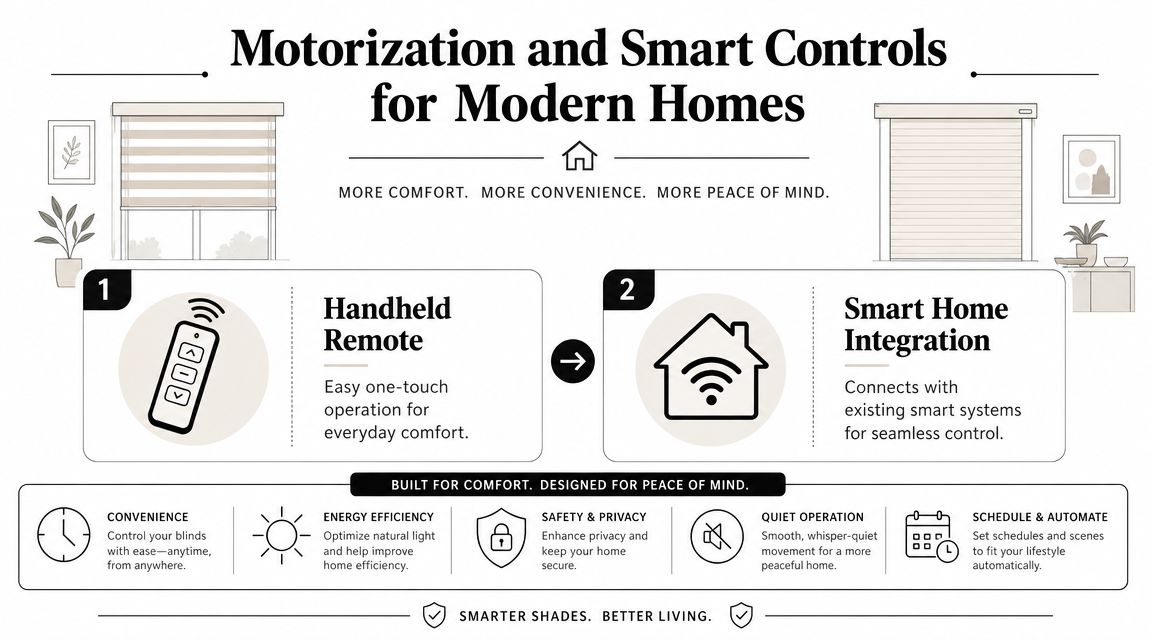
It also pairs well with blackout blinds because a shade only works when people use it. If lowering the blinds is as easy as tapping a remote, scheduling a scene, or using a voice command, the room stays more comfortable and the light control is more consistent.
The practical motorization options
You don't need a full smart home to benefit from motorized blinds. Most homeowners fit into one of three levels:
- Remote control if you want simple open-close convenience
- Wall switch control for a more built-in feel in bedrooms or media rooms
- Smart home integration if you want scheduled opening and closing with your existing system
For people planning a wider room update, this article on custom blinds and shades design planning can help you think through operation choices before ordering.
A short demo helps make the idea clearer:
Motorization is especially useful when the blackout blind is large, mounted high, or part of a layered setup. Manual operation on wide shades can be less convenient day after day, and convenience usually decides whether a product gets used properly.
Why cordless matters in Canada
The safety side matters as much as the convenience side. In Canada, blind-cord safety moved from a voluntary issue to a formal regulatory requirement when Health Canada announced tighter rules in 2019, with the regulations taking effect in May 2021. The policy followed a long injury record that included 39 deaths from window-cord strangulations since 1998, or roughly one Canadian child per year (Health Canada corded blind regulation summary).
That's why cordless and motorized systems aren't just trendy. For many homes, they're the sensible default.
If a child's bedroom, nursery, or playroom needs blackout blinds, cordless operation should be on the shortlist from the start.
Motorization also helps avoid yanking, uneven rolling, and daily wear from repeated manual use. On blackout products, that can help the blind stay aligned and keep the fit working the way it should.
Benefits of Buying Canadian and Professional Installation
A lot of homeowners find this out after the install. The fabric is labelled blackout, but the room still glows at the edges at 5:30 a.m. in July.
That usually comes down to fit, not fabric.
For Canadian homes, especially older ones with settled frames, deep trim, or windows that are slightly out of square, the difference between a light-blocking blind and a true blackout setup is often decided at measuring and installation. Shift workers, parents setting up a nursery, and anyone dealing with early summer sun tend to notice that gap fast.
There is also a real domestic market behind these products. According to IBISWorld projections for 2026, Canada's Blind & Shade Manufacturing industry is expected to reach $409.3 million in revenue, with 326 businesses operating in the category that year (IBISWorld Canada blind and shade manufacturing profile).
That matters because buying Canadian often means better access to custom sizing, shorter service loops, and products specified for the way homes here are built and used. It also makes it easier to get honest advice. A good local dealer will tell you if an inside mount roller shade with standard brackets will still leave side light, and when you need a different approach such as more overlap, a cassette, or side channels.
The practical advantages are straightforward:
- Better sizing for older or non-standard openings
- Easier service if a part needs adjustment or replacement
- Product options chosen for Canadian daylight and temperature swings
- Local measuring and installation instead of ordering by guesswork
Professional installation matters for blackout more than it does for many other window coverings. A shade can look perfectly fine and still fail the job if the gap pattern is wrong. I've seen windows where the frame looked square to the eye but was off enough to create a bright strip of light down one side. That is the kind of issue an installer catches before the brackets go up.
| What the installer checks | Why it matters |
|---|---|
| Frame depth | Decides whether inside mount makes sense |
| Window squareness | Affects side-gap consistency |
| Trim and casing | Determines possible overlap |
| Sill and crank clearance | Prevents bottom leakage and interference |
Blinds Hut is one example of the kind of local company homeowners often use for this work, with custom-measured blinds and shades, in-home consultation, and certified installation. That type of service is useful when the goal is actual darkness instead of a shade that only looks dark in the sample book.
If the room needs true blackout, installation is part of the product. In many Canadian homes, it is the part that makes the whole purchase succeed.
Your Canadian Blackout Blind Buying Checklist
By the time someone buys blackout blinds, they already know what they don't want. They don't want another shade that looks dark in the box and leaks light all around the frame once it's installed.
Canadian bedrooms make this issue more noticeable because seasonal light swings are so strong. Guidance aimed at Canadian shoppers points out that light leakage versus true blackout performance is a major gap in buying advice, especially with bright summer mornings and long winter nights making edge leakage more important than generic blackout marketing suggests (Canadian blackout buying guide on light leakage).
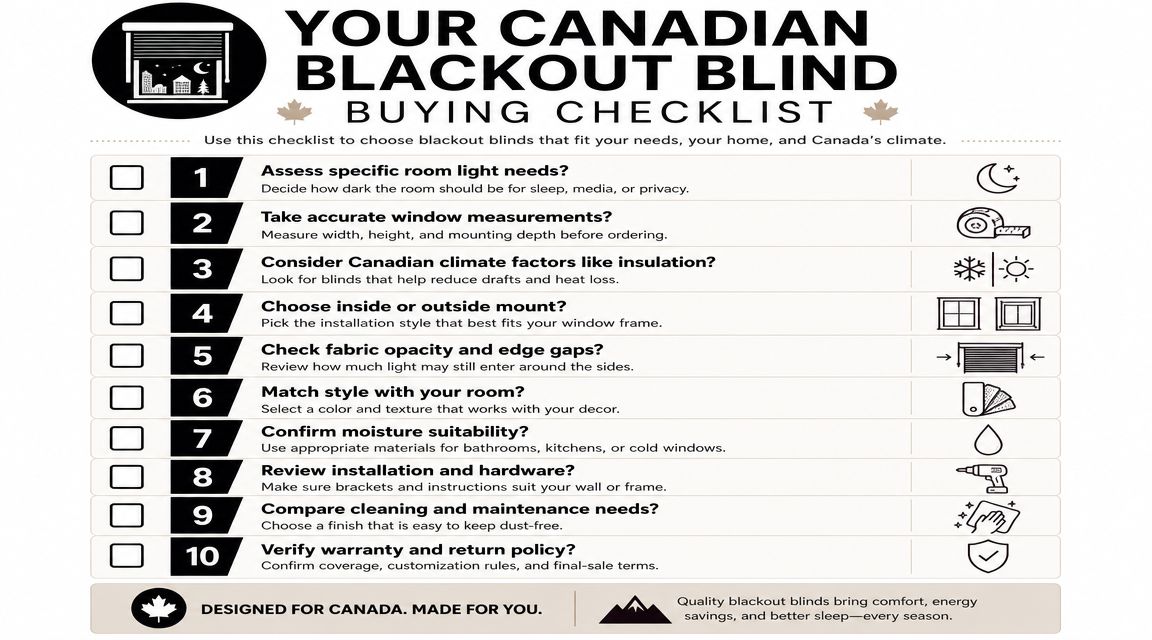
Questions to answer before you buy
Start with the room, not the product.
How dark does the room need to be
A guest room may only need room darkening. A nursery, shift-work bedroom, or projector room usually needs tighter blackout control.Is the bigger problem light, temperature, or both
If the room also runs hot or cold, lean toward tighter-fitting systems and insulating styles.Do you want an inside or outside mount look
Inside mounts look clean. Outside mounts often perform better for blackout.Will you use the blinds every day
If yes, motorization or cordless operation is often worth considering.
Questions to ask the supplier
Many purchases get better fast.
Ask how side gaps are handled
Don't stop at “it's blackout fabric.” Ask what controls edge leakage.Ask whether side channels, cassettes, or overlap options are available
Those details matter more than fabric colour names.Ask who measures and who installs
Custom products perform better when the same team owns the fit from start to finish.Ask what they recommend for your specific room
A good supplier won't recommend the same style for a nursery, condo bedroom, and living room media wall.
Buy for the result you want in the room, not for the label printed on the sample book.
Use this final filter before placing the order:
| Priority | Best question |
|---|---|
| Sleep | Will this setup control edge leakage well enough for early morning sun? |
| Comfort | Will it also help with window heat gain or winter chill? |
| Safety | Is the operation cordless or motorized? |
| Appearance | Does the mount style suit the room trim and décor? |
If you want help choosing a blackout setup that fits your window and your room use, Blinds Hut offers in-home consultations in London, Ontario with custom measuring, product guidance, and installation. That's often the easiest way to sort out whether you need simple room darkening, a tighter blackout roller system, or an insulating cellular shade for a colder bedroom.