
Roller Shades vs Solar Shades: What’s the Real Difference?
You're probably standing in a room that gets blasted with sun for part of the day and thinking, “I need something on these windows, but I don't want to pick the wrong shade.” That's the moment most London, ON homeowners start comparing roller shades vs solar shades.
The short answer is simple. If you want to keep your view and cut glare, solar shades usually make more sense. If you want stronger privacy, darker rooms, or blackout performance, roller shades are usually the better fit.
Where people get stuck is that both products roll up neatly, both can look clean and modern, and both can be custom made. The difference isn't the shape. It's what the fabric is built to do.
Table of Contents
- Roller Shades vs Solar Shades at a Glance
- How They Manage Sunlight and Your View
- Protecting Your Home from UV Rays Glare and Heat
- The Perfect Shade for Every Room in Your House
- Style Control and Getting the Installation Right
Roller Shades vs Solar Shades at a Glance
A lot of consultations start the same way. One person says the room is too bright to watch TV, and the other says they don't want to lose the natural light or the backyard view.
That's the roller shades vs solar shades decision in one sentence.
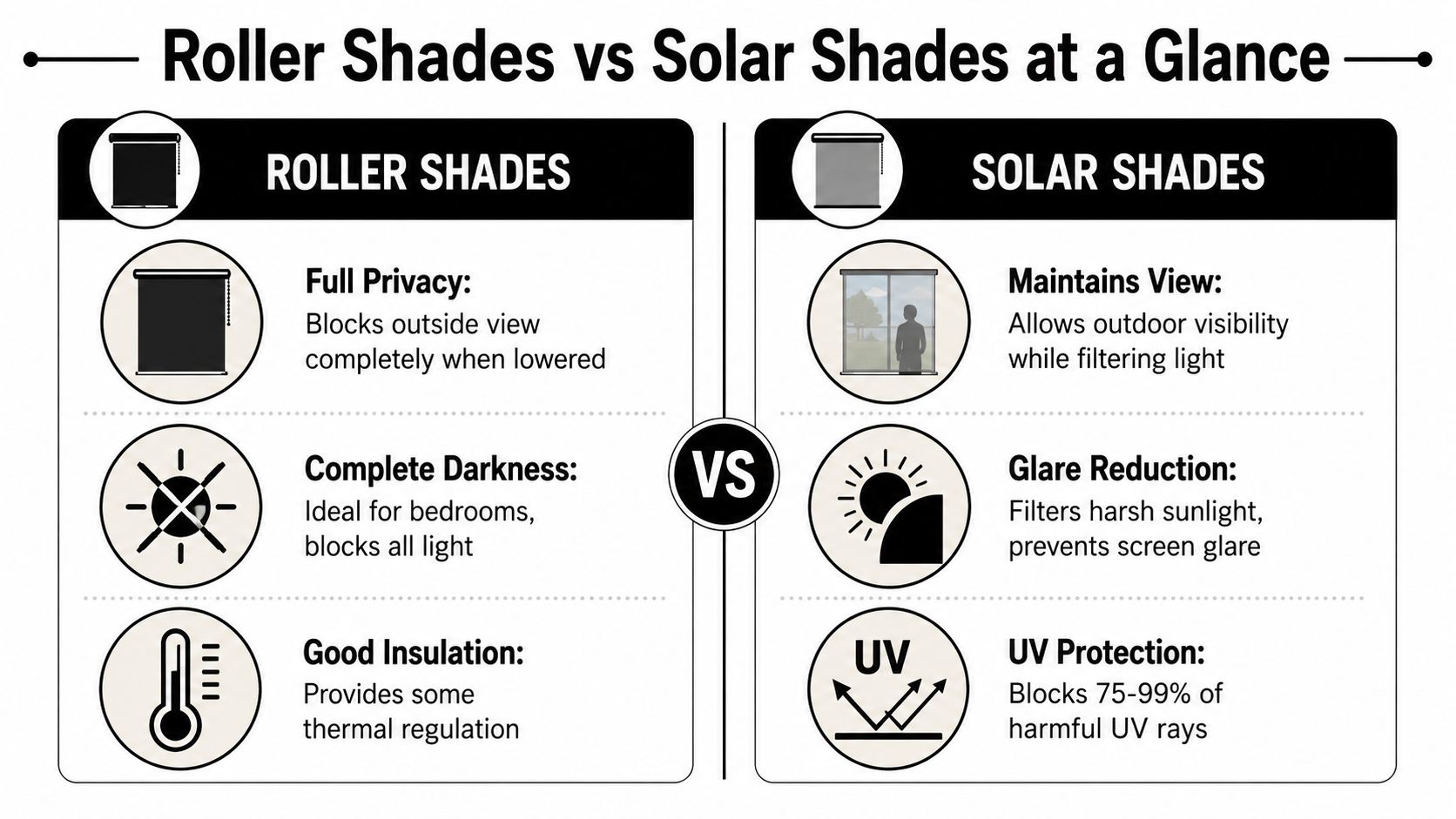
Here's the quick cheat sheet.
| Feature | Roller Shades | Solar Shades |
|---|---|---|
| Main job | Light control, privacy, room darkening | Glare control, UV reduction, view preservation |
| Fabric style | Solid fabric in opacity categories | Woven mesh with openness factor |
| View out | Usually blocked when lowered | Usually maintained during the day |
| Privacy | Better overall, especially at night | Limited at night with interior lights on |
| Best fit | Bedrooms, bathrooms, media spaces | Living rooms, offices, sun-heavy spaces |
| Light feel | Can range from soft filtered light to blackout | Filters daylight rather than blocking it |
The main difference in plain language
A roller shade is the better choice when you want to decide how much light gets blocked. You can go from sheer or light-filtering all the way to room-darkening and blackout.
A solar shade is built more like a performance screen. It's there to cut harsh sunlight, reduce glare, and protect interiors while still letting you see outside.
Practical rule: If your first complaint is “this room is too bright,” start with solar shades. If your first complaint is “people can see in” or “I need this room dark,” start with roller shades.
For homeowners who want a softer look without going full blackout, light-filtering roller shades often sit right in the middle. They don't behave like solar shades, but they can work well where privacy matters more than a clear daytime view.
Why this matters more in a real home
In London, a west-facing living room and a bedroom need totally different things. The living room often needs glare control without turning the space gloomy. The bedroom usually needs privacy and much tighter light control.
That's why neither shade is “better” across the board. Each one is better at a different job.
How They Manage Sunlight and Your View
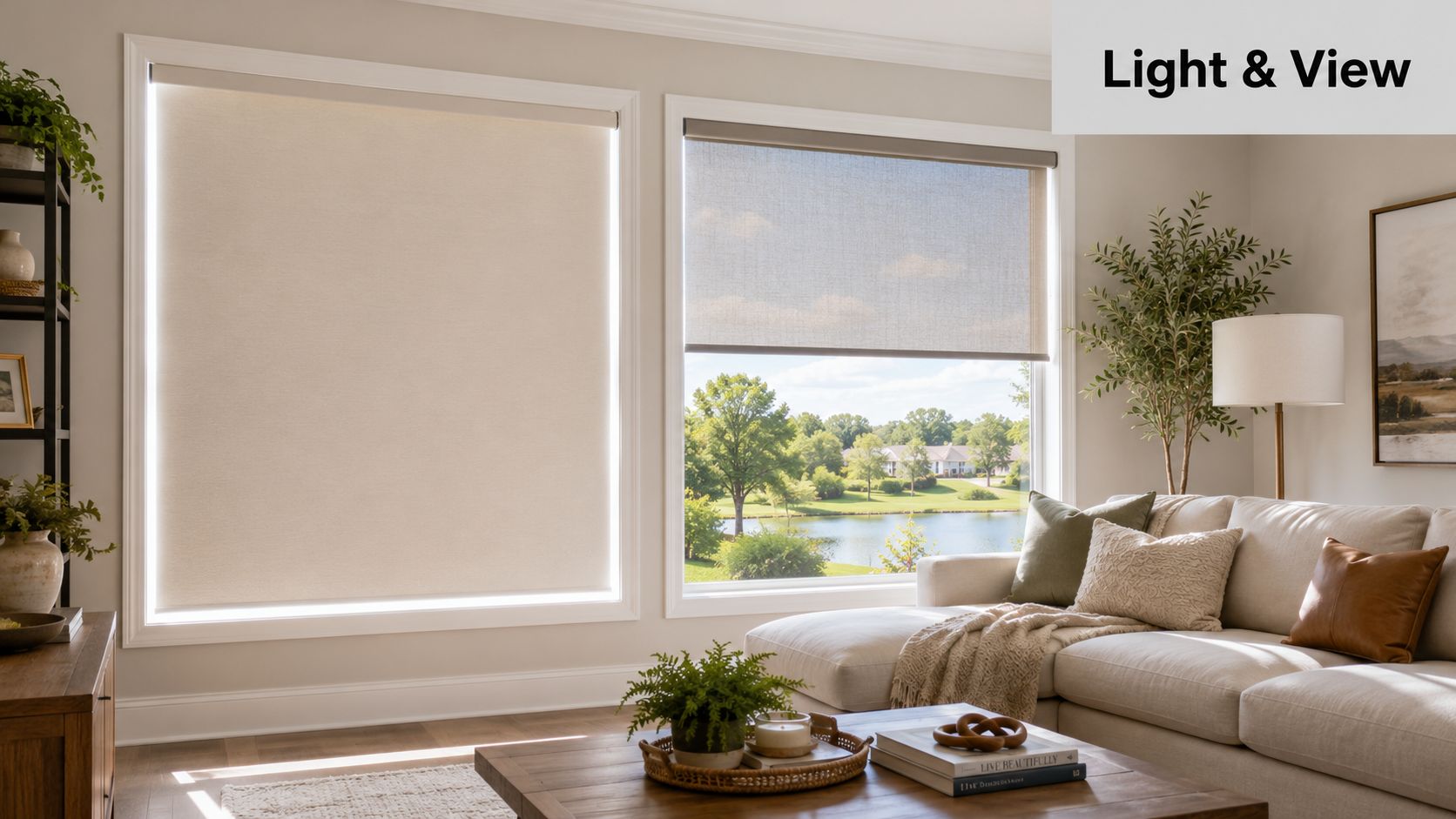
The biggest difference between these products is how they treat daylight. One blocks it by opacity. The other filters it through a weave.
The fast way to tell them apart
A roller shade fabric is usually chosen by opacity. That means you're looking at categories like sheer, light-filtering, room-darkening, or blackout.
A solar shade fabric is chosen by openness factor. According to Insolroll's guide to solar screen shade openness, low-openness fabrics provide stronger glare reduction and daytime privacy, while higher-openness fabrics preserve more outward view. The same guidance notes that 1% openness gives the most UV protection and privacy, while 5% to 10% openness is the practical range for balancing glare control with view-through.
That one spec changes the whole feel of the room.
Why openness matters more than colour names
Homeowners often focus on fabric colour first. Colour matters, but with solar shades the bigger question is how open the weave is.
Think of it this way:
- 1% openness gives a tighter screen effect. You lose some view clarity, but gain stronger glare control and more daytime privacy.
- 5% openness is the common middle ground. You still get a usable view out, but the sun feels more controlled.
- 10% openness keeps more of the view, but it also lets in more light and can feel too open for some sunny rooms.
With roller shades, you're usually not choosing between openness levels. You're choosing how much visibility and light you want to stop.
If you want to keep your backyard view during the day, a solar shade behaves more like sunglasses for the window. A blackout roller shade behaves more like closing the room off.
For homeowners comparing fabric options, solar roller shades are usually the category to look at when the room needs daylight, view, and screen glare control at the same time.
What this looks like in a real room
Take a home office with a computer facing a bright window. A blackout roller shade solves glare, but it can also make the room feel closed off by noon.
A solar shade usually handles that problem differently. It cuts the sharpness of the light while keeping the room visually open.
The same logic applies in a living room with a nice yard view. During the day, solar shades let the room stay connected to the outside. Roller shades are better when the priority shifts to privacy or a darker space for TV and movies.
This video gives a good visual sense of how that trade-off works in actual window setups.
Protecting Your Home from UV Rays Glare and Heat
A shade shouldn't just look good from the street. It should also help the room feel better at 3 p.m. when the sun is sitting right on the glass.
Solar shades get their name from this.
What each shade is actually blocking
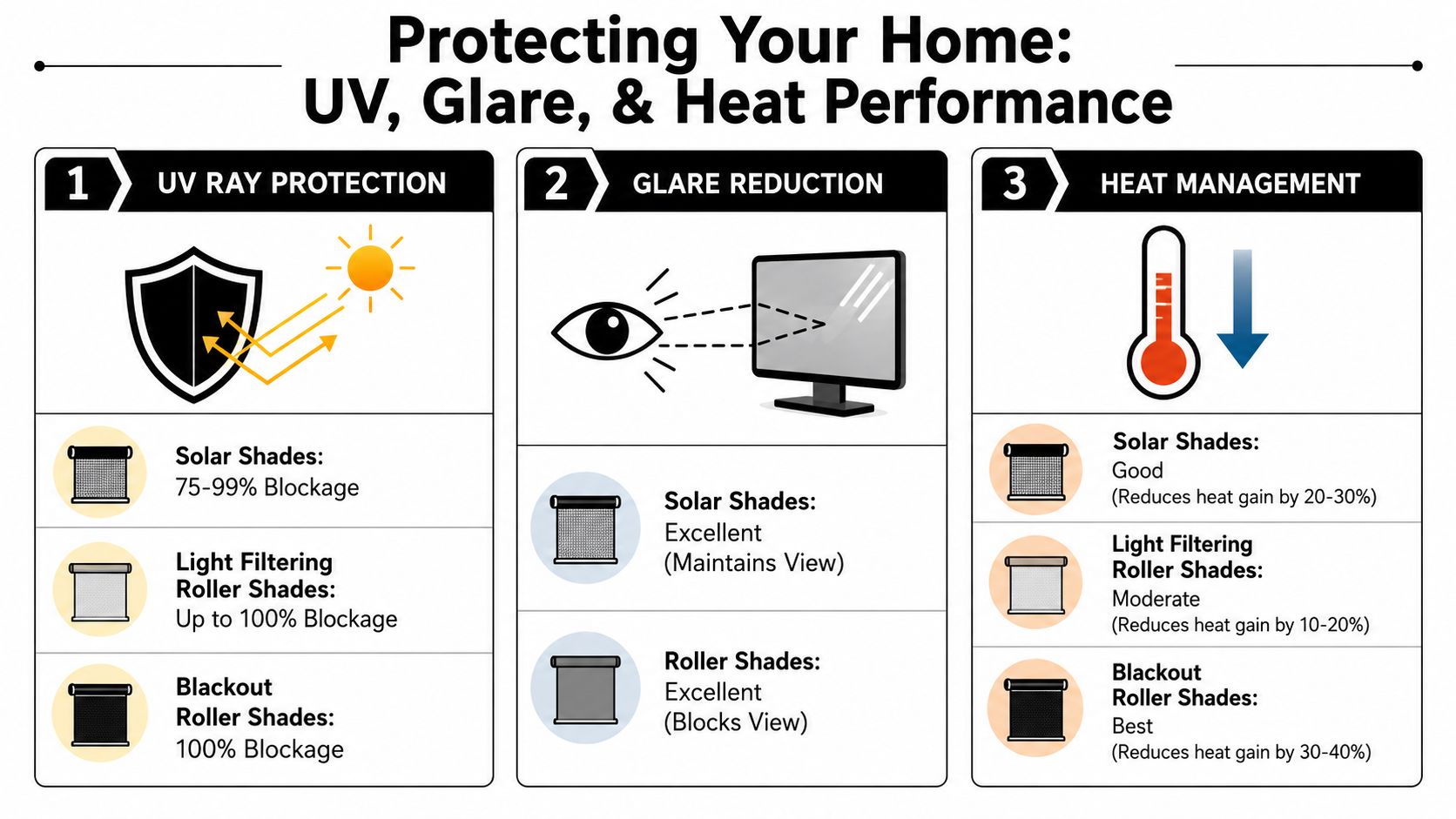
Solar shades are made to deal with sun exposure directly. The Shade Store notes that solar shades can block up to 99% of harmful UV rays, which matters if you're trying to protect flooring, furniture, or artwork from fading.
That same source also makes an important distinction. Roller shades aren't one single performance level for UV protection because their performance changes with the fabric opacity you choose.
A better way to choose for London summers
In London, humid summer days change how people experience a room. Heat and glare usually show up together, especially on south- and west-facing windows.
Here's the practical part. If your room feels hot because the sun is aggressive but you still want daylight, solar shades usually do the better job. If your room needs to be dim, private, and visually closed off, roller shades still win.
What doesn't work well is picking a shade based only on looks. A fabric that seems perfect in a sample book can feel wrong once the afternoon sun hits it every day.
Use this checklist instead:
- Choose solar shades when you want to cut glare, keep the room brighter, and preserve the outside view.
- Choose roller shades when privacy is essential or you want darker conditions for sleep or screens.
- Be careful with very open solar fabrics if the room already struggles with harsh late-day sun.
- Match the shade to the exposure. West-facing rooms usually need stronger control than shaded north-facing rooms.
The best shade isn't the one with the nicest swatch in your hand. It's the one that solves the problem the room has every day.
Where each one tends to work best
For a bright kitchen nook or a family room, solar shades often feel more comfortable because they soften the room without making it feel shut down.
For a nursery, bedroom, or TV room, roller shades are more dependable because they give you stronger control over light and privacy.
That's really the heart of roller shades vs solar shades. Solar shades are about managing sunlight. Roller shades are about controlling access to the room.
The Perfect Shade for Every Room in Your House
The easiest way to choose is to stop thinking about the product first and think about the room first. How you use the room tells you which shade is likely to work.
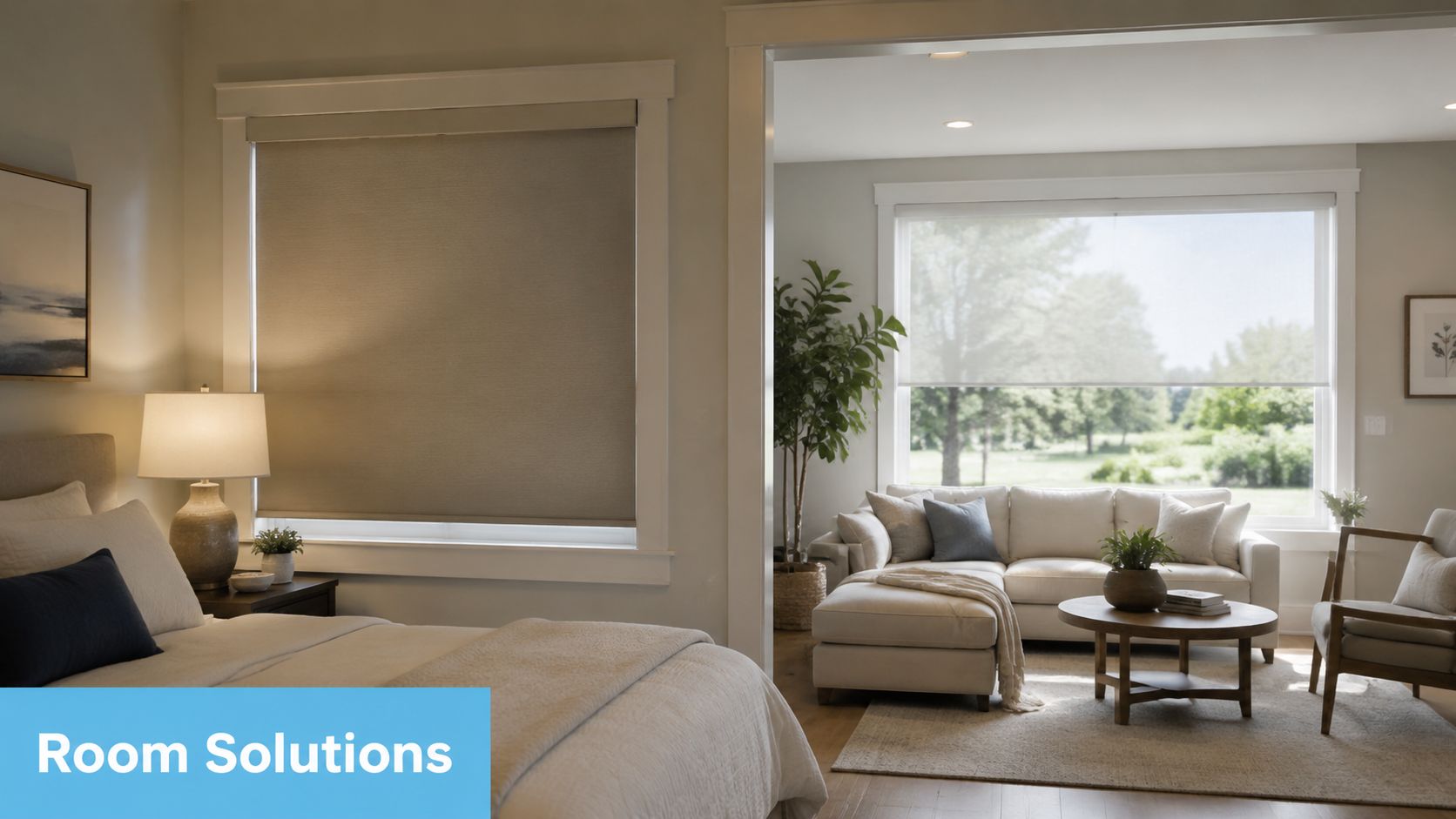
Bedrooms and media rooms
These rooms usually want control, not compromise. If you're trying to sleep in, put a baby down for a nap, or watch a movie in the afternoon, roller shades are usually the safer pick.
Blackout and room-darkening fabrics are especially useful where outside light becomes a daily annoyance. They also make more sense if the window faces a neighbour or the street.
Living rooms kitchens and home offices
These rooms tend to benefit more from daylight. You want the brightness, but not the harshness.
That's where solar shades often feel smarter. They let the room stay open and usable during the day without the washed-out screen glare that happens on laptops and TVs.
A lot of large glass areas also fall into this category. If you're dressing patio doors or wide openings and still want a sleek look, roller shades for sliding glass doors can be a practical option, especially when privacy is part of the brief.
Ground floors rentals and nighttime privacy
This is the part many generic guides skip. Solar shades can look great all day and then disappoint badly at night.
A report referenced by Blinds Hut on solar fabric privacy notes that with 5% openness solar fabrics and standard interior lighting, visual penetration from the street at night is 85%, making tenants visible. That's the key issue for ground-floor homes, rental units, and any room facing a road or shared walkway.
So what works?
- Use roller shades in bedrooms, bathrooms, and street-facing ground-floor rooms where night privacy matters most.
- Use lower-openness solar shades if you still want the solar-shade look but need more daytime privacy.
- Don't rely on solar shades alone for rentals if tenants will use the room at night with lights on.
- Consider layered solutions if you want daytime view and nighttime privacy from the same window.
Rental reality: A shade that looks perfect at noon can be the wrong choice at 9 p.m. once the inside lights are on.
For landlords, this matters even more. Tenants care about privacy immediately. If the unit faces parking areas, sidewalks, or another building, roller shades are usually the lower-risk recommendation.
Style Control and Getting the Installation Right
Both shade types can look clean, modern, and custom. You can get soft neutrals, deeper charcoals, textured weaves, cassette options, and motorized controls in either category.
Design choices that matter
With roller shades, the fabric finish changes the whole room. A blackout fabric feels crisp and functional. A light-filtering fabric feels softer and more decorative.
With solar shades, the view and the weave are part of the look. The shade doesn't just cover the window. It changes how the glass reads from inside the room.
Fit matters more than most people expect
Good shade performance starts with accurate measuring. A poor fit can leave light gaps, reduce privacy, and make an otherwise good product feel cheap.
That's especially important with blackout roller shades, where side gaps matter, and with solar shades, where alignment affects the finished look across multiple windows. Motorization also works best when the brackets, power setup, and window dimensions are planned properly from the start.
If you want help sorting out which rooms need solar shades, which need roller shades, and how to get the fit right, Blinds Hut makes the process easy with in-home consultations, real fabric samples, precise measuring, and professional installation across London, Ontario.