
Solar Roller Shades: A Buyer’s Guide for Your Home
The room looks great at 9 a.m. By 3 p.m., the sun has turned it into a bright, squinty mess, your laptop screen is useless, and the sofa by the window feels warmer than the rest of the house.
That's usually when homeowners start looking at solar roller shades. And in London, Ontario, that's a smart move, as long as you understand the trade-offs before you buy.
Table of Contents
- Your Complete Guide to Solar Roller Shades
- What Exactly Are Solar Roller Shades
- Choosing Your Fabric Openness and Colour
- The Real-World Benefits and Limitations
- Manual Motorized and Smart Shade Options
- Measurement Installation and Long-Term Care
- Why Buying Local in London Delivers the Best Results
Your Complete Guide to Solar Roller Shades
Solar roller shades solve a very specific problem. They cut harsh daylight, reduce glare, and keep your room usable without shutting out the view the way a blackout shade does.
That matters because window coverings aren't some niche finishing touch anymore. The North American window coverings market was valued at US$7.14 billion in 2025 and is projected to reach US$9.85 billion by 2034, which tells you how central light control, privacy, and energy efficiency have become in everyday home upgrades, according to Fortune Business Insights on the blinds and shades market.
For Ontario homeowners, the appeal is obvious. We deal with strong summer sun, long heating seasons, and plenty of rooms that need daylight without feeling overexposed.
Why people choose them
Some rooms need darkness. Others need balance.
Solar roller shades fit spaces like:
- Living rooms with big front windows where afternoon glare ruins TV time
- Home offices where screen reflection gets annoying fast
- Dining areas and sunrooms where you want light, not the feeling of sitting under a spotlight
- Street-facing main floors where daytime privacy matters, but you still want to see out
Practical rule: If your main complaint is glare and heat during the day, solar roller shades are usually a better fit than blackout shades.
Where they make sense in London homes
A lot of homes around London have exactly the same issue. Large rear windows, newer open-concept layouts, and west-facing rooms that get hammered late in the day.
That doesn't mean every window should get the same treatment. The right solar shade for a bright family room might be the wrong choice for a bedroom or a front office facing close neighbours.
What Exactly Are Solar Roller Shades
Think of solar roller shades as sunglasses for your windows. They filter light instead of blocking it completely, so the room stays bright but far more comfortable.
A standard roller shade usually uses a solid fabric. A blackout shade goes even further and aims for darkness and full privacy. Solar roller shades are different because they use a woven screen fabric that lets some light pass through while reducing glare, softening the sun, and preserving a daytime view.
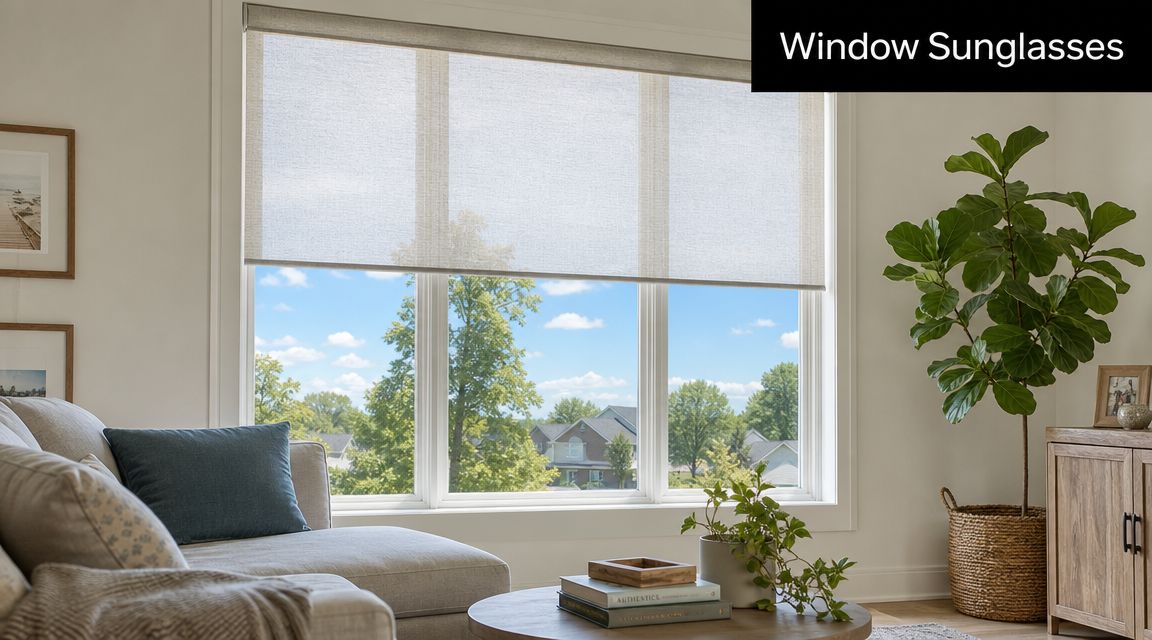
If you want to browse actual product styles, this collection of custom solar shades shows the category well.
How they work
The key idea is the fabric weave. The tiny openings in the material control how much daylight gets through, how clear your outside view stays, and how much solar energy the shade filters.
That's why two solar shades can look similar at first glance but perform very differently once they're installed. One can feel ideal in a home office. Another can still leave too much glare on a west-facing patio door.
What they are not
Solar roller shades are not blackout shades. If you want a dark bedroom, full nighttime privacy, or the strongest possible light block, this isn't the category I'd start with.
They're also not decorative drapery. They have a cleaner, simpler look and they're usually chosen because they solve practical window problems first.
They're built for comfortable daylight, not darkness.
The best use case
Solar roller shades shine in rooms where you want to keep the room open and bright. That's why they work so well in kitchens, living rooms, offices, and main-floor spaces with a nice yard view.
They're less convincing in rooms where privacy matters around the clock. That's the part many shoppers miss, and it's where a lot of disappointment starts.
Choosing Your Fabric Openness and Colour
This is the decision that matters most. Not the cassette style, not the chain colour, not the marketing label. Openness is what changes how the shade feels in your home.
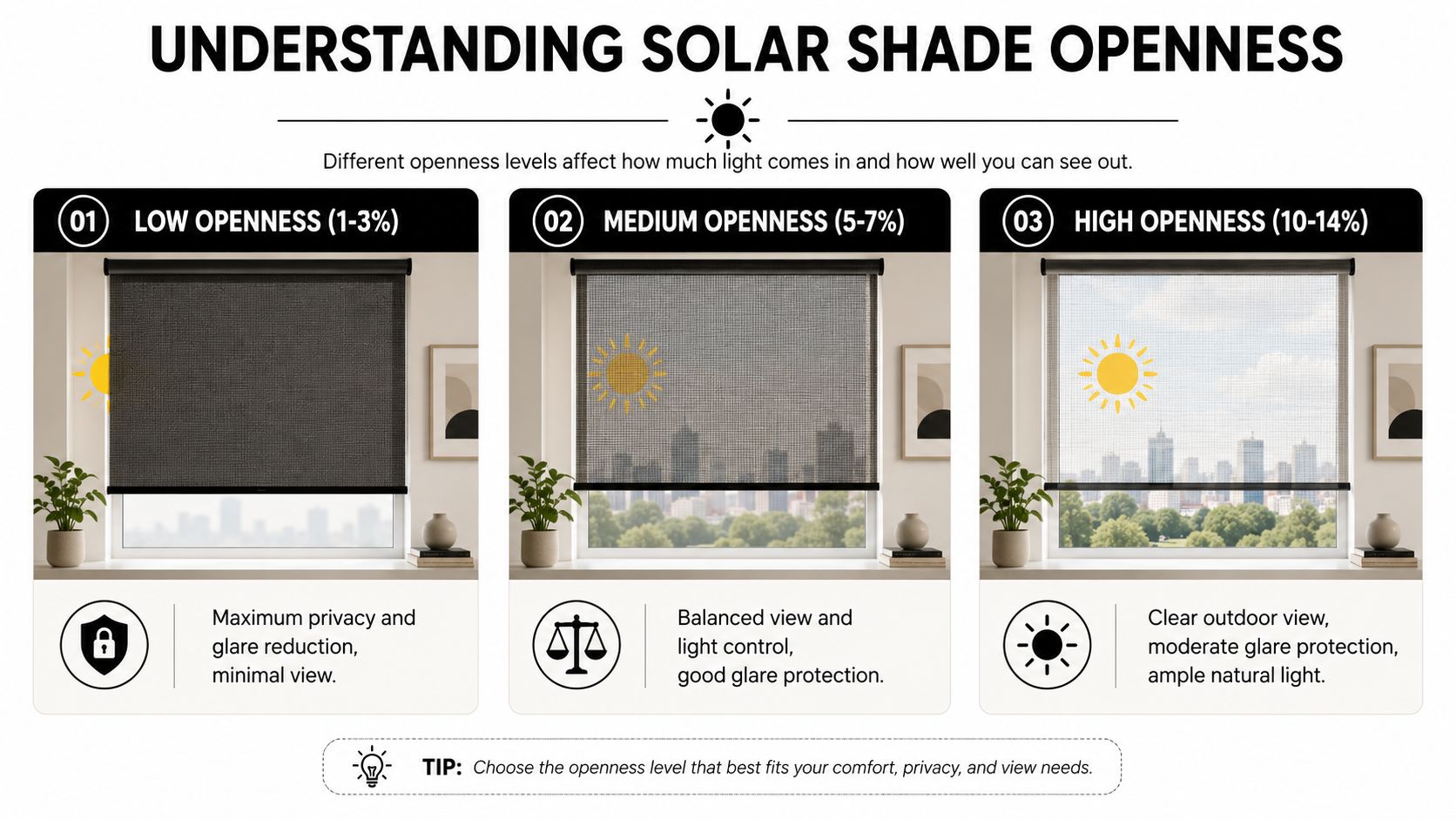
Solar shade fabrics typically range from 1% to 14% openness, and a 5% openness fabric is often treated as the middle-ground option. At that level, it blocks about 95% of UV rays, while 10% openness blocks about 90%, according to JC Licht's guide to solar shade openness percentage.
If you're comparing broader custom options for the rest of a room, this guide on designing your dream space with custom blinds and shades is useful.
What openness actually means
Lower openness means a tighter weave. That gives you more glare control, more daytime privacy, and less view-through.
Higher openness means a more open weave. You keep more of the outside view and more daylight, but you also accept more brightness and less privacy.
Here's the simple breakdown:
| Openness | What it feels like |
|---|---|
| 1% to 3% | Best for strong glare control and tougher sun exposure |
| 5% | Balanced choice for many everyday rooms |
| 10% to 14% | Better if the view matters more than maximum glare reduction |
My honest picks for Ontario rooms
I wouldn't choose by percentage alone. I'd choose by room use, window direction, and how annoyed you are by glare.
- For a home office: Go lower. A tighter fabric makes screens easier to use and cuts eye strain.
- For a west-facing family room: Stay conservative. If the room gets blasted in late afternoon, more openness usually means more regret.
- For a living room with a great backyard view: A medium or more open fabric can make sense if glare isn't severe.
- For a front room near the street: Don't overestimate privacy. Lower openness helps during the day, but it still won't solve nighttime visibility on its own.
Colour matters more than most buyers think
People often focus on openness and ignore fabric colour. That's a mistake.
Dark fabrics usually give you a clearer outward view and stronger glare control. Lighter fabrics tend to brighten the room visually and can feel softer from inside.
That choice changes the mood of the room:
- Dark charcoal or black screen fabrics usually suit offices, media-adjacent living rooms, and bright south or west exposures.
- Lighter greys or soft neutrals can work well where you want a brighter feel and less visual contrast.
- Match colour to function first, not just paint colour. A shade that looks perfect on a sample card can still be wrong if it leaves the room too bright.
If you love your view, don't automatically choose the tightest fabric. If glare drives you crazy, don't automatically choose the lightest colour.
A practical way to decide
Stand in the room at the worst time of day. Not in the morning. Not on a cloudy day. Go look when the room is at its most annoying.
Then ask:
- Do you need screen comfort or just softer light?
- Is the outside view worth protecting?
- Will this room feel gloomy in winter if the fabric is too dense?
That last question matters a lot in Ontario. We want summer control, but we also live with a long winter and a real need for daylight.
The Real-World Benefits and Limitations
Solar roller shades do a lot well. They just don't do everything, and you're better off knowing that before ordering them.
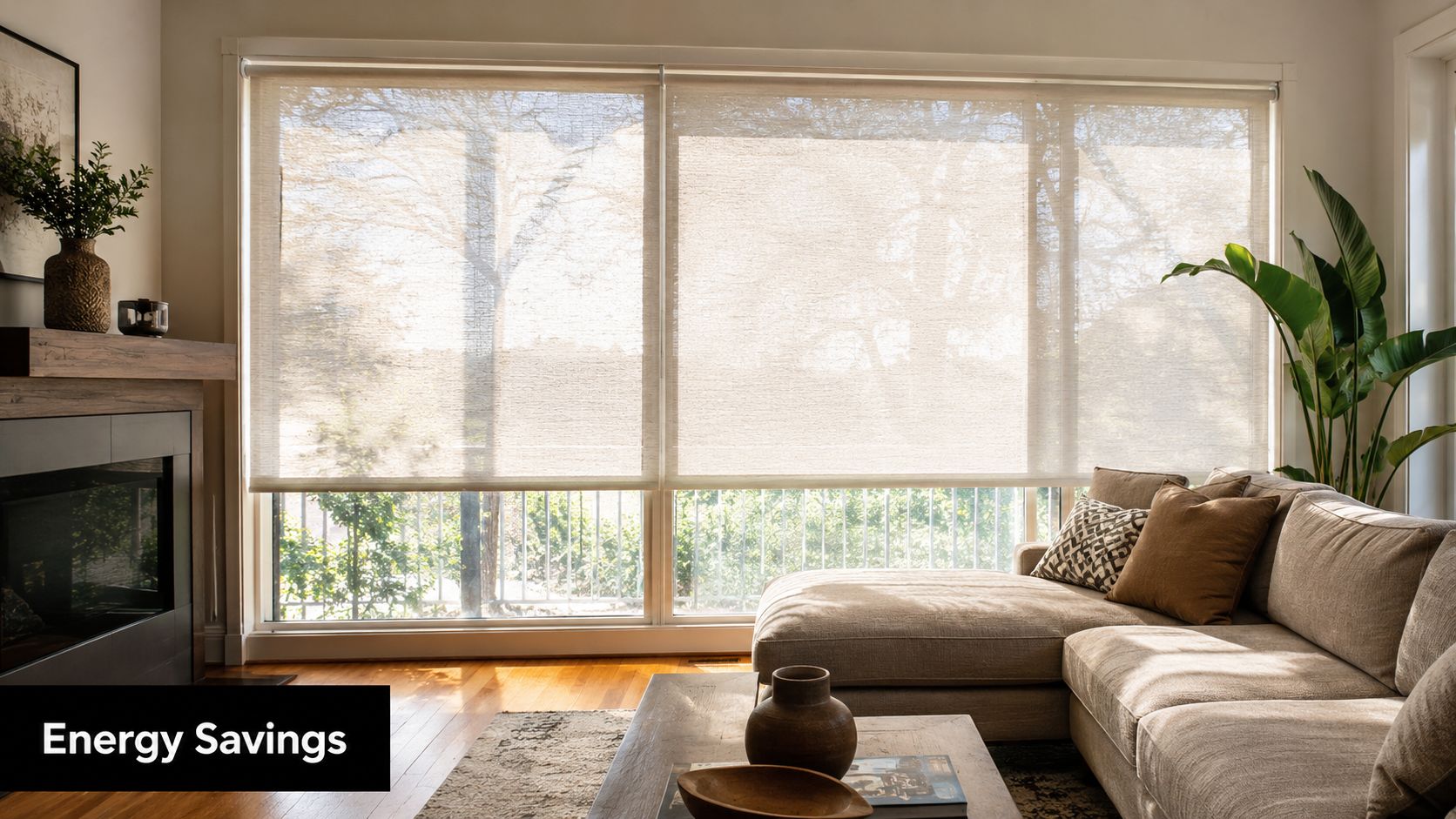
For sun-heavy spaces, they can be a strong performer. In high solar-load conditions, solar shades are documented to block 80% to 96% of UV rays while reducing glare and heat gain, according to American Blinds solar shades guidance.
Where they earn their keep
The big wins are straightforward. Rooms feel calmer, screens are easier to use, and direct sun doesn't beat up your furniture and floors as aggressively.
They're especially useful on windows that get hammered in the afternoon. If you've got west-facing glass in a family room or office, solar shades can make that space usable again without turning it cave-dark.
A few benefits stand out:
- Glare control: Great for TVs, laptops, and any room where bright reflection gets old fast
- UV reduction: Helpful if you want to be kinder to wood floors, rugs, artwork, and upholstery
- Heat management: Strong choice for sun-exposed spaces where summer comfort matters
- View retention: Better than solid shades if you still want to enjoy your yard or street view during the day
The privacy problem most people learn too late
Here's the blunt truth. Solar roller shades are a daytime privacy solution, not a full privacy solution.
At night, when your interior lights are on, they allow visibility from outside in. That's the key issue many Ontario homeowners don't get told clearly enough, and Blinds.com's explanation of roller shade opacities makes that point directly.
Street-facing rooms, ground-floor offices, and condos with close sightlines need a backup plan for after dark.
If privacy matters at night, pair solar shades with something else. Curtains, drapery panels, or a secondary room-darkening layer are usually the right answer.
The Ontario trade-off nobody talks about enough
Summer is only half the story here. The same shade that cuts harsh sun in July can also reduce welcome sunshine in January.
That's why I don't love ultra-tight solar fabrics on every window in an Ontario house. In some rooms, especially south-facing spaces that feel pleasant in winter, a medium openness can be the smarter compromise.
Think in seasons:
| Room condition | Better approach |
|---|---|
| Brutal summer glare, daily screen use | Prioritise lower openness |
| Nice winter brightness, moderate glare | Consider a middle-ground fabric |
| Room needs full privacy after dark | Add a second layer or choose a different shade type |
My recommendation
Use solar roller shades where daylight is still welcome. Don't force them into jobs they aren't built to do.
If the room needs darkness, insulation feel, or all-hours privacy, look at room-darkening or blackout options instead. That's not a knock on solar shades. It's just choosing the right tool for the room.
Manual Motorized and Smart Shade Options
The fabric gets most of the attention, but the control system changes how happy you'll be using the shade every day. A great fabric on an annoying mechanism still feels like a bad purchase.
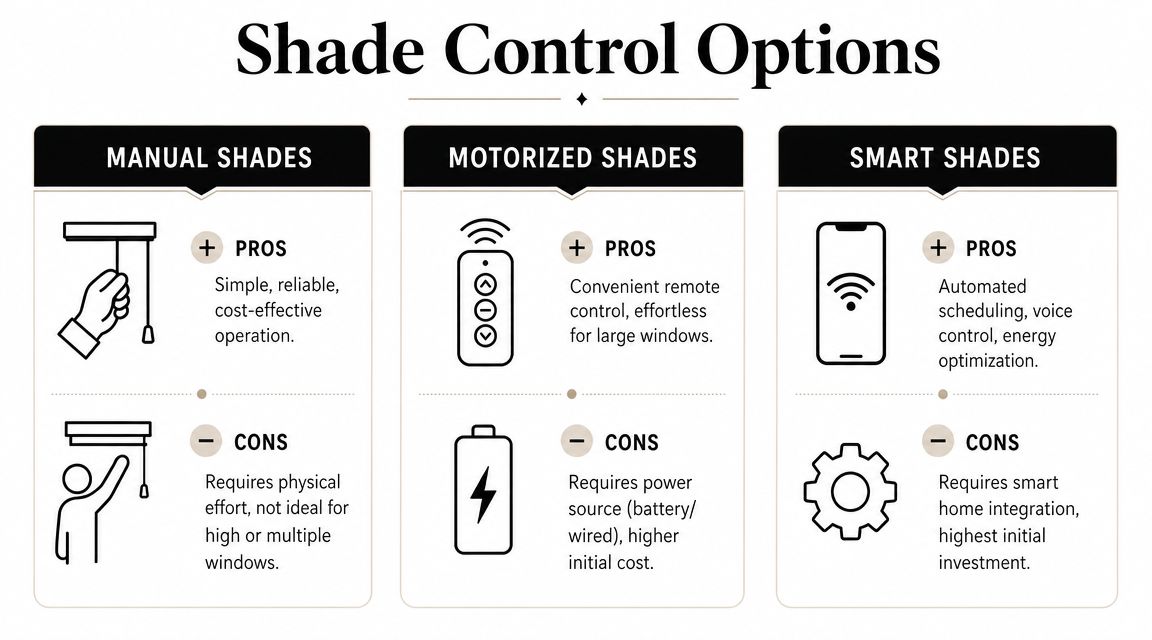
The three common routes are manual, motorized, and smart controls. None is automatically best. The right one depends on your windows, your routine, and how much convenience matters to you.
Manual shades
Manual solar roller shades are the practical choice for many homes. They're simple, familiar, and easy to live with when the windows are within reach.
They make the most sense when:
- You're covering a standard bedroom or living room window
- You want straightforward operation
- You'd rather keep the budget focused on fabric and fit
Manual doesn't mean outdated. A clean cordless setup still looks modern and works well in everyday spaces.
Motorized shades
Motorized shades are worth considering the moment your windows get tall, wide, or awkward to access. They also make sense when you're opening and closing multiple shades at the same time every day.
The benefit is convenience. Press a remote, move the shade, done.
A lot of homeowners start with motorization for one problem window, then wish they'd done the whole main floor that way.
Here's a quick look at how these options compare:
| Control type | Best for | Main drawback |
|---|---|---|
| Manual | Everyday reachable windows | Less convenient for multiple or tall windows |
| Motorized | Large, high, or frequently used shades | Higher upfront cost |
| Smart | Automated routines and connected homes | More setup, more investment |
Take a quick look at smart shade operation in action:
Smart shades
Smart shades are motorized shades with scheduling, app control, and home system integration. If you already use smart lighting, thermostats, or voice assistants, they fit naturally into that setup.
They're especially useful for routines. You can have shades lower during the hottest part of the day and open again later without touching anything.
Smart control makes the most sense when the shades are part of how you manage light every day, not just a novelty feature.
If you're not interested in apps or automation, don't force it. A well-made manual or standard motorized shade can still be the better buy.
Measurement Installation and Long-Term Care
A solar shade can have the right fabric and still look wrong if it's measured badly. Most installation problems start before the bracket ever touches the wall.
Inside mount or outside mount sounds simple until the window opening isn't square, the trim projection gets in the way, or the fabric width leaves more side gap than you expected. That's where DIY can get frustrating fast.
What usually goes wrong with DIY
People tend to measure the obvious width and ignore the details that affect fit. Then the shade arrives, clears the frame awkwardly, or sits with light gaps that feel much larger in real life than they did on paper.
The usual problem areas are:
- Inside mounts with shallow depth that don't suit the hardware well
- Uneven window openings that throw off a clean fit
- Multiple shades in one room that don't line up neatly
- Patio doors and wide windows where a small measuring error becomes very visible
If you're also comparing solid fabric treatments, these custom roller shades help show how different shade categories affect fit and coverage.
Why installation quality matters
A proper install changes the finished look more than most buyers expect. The brackets sit clean, the roll runs level, and the bottom bar hangs straight.
That's not just cosmetic. Better alignment means smoother operation and less day-to-day annoyance.
How to keep them looking good
Solar roller shades are fairly low-maintenance, but they still need basic care. Treat them like a finished product, not patio furniture.
Use common sense:
- Dust regularly with a soft cloth or vacuum brush attachment.
- Spot clean gently if needed, rather than scrubbing the fabric.
- Avoid soaking the material or using harsh cleaners.
- Check the mechanism occasionally so a small issue doesn't turn into a bigger one.
A shade that's used every day should move smoothly and hang evenly. If it doesn't, fix the issue early.
Don't ignore the warranty
Warranty matters because these are moving products, not static décor. Ask what's covered, how service works, and who shows up if something needs adjustment later.
That support matters more than a flashy sample book. A shade isn't really a good value if help disappears the second it's installed.
Why Buying Local in London Delivers the Best Results
This product looks simple online. In real homes, it isn't.
The right solar roller shade depends on window direction, room use, privacy needs, how much winter brightness you want to keep, and whether the view is worth protecting. Those are choices that make more sense when someone sees the room in person.
What local advice gets right
A local expert can judge the room at the right angle and ask better questions. Is that front office exposed after dark? Does the west-facing patio door turn the room into a hot spot? Will a darker screen improve the view or make the room feel too heavy?
Those details don't show up well in product thumbnails.
A proper in-home consultation usually gives you better answers on:
- Openness choice based on the actual light in your room
- Fabric colour under your own wall colour and flooring
- Mounting style that fits the trim and the window depth
- Control type that suits your lifestyle instead of just the price point
Why samples in your own home matter
Showroom lighting can fool you. Online photos can fool you even faster.
You need to see the fabric in your house, against your paint, in your afternoon sun. That's the only way to judge whether the shade feels calm, too dark, too open, or just right.
For London homeowners, that local, practical approach usually leads to fewer mistakes and a better finished result.
If you're ready to sort out glare, privacy, and light control without guessing, book an in-home consultation with Blinds Hut. You'll get real advice for your actual windows, samples in your own space, precise measurements, and a finished fit that works for the way you live.