75% Off All Blinds: A Homeowner’s Guide to Arched Windows
You've got an arched window that looks great from the street and drives you crazy from inside the room. Too much glare in the morning, not enough privacy at night, and every time you see a 75% off all blinds promotion, the same question comes up. Does that deal even apply to a window like yours?
Sometimes it does. The catch is that an arched window isn't an off-the-shelf purchase, so the headline discount only tells part of the story.
With a standard window, you can often compare a few basic products and move on. With an arch, the main decision comes down to shape, mounting space, light control, and whether you want the treatment to stay fixed or move.
Table of Contents
- That Beautiful Arched Window Problem
- Know Your Arch The First Step to a Perfect Fit
- Your Top 4 Options for Covering Arched Windows
- How to Measure and Mount Arched Window Blinds
- Choosing Materials for Light Control and Energy Savings
- What to Expect from Your Custom Blind Installer
That Beautiful Arched Window Problem
Arched windows create a very specific kind of headache. You love the architecture, but the minute the sun hits the glass or the neighbours' sightline lines up just right, that beautiful feature becomes the hardest window in the house to live with.
The 75% off all blinds message can get confusing. It sounds simple, but arched windows rarely are.
In Ontario, where many homes were built before 1980 and 65.6% of dwellings in London are owner-occupied, non-standard window sizes are common, which makes custom-fit pricing far more relevant than a blanket sale headline, as noted in this London housing and dwelling analysis. That's why the smarter question isn't “Is it 75% off?” It's “What's my final installed price for this exact opening?”
The biggest mistake with an arched window is buying based on the promotion first and the shape second.
A lot of homeowners assume there must be one “arched blind” that solves everything. Usually, there isn't.
Some arches take a fixed sunburst insert beautifully. Others look better when you leave the arch open and cover only the rectangular portion below. Some need a full custom solution because the curve is shallow, asymmetrical, or paired with trim that leaves very little mounting room.
A good deal can still be a good deal on a custom product. You just have to look at the right things.
- Fit matters: Even a nice product looks cheap if it leaves awkward gaps along the curve.
- Function matters: Some treatments are decorative only. Others give you daily privacy and glare control.
- Longevity matters: If the treatment is hard to use, people stop using it. Then the window looks covered, but the room still feels uncomfortable.
That's the part people often miss when they're comparing sale tags. On an arched window, the discount gets your attention. The measuring, product design, and installation determine whether you'll still like the result a year from now.
Know Your Arch The First Step to a Perfect Fit
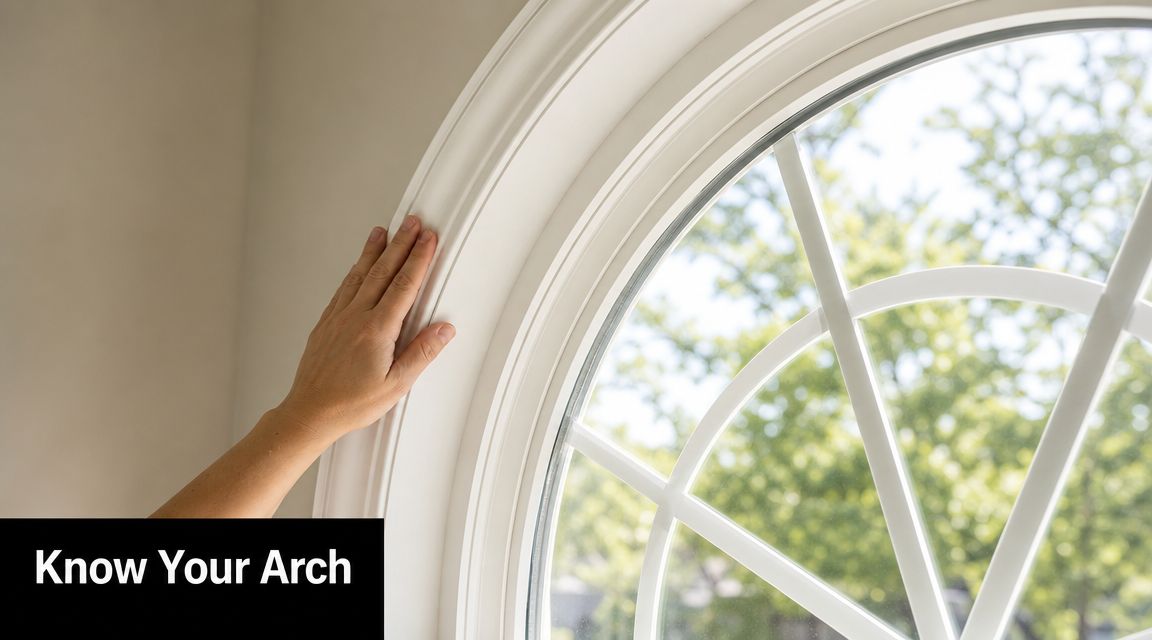
Before you look at fabrics, slats, or colours, you need to identify the actual shape of the window. Two arches can look similar from across the room and require completely different products once you start measuring.
The most common arch shapes
A perfect arch is the classic half-circle. The curve is even, balanced, and centred over the width of the opening.
An eyebrow arch is flatter and softer. It stretches wider than it rises, which changes how a blind or shade has to sit inside the frame.
A Palladian-style window usually combines a large centre arch with rectangular side sections. These can look fantastic with coordinated treatments, but they need a plan so the whole unit feels intentional.
You'll also see arched transoms above standard rectangular windows. In those cases, the best answer is often to treat the top and bottom as two separate zones instead of forcing one product to do everything.
Why shape changes the product options
The shape tells you what kind of movement is realistic. A tight half-circle may suit a fixed insert very well, while a shallow eyebrow often works better with a treatment below the arch and the upper curve left uncovered.
The frame depth matters too. Inside-mount products need enough room for brackets, headrails, and clean alignment. If the trim is decorative or the drywall return narrows toward the curve, your choices shrink fast.
Practical rule: If you can't clearly describe the shape, you're not ready to compare products yet.
A quick room check helps narrow things down:
- Check the light pattern: Morning glare from an east-facing arch is a different problem than late-day privacy on a street-facing front room.
- Look at the trim depth: Deep frames usually give you more inside-mount flexibility.
- Notice what sits below the arch: A separate rectangular section opens up far more functional options.
- Be honest about access: If the top section is too high to reach comfortably, a fixed upper treatment may make more sense than something you won't use.
Arched windows punish guesswork. The homeowners who end up happiest are usually the ones who start with shape and mounting conditions, not the catalogue cover.
Your Top 4 Options for Covering Arched Windows
There isn't one best answer for every arch. There are a few dependable approaches, and each one solves a different problem.
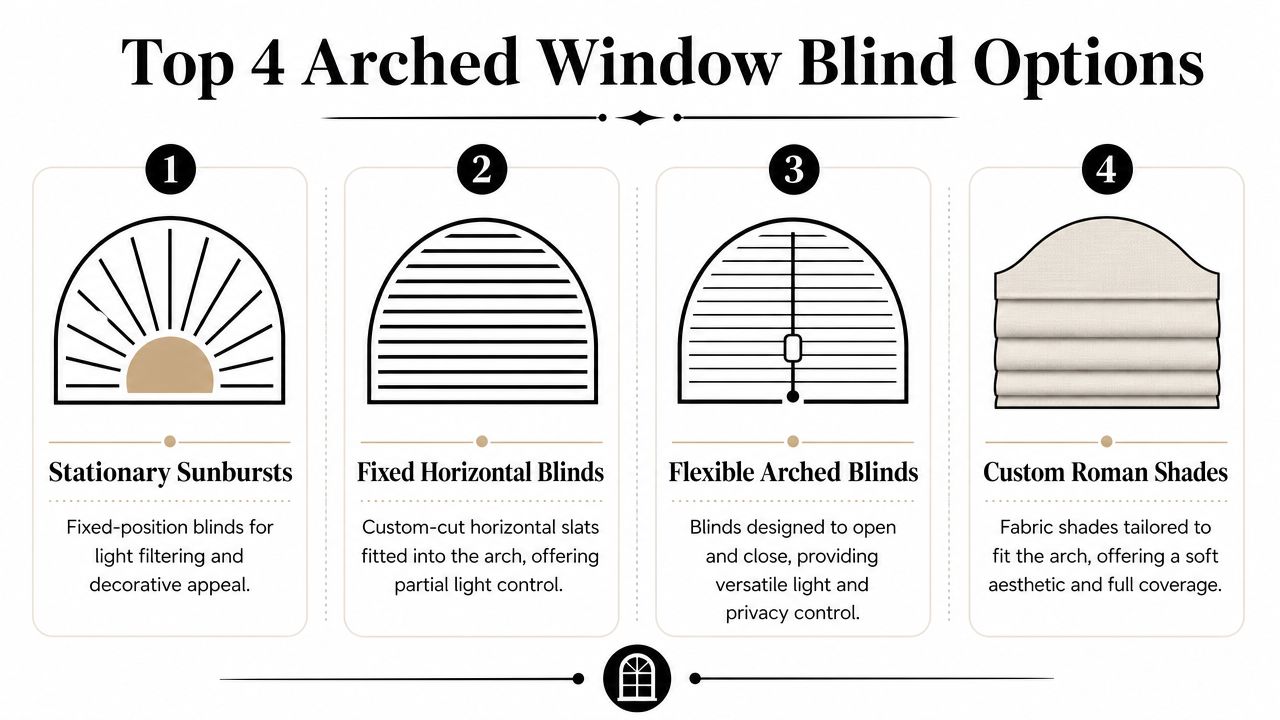
Option 1 Stationary sunbursts
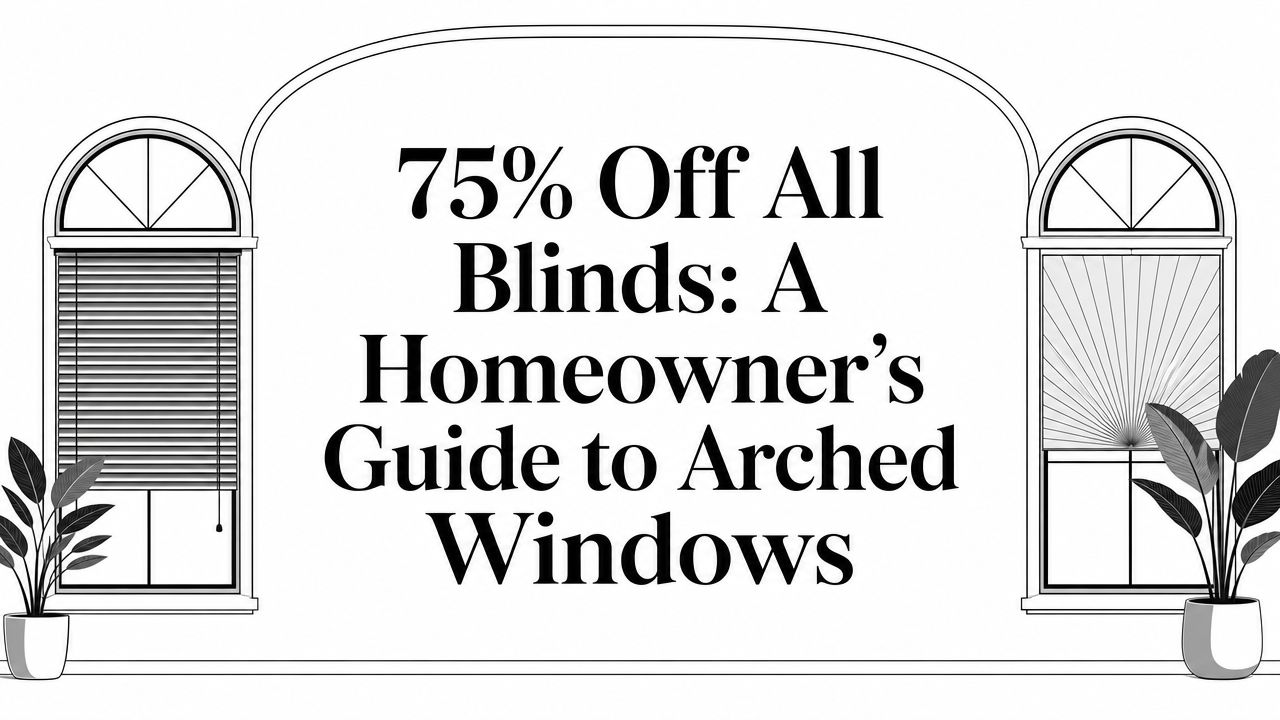
This is the classic arched insert with fan-shaped pleats or slats radiating outward. It stays in place and follows the curve neatly.
It's a strong choice when you want to soften incoming light but don't need the top section to open and close. Sunbursts suit foyers, stair landings, and formal rooms where privacy matters less than appearance.
The downside is simple. They don't offer true day-to-day adjustability.
Option 2 Fixed horizontal blinds
These are custom-cut horizontal slats shaped to the arch. They create a more structured, clean-lined look than a soft sunburst and can pair nicely with horizontal blinds below.
They work best when the homeowner wants visual consistency across the whole window wall. They are less ideal if the goal is active operation in the arched section, because many versions are fixed once installed.
Option 3 Operable treatments on the lower section
This is one of the most practical choices. You leave the arch visible and install a blind or shade on the rectangular part below.
That lower treatment does the heavy lifting for privacy and light control, while the upper arch keeps its architectural character. In bedrooms and street-facing rooms, this often performs better than trying to force a moving product into the curve itself.
Top-down/bottom-up shades are especially useful because they offer added light control, privacy, and style, letting you block the lower sightline while still bringing in daylight from above, as explained in this top-down/bottom-up buying guide. For anyone considering fabric options below an arch, it also helps to compare styles like custom Roman shades for a softer finished look.
If privacy is the real problem, the lower rectangular section is often where the solution belongs.
Option 4 Custom shutters or soft shades for full coverage
When the goal is a finished architectural look, custom shutters are hard to beat. They can be built to follow the arch and give the opening a permanent, furniture-grade appearance.
Soft custom shades can also work, depending on the window shape and mounting space. They bring a gentler look than shutters and may suit bedrooms or living spaces where hard slats feel too rigid.
These options usually ask for the most precision. They also put more pressure on measuring, because every curve, spring line, and trim detail shows.
Arched Window Treatment Comparison
| Solution | Best For | Functionality | Typical Cost |
|---|---|---|---|
| Stationary sunbursts | Decorative arches, entryways, high windows | Fixed light filtering, limited privacy control | Lower to mid, depending on customization |
| Fixed horizontal blinds | Coordinated look with horizontal blinds below | Partial control, often fixed in place | Mid |
| Operable treatments on the lower section | Bedrooms, street-facing rooms, everyday privacy needs | Strong daily usability and flexible light control | Low to mid, depending on product |
| Custom shutters or soft shades for full coverage | Feature windows where finish quality matters most | Varies by product, often best visual result | Mid to high |
A sale can absolutely help on any of these. But once you're dealing with an arch, the right option is the one that matches how you use the room, not the one that sounds best in a promo banner.
How to Measure and Mount Arched Window Blinds
Arched windows look graceful. Measuring them does not.
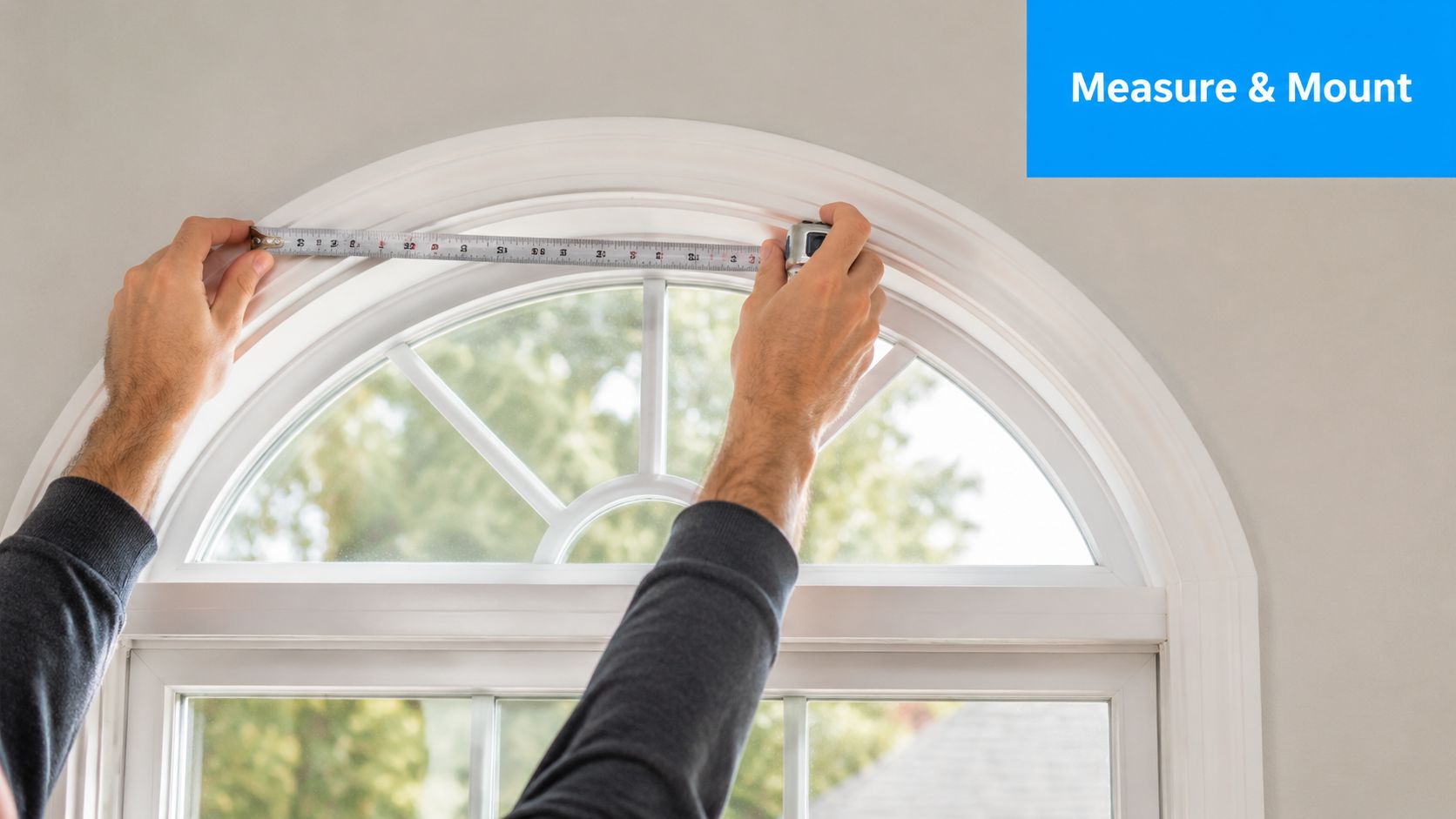
A standard window usually asks for width, height, and maybe depth. An arch can ask for width at the base, total height, spring line height, curve height, frame depth, and trim conditions. If the window isn't perfectly symmetrical, you also need to know where it's off.
Inside mount or outside mount
An inside mount sits within the window frame. It looks cleaner and more built-in, but it depends on having enough depth and a reasonably true opening. If the frame narrows, bows, or has decorative trim pushing into the space, inside mounting gets tricky fast.
An outside mount sits on the face of the trim or wall area around the opening. It gives you more flexibility when the inside opening is shallow or uneven, and it can help hide small imperfections in the frame.
If you're comparing styles, this inside mount guide for custom blinds gives a useful reference point for how mount choice changes the final look.
- Choose inside mount when: You have enough depth, the frame is square enough, and you want a precise finish.
- Choose outside mount when: You need better coverage, more forgiveness, or extra room for hardware.
- Be cautious when: The arch trim is ornate, the drywall return is uneven, or the window was renovated years after the home was built.
What to measure before you order
For a true arch, start with the full width at the base of the curve. Then measure the height from that base line to the highest point of the arch.
You also need to identify where the curve begins. On some windows, the arch springs directly from the corners. On others, a short vertical section rises first, then the curve starts above that.
A visual walkthrough helps more than a long description, especially if this is your first time dealing with spring lines and mount points.
A measuring error on a rectangular blind can be annoying. On an arch, it can make the whole product unusable.
The most common problems show up after installation:
- Gaps along the curve: The shape was measured loosely or the frame wasn't checked properly.
- Crowded hardware: The headrail or bracket placement ignored shallow depth near the top.
- Uneven visual lines: The window itself isn't centred, but the treatment was manufactured as if it were.
If you're very comfortable with a tape measure and can sketch the opening accurately, you can gather rough dimensions yourself. For ordering a custom arched treatment, precision matters enough that most homeowners are better off treating their own measurements as preliminary, not final.
Choosing Materials for Light Control and Energy Savings
Material choice changes how the room feels every day. The same arch can feel bright and soft with one product, harsh and exposed with another, or calm and insulated with the right fabric or cell structure.
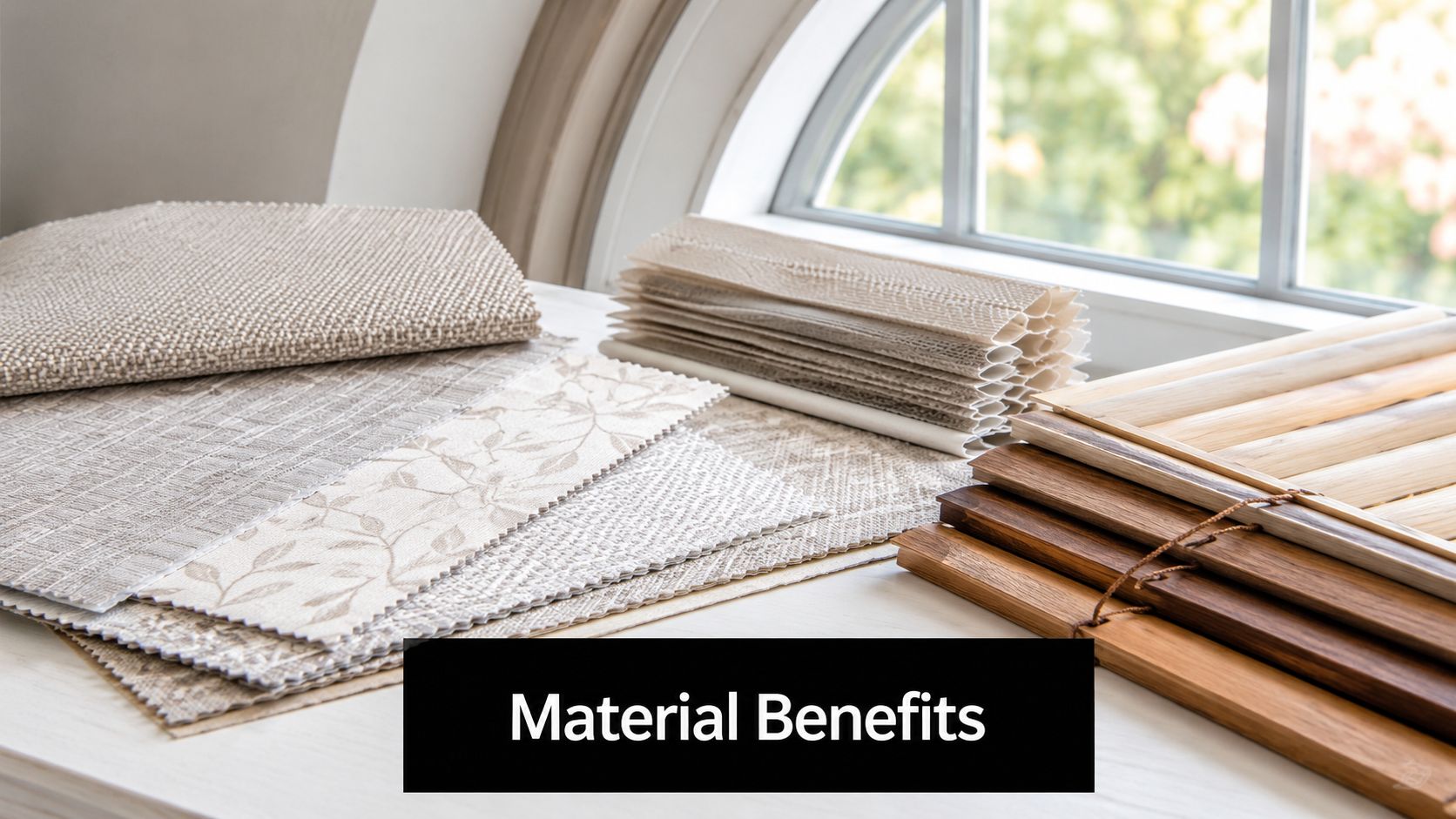
What each material does well
Wood and faux wood blinds give you crisp lines and a familiar look. They're popular in living rooms, offices, and spaces where trim detail matters.
Fabric shades soften the window visually and handle glare well. Depending on the fabric, they can go from light filtering to room darkening.
Cellular shades are worth a close look when comfort is part of the goal. Their structure is designed around insulation as much as privacy, so they often make more sense than a basic blind in colder rooms.
If you're deciding between privacy and room darkening, this guide to blackout shades for comfort and privacy is a useful next comparison.
Why daily use matters more than most people think
In Canada, an estimated 75% of residential window coverings remain in the same position every day, which matters because coverings only help with comfort and thermal performance when people move them as conditions change, according to the U.S. Department of Energy's window-covering guidance. In practical terms, a well-fitted insulating treatment can help, but only if it's easy enough to use consistently.
That's why the best material on paper can still be the wrong product in real life. If the treatment is awkward to raise, hard to reach, or annoying to align, it tends to stay put.
The best-performing window treatment is usually the one people will actually open and close every day.
A few straightforward material decisions help:
- For strong sun exposure: Look for materials that reduce glare without making the room feel flat and gloomy.
- For bedrooms: Prioritise privacy first, then decide how much light filtering you still want during the day.
- For colder rooms: Favour snug fit and insulating designs over decorative slat style alone.
- For humid spaces: Use materials that won't warp, sag, or age poorly near moisture.
A 75% off all blinds offer needs a second look. If the discounted product isn't the right material for the room, you haven't saved money. You've just bought a cheaper mismatch.
What to Expect from Your Custom Blind Installer
A good installer should make the process feel clear, not mysterious. You shouldn't have to guess what's included, what counts as custom, or whether the sale applies to the actual product you need.
What happens during the visit
The first appointment should focus on the window, the room, and how you use the space. Samples should be viewed in your own lighting, because colour and opacity can shift a lot between a showroom wall and a real home.
The installer should measure every relevant point of the arch and check for practical issues like trim depth, handle clearance, uneven plaster, and whether the lower section needs separate treatment. This is also when you should get honest feedback if your first idea isn't the best fit.
A useful quote doesn't just show a discount. It spells out what's being priced, what's custom, what's optional, and what the installed solution includes.
What a good installer should clarify before you buy
Blinds are a major category in the residential market. The U.S. Consumer Product Safety Commission states that 62% of all residential window coverings are blinds, and that more than 95% of vinyl blinds and more than 75% of metal blinds are produced overseas, which helps explain why locally made custom products can be positioned around lead times and quality control, according to this CPSC window-coverings cost analysis.
That matters because custom work depends on consistency. If a treatment is being built for a curved opening, you want clear communication about manufacturing, finishing, and who stands behind the final fit.
Ask direct questions:
- What exactly is discounted: Base product only, or also custom sizing and installation?
- How will the arch be treated: Separate insert, unified look, or lower section only?
- Who is responsible for final measurements: You, the installer, or the manufacturer?
- What happens if the fit is off: Is there a remake process and how is it handled?
A trustworthy installer will talk you out of the wrong product, even when it would be easier to just sell it.
That's usually the difference between a smooth project and a frustrating one. The sale gets attention, but the installer's honesty is what protects the outcome.
If you're weighing 75% off all blinds for an arched window, the smartest next step is to get your exact opening assessed before you commit. Blinds Hut helps London, Ontario homeowners compare custom options in person, see samples in their own space, and get a clear quote based on fit, function, and final installed price.