
Cordless Blinds Canada: Top Choices & Guide 2026
If you're staring at old blinds with tangled pull cords, uneven bottoms, or a look that dates the whole room, you're not alone. A lot of homeowners start shopping for cordless blinds after one annoying morning of fighting a crooked shade, or after realising those hanging cords don't belong around kids, pets, or busy family spaces.
For most Canadian homes, cordless blinds now make the most practical sense. They clean up the window line, feel easier to use day to day, and fit the way people live now. The part that often gets skipped is the practical side. Which styles hold up best, which ones help with comfort in winter, and what the Canadian rules mean when you're replacing blinds in an existing home.
Table of Contents
- Your Simple Guide to Cordless Blinds
- What Are Cordless Blinds and How Do They Work
- Understanding Cordless Blind Safety Regulations in Canada
- The Real Pros and Cons of Going Cordless
- Choosing Your Style and Material for Canadian Homes
- How to Measure for a Perfect Cordless Blind Fit
- Finding the Right Cordless Blind Supplier
Your Simple Guide to Cordless Blinds
Cordless blinds are exactly what they sound like. You raise and lower them without a dangling lift cord, usually by guiding the bottom rail or using a built-in operating system that stays hidden inside the blind.
That sounds simple, but the buying decision usually isn't. The decision isn't typically between “good” and “bad” blinds. They're choosing between zebra, roller, cellular, faux wood, blackout, light-filtering, inside mount, outside mount, manual, and sometimes motorized.
The fastest way to narrow it down is to think about the room first, not the product name.
- Bedrooms need control: If the room gets early sun or streetlight, look closely at blackout-friendly options.
- Living rooms need flexibility: You may want privacy in the daytime without making the room feel closed off.
- Kitchens and bathrooms need durability: Moisture, splashes, and frequent cleaning matter more than decorative detail.
- Large windows need realistic operation: Some cordless styles feel great on standard windows but less convenient on oversized openings.
Practical rule: Start with how the room is used at 7 a.m. and 7 p.m. That tells you more than any showroom label.
For anyone researching Cordless Blinds Canada, there's also a Canada-specific layer to consider. Safety is part of the decision, but so is climate. Window coverings affect comfort, light, privacy, and how finished a room feels through every season.
A good cordless blind should do three jobs well. It should operate smoothly, fit the window properly, and suit the room's daily use. If one of those is off, the blind may still look fine in a photo, but it won't feel right once you live with it.
What Are Cordless Blinds and How Do They Work
Cordless blinds work by replacing the free-hanging lift cord with an internal operating system. Instead of pulling a cord to move the blind, you guide the shade with your hand and the hidden mechanism helps hold it in position.
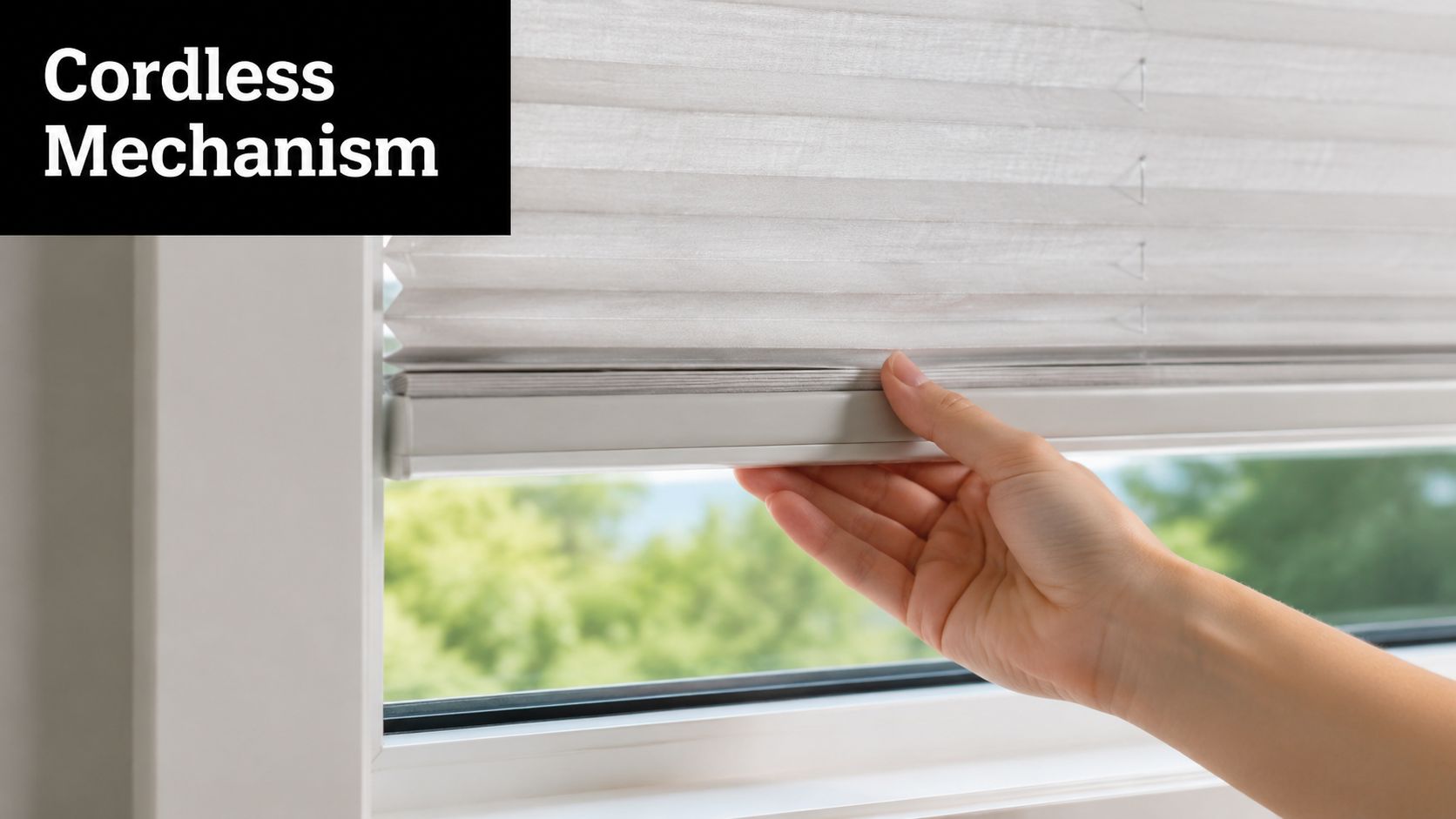
The mechanism behind the clean look
The easiest way to think about it is like a retractable measuring tape. You move it to where you want it, and the internal system controls the tension and position.
From a mechanical standpoint, cordless blinds typically use an internal lift mechanism in the headrail or bottom rail, so the load moves through spring, clutch, or friction systems rather than a hanging cord, as explained in SelectBlinds' overview of how cordless blinds and shades work. That hidden design is what gives cordless blinds their cleaner look and their simpler day-to-day use.
Different product types handle this a little differently.
- Roller shades usually move in a smooth up-and-down motion with a spring or clutch-assisted feel.
- Cellular shades often feel light in the hand because the fabric structure is lightweight.
- Zebra blinds can be cordless too, but alignment matters more because the bands need to sit properly as they move.
- Faux wood and horizontal blinds may use a cordless lift system for raising and lowering while tilt works through a wand or built-in control, depending on the product.
Why fit matters more with cordless systems
Cordless doesn't mean maintenance-free. It means the blind depends more on proper balance.
If the blind is measured carelessly, mounted out of level, or ordered in the wrong size, the problems show up faster. You may see drifting, uneven lift, extra resistance, or premature wear on the internal parts.
That's why cordless products reward precision. A good fit makes them feel effortless. A bad fit makes them feel fussy.
A cordless blind should move evenly with light guidance. If you have to tug, twist, or correct one side every day, something is off.
This is especially important on wider windows, heavier materials, and rooms where the blind gets used morning and night. The mechanism can only do its job well if the blind was built and installed to suit the opening.
Understanding Cordless Blind Safety Regulations in Canada
The biggest shift in the Canadian market wasn't fashion. It was regulation.
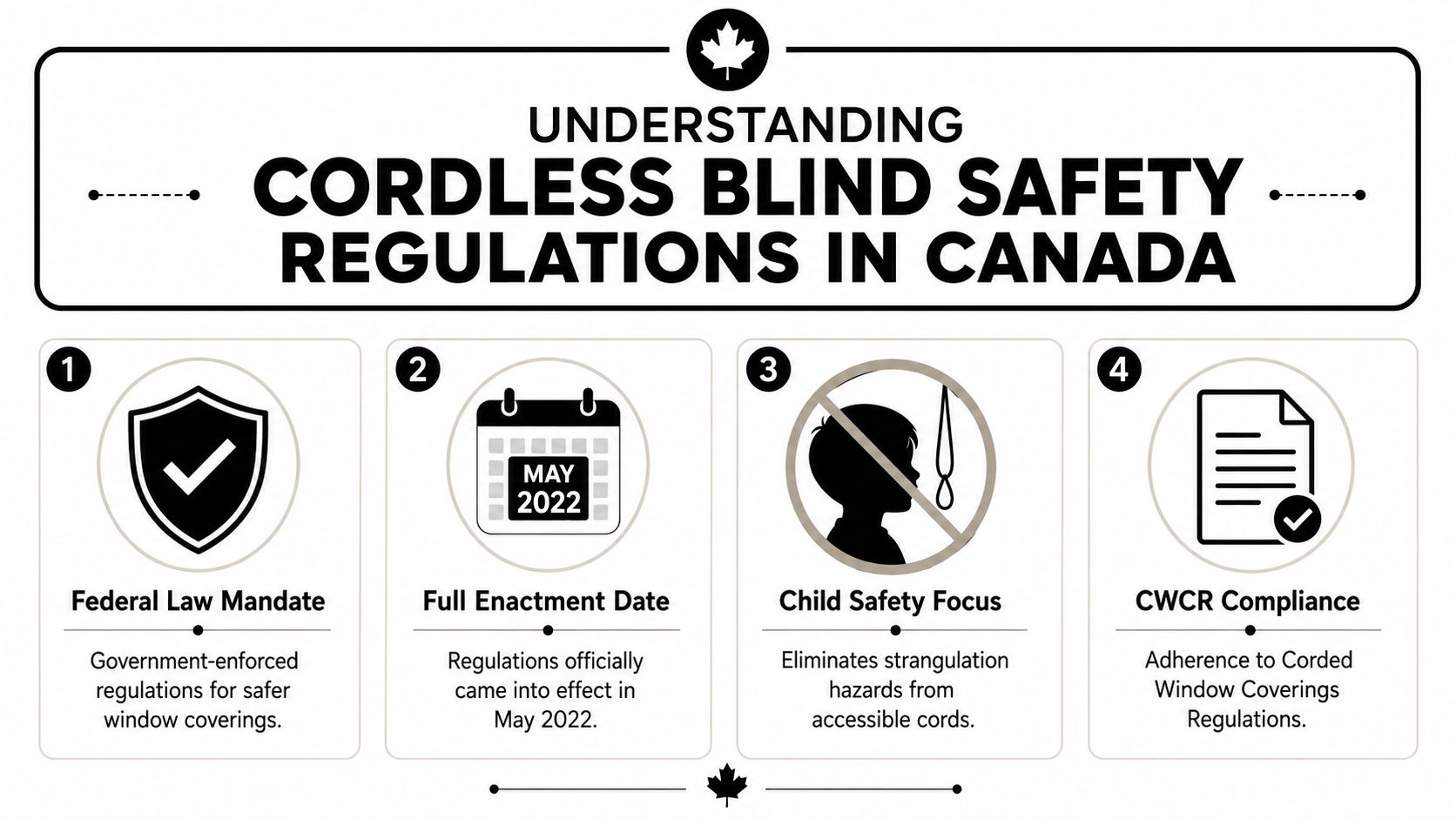
What changed in Canada
Canada's federal Corded Window Coverings Regulations came into full effect in May 2022, and Health Canada says window coverings sold or manufactured in Canada must be cordless or have inaccessible cords to eliminate strangulation hazards, as outlined in this guide to Canada's new cordless window covering laws.
That matters because it changed cordless blinds from an upgrade into the practical baseline for new products sold in Canada. If you're shopping for new blinds in Ontario, you're buying in a market shaped by that federal rule.
Health Canada also identifies long, accessible cords as a serious child-safety risk. The guidance is direct. New products need to remove that hazard through cordless design or inaccessible cords.
What that means in a real home
This doesn't mean every homeowner has to rip out older coverings overnight. It does mean old corded blinds deserve a hard look, especially in homes with young children or in spaces where children sleep or play.
Health Canada reports that in Canada there have been many strangulation deaths and near-fatal incidents linked to window coverings with long, accessible cords, and advises that the safest option is a window covering without long accessible cords, according to Health Canada's blind cord safety page. That same guidance is what pushes many families, landlords, and renovators toward cordless retrofits.
A few practical takeaways matter most:
- Buying new is simpler now: If you're replacing blinds, cordless is usually the clearest path for safety-aligned products.
- Older corded blinds are still a household decision point: They may still be in place, but they're no longer the safety standard.
- Priority rooms come first: Bedrooms, nurseries, and play areas should move to the top of the list.
- Rental turnovers and renovations are a natural time to upgrade: That's often when property owners address both appearance and risk at once.
One thing that confuses buyers is the wording they see online. Some pages say corded blinds are “banned” without explaining what that means in practice for existing homes. The useful way to read the Canadian change is this. The rule shapes what can be sold or manufactured, and it sets a clear safety direction for replacement decisions.
If you're shopping for new blinds in Canada, cordless isn't just a style preference anymore. It's the category the market has moved toward for safety and compliance.
The Real Pros and Cons of Going Cordless
Cordless blinds solve a lot of problems, but they aren't perfect for every opening. The best results come from matching the system to the room instead of assuming one lift style fits every window.
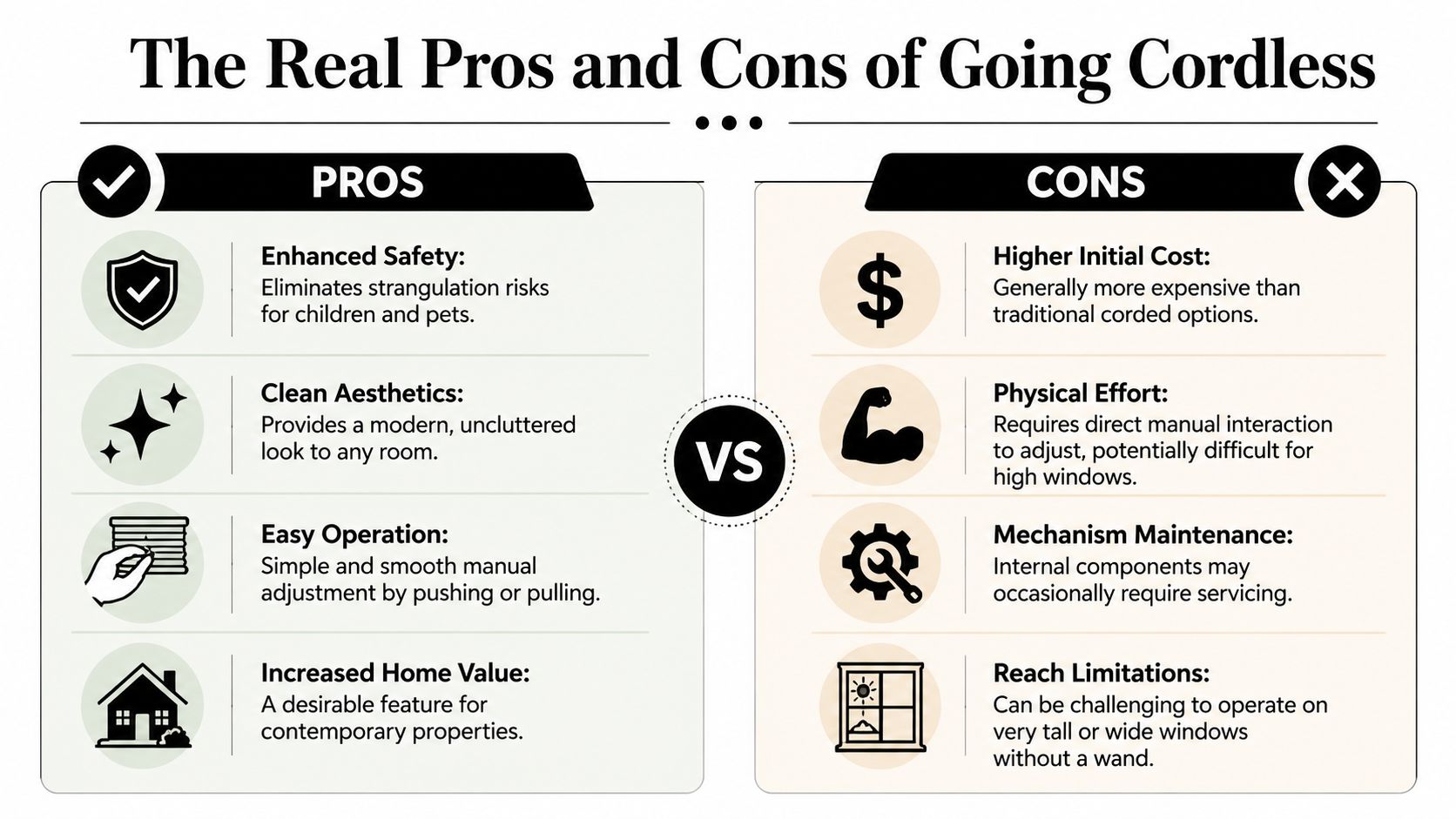
Where cordless works best
The first advantage is obvious. No hanging lift cord means a cleaner, safer setup.
The second advantage is one homeowners often notice right away. Rooms look more finished. Cordless blinds remove visual clutter, which helps modern spaces, smaller windows, and open-concept rooms feel more organised.
A few practical wins stand out:
- Safer daily use: The cord hazard is removed from normal operation.
- Cleaner sightlines: Nothing hangs in front of the glass.
- Easy for everyday windows: Standard bedroom, office, and living room windows usually suit cordless systems well.
- Good fit for design upgrades: If you want a newer look without going fully motorized, cordless often hits the sweet spot.
For windows that are too high, oversized, or part of a home automation plan, some homeowners skip manual cordless and go straight to smart blinds in Canada.
Where homeowners should pause before ordering
Cordless systems can cost more upfront than simple old-style corded products. That's not a flaw, but it is part of the buying decision.
They also ask more from the product build and installation. If the mechanism is hidden inside, repairs usually aren't a casual DIY fix. And on very tall or wide windows, lifting a manual cordless blind every day can become less convenient.
Here's the honest trade-off table:
| Situation | Cordless fit |
|---|---|
| Standard bedroom window | Usually excellent |
| Child's room or playroom | Strong choice |
| Bathroom with humidity | Depends more on material than lift style |
| Very wide front window | Needs careful product selection |
| Hard-to-reach stairwell window | Often better motorized |
The weak point isn't “cordless” itself. The weak point is using the wrong cordless product on the wrong window. That's where homeowners get frustrated.
Choosing Your Style and Material for Canadian Homes
Shoppers don't shop by saying, “I need a spring-assisted lift mechanism.” They say, “The bedroom is freezing in winter,” or “I want privacy in the front room without losing all the daylight.” That's the right way to choose.
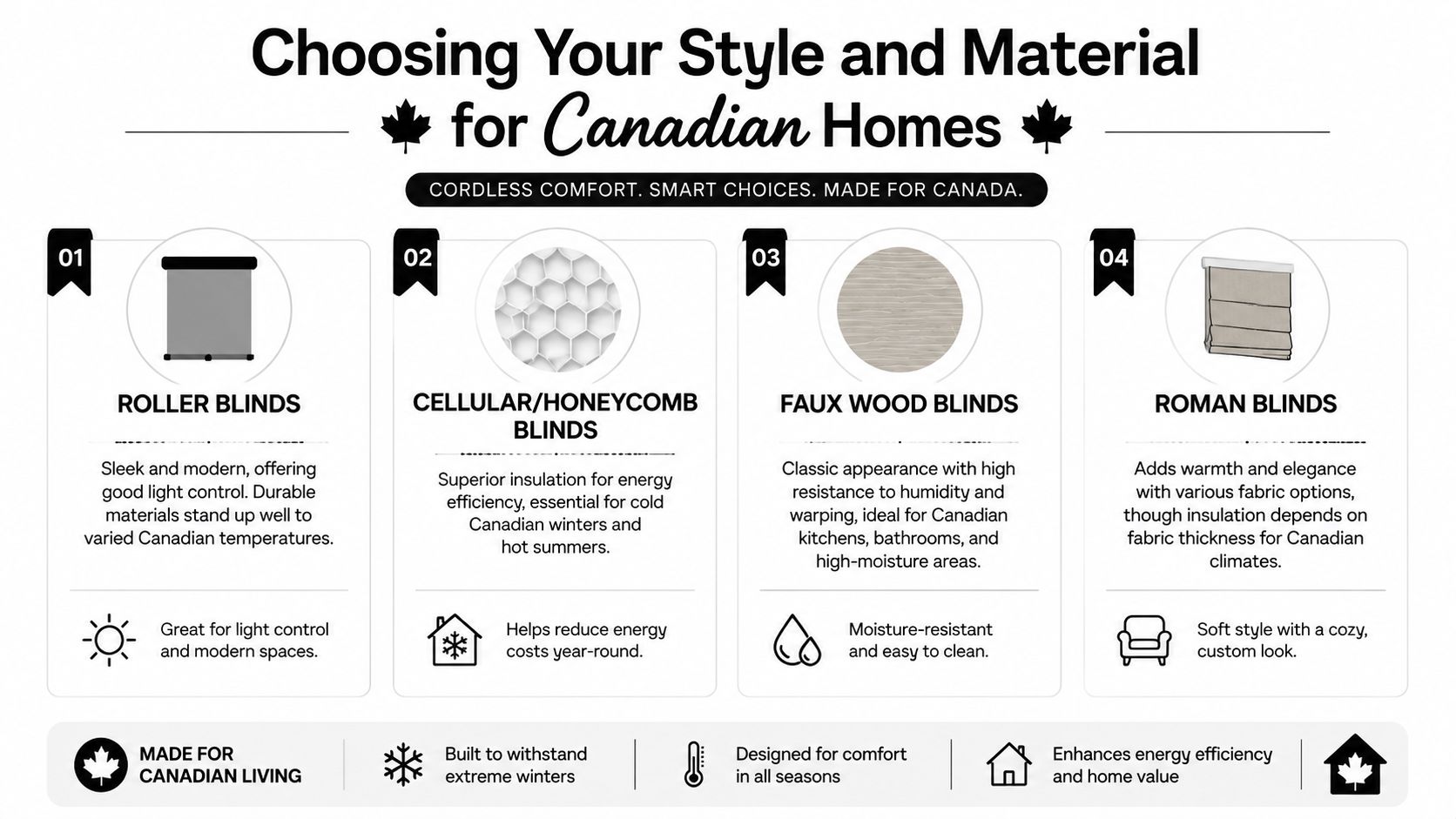
Canadian homes ask more from window coverings because comfort changes so much through the year. Existing content often skips practical performance questions like how cordless systems behave on larger windows or in rooms where temperature control matters. That gap matters because National Resources Canada guidance emphasizes that window coverings affect heat gain and loss, a point discussed in this Hunter Douglas buyer's guide on cordless window treatments.
Living rooms bedrooms and main spaces
In a typical living room, roller shades are the cleanest, simplest option. They suit modern homes, work well with large expanses of glass, and are easy to keep visually quiet. If the room gets heavy afternoon sun, fabric choice matters just as much as the lift style.
Zebra blinds are popular because they give you a flexible middle ground. You can line up the sheer and solid bands for filtered light or shift them for more privacy. They work especially well in front-facing rooms where you want some daytime softness without closing the room off.
For bedrooms, cellular shades usually earn the strongest practical case. Their honeycomb-style structure is a smart fit for homeowners focused on comfort, privacy, and better light control. If thermal performance matters in your home, it's worth looking closely at cellular shades designed for Canadian homes.
In a Canadian bedroom, the blind that looks softest isn't always the one that performs best. Cold morning comfort often points buyers toward cellular fabric construction.
Kitchens bathrooms and harder-working rooms
Kitchens need something easy to wipe down and easy to operate with one hand. Cordless roller shades are often the least fussy option here, especially when the window sits over a sink or breakfast area.
Bathrooms call for privacy first, but moisture matters almost as much. Faux wood-style cordless blinds can make sense in these spaces because they bring a classic slatted look without the same concern around humidity that some natural materials can bring.
For a quick room-by-room view, this is how many homeowners sort it out:
- Front living room: Zebra blinds for layered light and privacy.
- Bedroom: Cellular shades for comfort and blackout-friendly options.
- Kitchen: Roller shades for easy cleaning and simple lines.
- Bathroom: Faux wood or moisture-friendly materials.
- Basement office: Light-filtering roller or cellular shades, depending on glare and comfort needs.
Roman shades can work beautifully too, especially when you want softness and warmth. Just be honest about the room. In a hard-working kitchen or humid bath, a decorative fabric-first product may not be the easiest long-term choice.
How to Measure for a Perfect Cordless Blind Fit
Good cordless blinds depend on good measuring. If the fit is off, you'll notice it in operation, light gaps, and how square the blind looks once it's mounted.
Use a steel tape measure, not a fabric sewing tape. Write each measurement down immediately and label every window clearly.
Inside mount basics
An inside mount sits within the window frame. It looks neat and built-in, but it gives you less room for error.
Measure width at the top, middle, and bottom of the inside frame. Measure height on the left, centre, and right. Use the narrowest width and the tallest height when recording your opening, then follow the supplier's ordering instructions because some products require their own deduction rules.
A few points matter here:
- Check frame depth: Some cordless products need enough depth to sit properly inside the opening.
- Measure the actual frame, not old blinds: Existing hardware can throw you off.
- Watch for obstructions: Cranks, handles, and trim details can affect fit and operation.
Measure twice, then check one more time if the blind is going on a wide window. Cordless systems are less forgiving when the opening is out of square.
Outside mount basics
An outside mount overlaps the frame or trim. It's often the better choice if your window opening is shallow, uneven, or you want stronger light control.
For width, measure the area you want the blind to cover, not just the glass. For height, measure from the planned top mounting point down to where you want the blind to end. That could be just below the sill, at the sill, or lower for a taller visual line.
Outside mount often works well when you want to:
- Hide an uneven frame
- Cover more of the window for privacy
- Reduce visible light gaps
- Create a taller-looking window
If a window is extra wide, unusually tall, or part of a bay or corner setup, get help before ordering. That's where small measuring mistakes turn into noticeable operating issues.
Finding the Right Cordless Blind Supplier
The supplier matters almost as much as the product. A well-made cordless blind can still disappoint if the measurements are rushed, the installer skips details, or the seller can't explain how the mechanism suits your window.
What a good supplier should handle
Look for a company that does more than take an order. You want someone who can assess the room, explain trade-offs, and flag problems before the blinds are made.
A strong supplier usually offers:
- In-home consultation: Samples look different under your own daylight and wall colour.
- Accurate measurement: Many window treatment problems begin or end here.
- Installation that suits the product: Cordless systems need level, secure mounting.
- Clear warranty support: You should know what's covered on mechanisms and hardware.
- Help with product matching: A good advisor won't put the same blind on every window just to simplify the sale.
Store-bought options can work for basic situations, but custom-fit products usually perform better where sizing, finish, and smoother operation matter most. That's one reason many homeowners compare off-the-shelf options with custom window coverings over store-bought blinds in London, Ontario.
Questions worth asking before you order
You don't need a long interview. You do need direct answers.
Ask questions like these:
- Are these blinds made for Canadian homes? You want a product chosen with climate and everyday use in mind.
- How will this lift system perform on my window size? This is especially important for wider or heavier blinds.
- Who handles measuring and installation? If different people do each step, mistakes can get passed along.
- What happens if the blind doesn't sit level or operate smoothly? Their answer tells you a lot.
- Do you remove and dispose of old coverings? This matters more than people think during a full-home update.
- What does the warranty cover? Get specifics on mechanisms, cassettes, and service.
A good supplier won't rush these conversations. They'll narrow your choices, explain what won't work, and help you avoid buying a blind that only looks good in a sample book.
If you're ready to replace old window coverings with a cleaner, safer, better-fitting option, Blinds Hut can help. Their team serves London, Ontario with free in-home consultations, made-to-measure blinds manufactured in Canada, expert measuring, certified installation, and practical guidance on cordless, zebra, roller, cellular, and smart blinds that suit how your home works.