
Cellular Shades Canada: Your 2026 Buyer’s Guide
You're probably here because one room in your home never feels quite right. In January, the window area feels cold even when the heat is on. In July, the same glass turns the room bright, hot, and hard to enjoy.
That's where cellular shades make sense for Canadian homes. They're not just a decorating choice. They're one of the few window coverings built around comfort, insulation, and day-to-day function.
A lot of advice online talks about energy savings in broad terms, but it often skips the practical Canadian questions. People in Ontario usually want to know which options suit a long heating season, what fit details matter, and how to avoid buying something that looks good online but performs poorly once installed.
Table of Contents
- Your Guide to Cellular Shades in Canada
- What Exactly Are Cellular Shades
- The Best Reason Canadians Choose Cellular Shades Insulation
- Finding Your Perfect Style and Light Control
- Modernizing Your Home with Smart Shades
- Getting the Perfect Fit with Proper Measuring
- How to Choose a Canadian Supplier Like Blinds Hut
- Common Questions About Cellular Shades
Your Guide to Cellular Shades in Canada
A typical call we get goes like this. Someone has a living room with big front windows, and every winter they notice the sofa area feels cooler than the rest of the house. They've tried turning up the thermostat, but the discomfort stays right near the glass.
That's the kind of problem cellular shades in Canada are made to address. They help with comfort first, then style, privacy, and light control follow close behind.
Many online articles miss the local angle. As Fortune Business Insights notes in its blinds and shades market coverage, many energy-performance claims for window treatments are not localized to Canadian winters, even though buyers often want Ontario-specific guidance on payback and cold-climate performance.
Good window coverings should solve a room problem, not just fill a window.
For most homeowners, the key questions are simple. Will the shades help with drafts, glare, privacy, and day-to-day use? Will they fit properly? And are they compliant with Canadian safety expectations?
Those are the questions worth answering before you pick fabric colours or operating systems.
What Exactly Are Cellular Shades
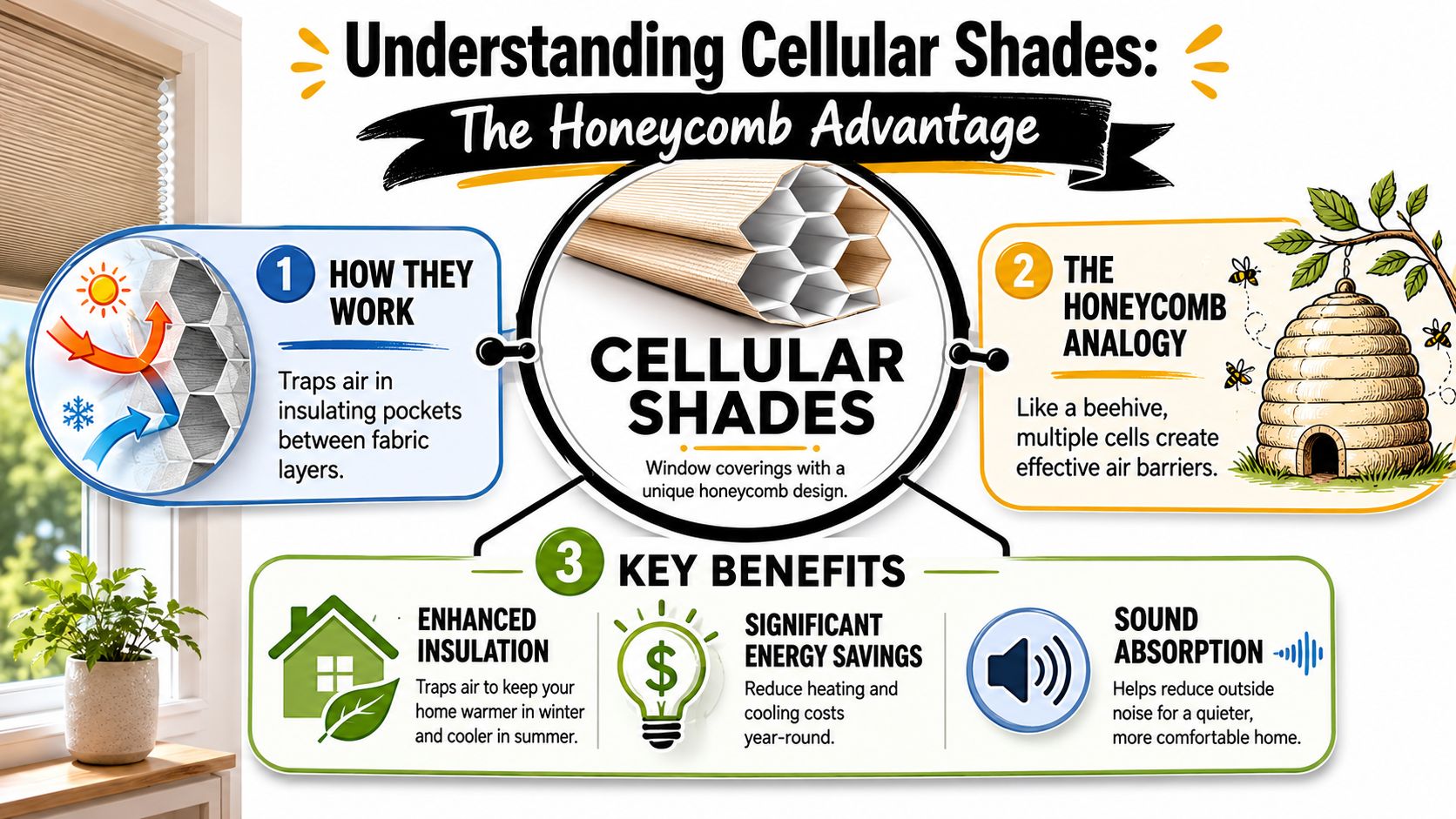
Cellular shades are soft fabric window coverings built with pockets that look like a honeycomb when viewed from the side. Those pockets are called cells, and they hold air.
The easiest way to think about them is this. They're like a puffer jacket for your windows. A puffer jacket works because trapped air slows down heat transfer, and cellular shades use that same basic idea right at the glass.
Why they're called honeycomb shades
From the front, they look clean and simple. From the side, the fabric forms rows of small air chambers.
That's why people use both names. Cellular shades and honeycomb shades usually mean the same product category.
What makes them different from regular blinds
Traditional blinds use slats. Cellular shades use fabric cells.
That difference changes how the product feels in a room:
- Softer look: They suit bedrooms, living rooms, offices, and condos where you want a smoother finish.
- Better insulation design: The cell structure is built to trap air rather than blocking sightlines alone.
- Cleaner stack: When raised, they usually compress into a neat profile.
A lot of shoppers get confused because these shades can look minimal, almost plain, in photos. The value is in the structure. The inside of the shade is doing most of the work.
Practical rule: If your main complaint is temperature swing near the window, cellular shades usually deserve a serious look before standard blinds do.
They also come in different configurations, including single-cell and double-cell styles, plus light-filtering and room-darkening fabrics. That's where the product starts to feel custom rather than one-size-fits-all.
The Best Reason Canadians Choose Cellular Shades Insulation
The biggest reason people buy cellular shades in Canada is simple. They want rooms to feel more comfortable near the window.
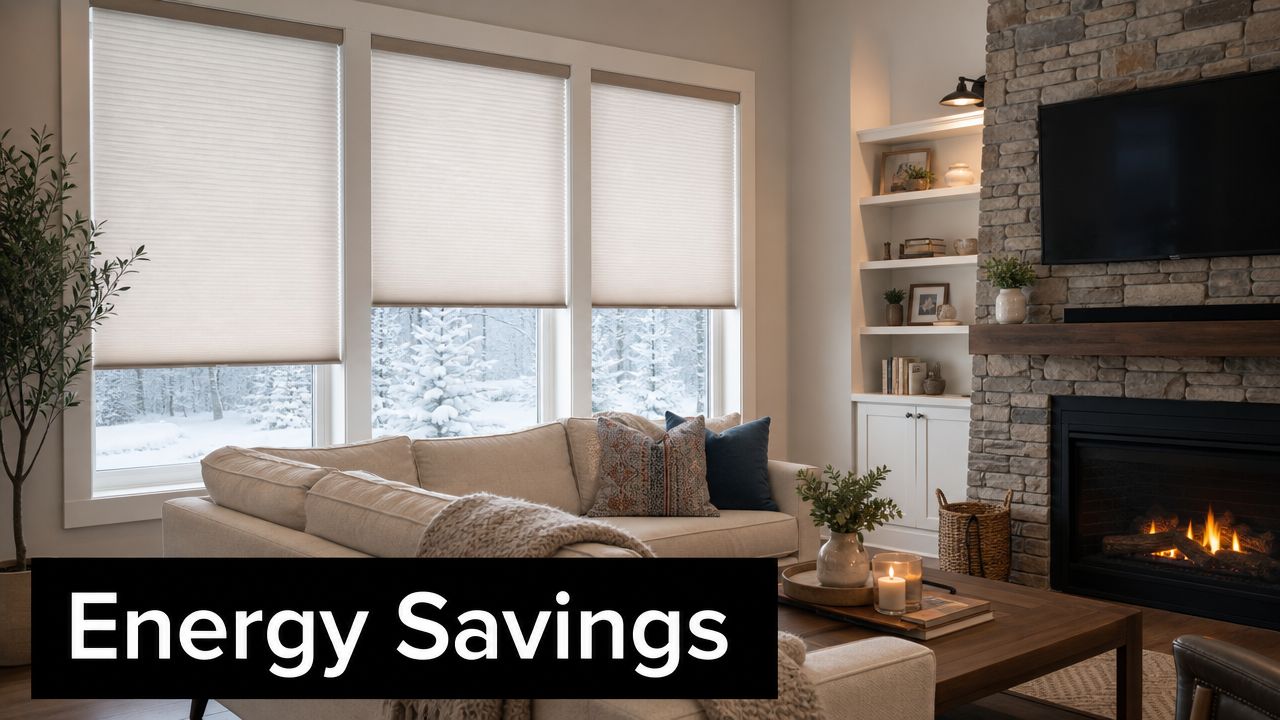
The performance case is strong. The U.S. Department of Energy cellular shades factsheet says cellular shades can save homeowners up to 20% on heating energy and up to 15% on total heating and cooling energy compared with having no shades, and that window attachments can save 15% of a household's annual HVAC energy use compared with vinyl blinds.
For a Canadian homeowner, those numbers matter because the problem usually shows up in comfort before it shows up on a utility bill. You feel cold radiation off the glass, drafts around the window area, and uneven room temperature.
Why the honeycomb shape matters
The cells trap air within the shade and also help create a buffer between the shade and the window. That slows down nighttime heat loss and helps cut down on cold drafts.
In summer, the same structure helps reduce unwanted solar heat gain. So this isn't just a winter product. It's a year-round one.
People sometimes ask about R-value, but they don't always need the technical version. A simpler way to think about it is this: better insulating window coverings help the inside of your room stay more stable when outdoor temperatures swing hard.
Here's a quick way to think about where you'll feel the difference most:
| Room condition | What cellular shades help with |
|---|---|
| Large cold window in winter | Less chill near seating areas |
| Bright west-facing room | Better glare and heat management |
| Bedroom over a cold night | More even comfort near the glass |
| Older home with drafty windows | Added buffer at the window opening |
A lot of generic content stops at “energy efficient.” That's not enough for Ontario buyers. You want to know whether the upgrade changes daily comfort in a house with a long heating season. In our experience, that's where cellular shades earn their keep.
When the upgrade makes the most sense
Not every window needs the same solution. Cellular shades make the most sense when your room has one or more of these issues:
- Cold spots near the glass: Common in bedrooms, family rooms, and front living spaces.
- Strong afternoon sun: A frequent issue on west-facing windows.
- Older windows: The shade adds another layer between the room and the glazing area.
- Homes where comfort matters more than bare-minimum coverage: Especially in rooms you use every day.
A short visual can help if you want to see the product in action.
If you're deciding between several window treatments, this is the section to remember. Curtains can help. Drapery can help. But cellular shades are designed around insulation in a way most basic blinds aren't.
Finding Your Perfect Style and Light Control
Once you know why you want them, the next step is choosing the version that suits the room. Buyers often get stuck at this point, because “cellular shades” sounds like one product when it's really a family of options.
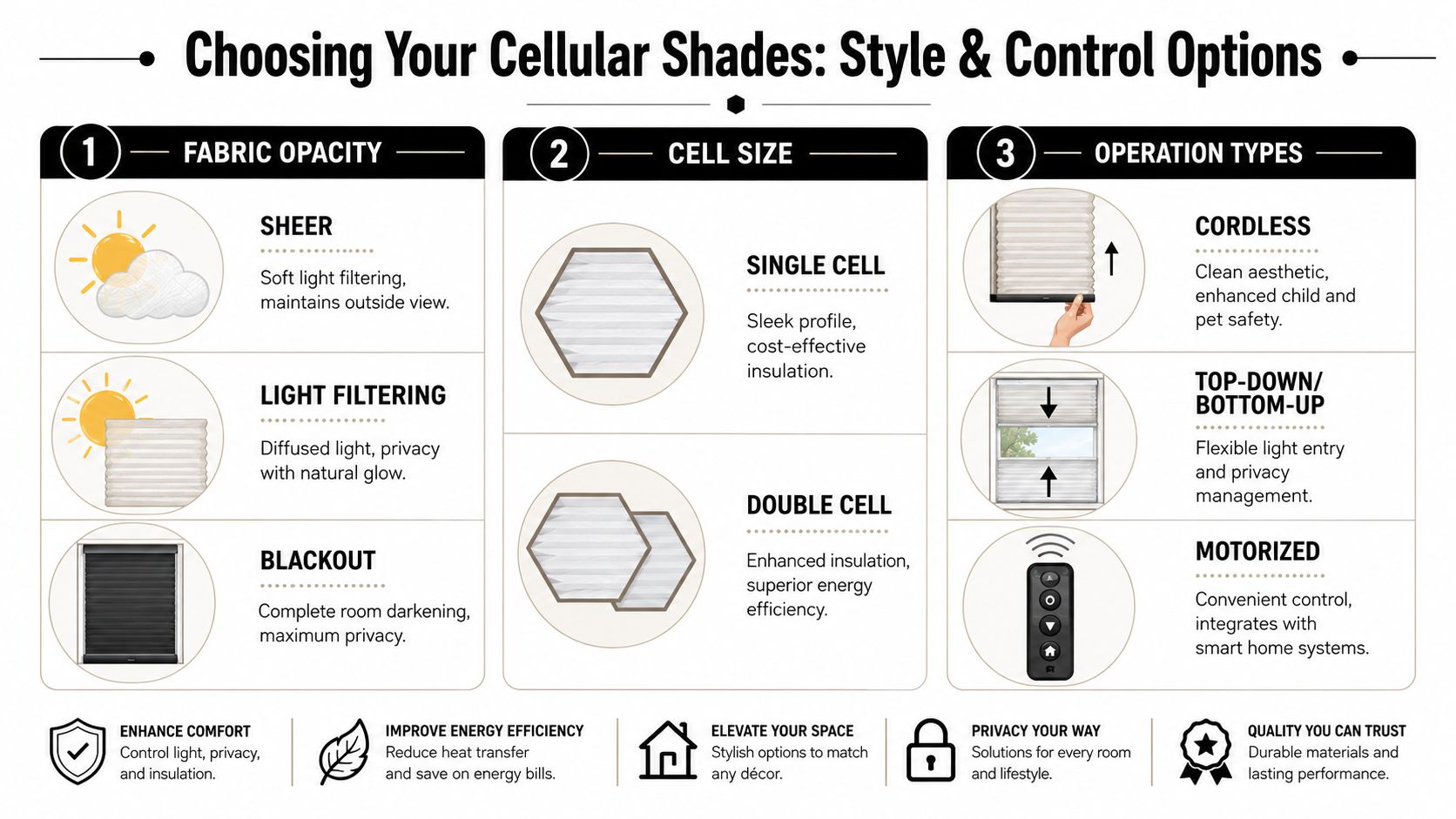
Single cell versus double cell
Single-cell shades have one layer of honeycomb pockets. Double-cell shades have two.
A single cell is often a solid fit for many rooms, especially when you want the clean look and insulating benefit without adding more bulk. A double cell is worth considering when the window is extra drafty or you want stronger thermal performance.
This is less about right or wrong and more about matching the product to the room. A condo bedroom and a large detached-home front window may not need the same build.
Picking the right fabric for each room
Light control matters just as much as insulation. The same shade style can feel totally different depending on fabric opacity.
A quick room-by-room guide helps:
- Living room or kitchen: Light-filtering fabric usually works well. It softens sunlight and maintains a bright feel. If you like a similar daylight-friendly approach in another shade style, light-filtering roller shades are worth comparing.
- Bedroom: Room-darkening or blackout fabrics usually make more sense, especially if early morning light is an issue.
- Street-facing room: Privacy often pushes people toward less transparent fabrics.
- Home office: Many people prefer filtered light to reduce glare without making the room feel closed off.
If you love natural light but hate feeling exposed at night, fabric choice matters more than colour.
Top-down/bottom-up operation can also solve a very common problem. You can keep privacy at the lower part of the window while still letting daylight in from above.
Choosing the right cell size
Cell size affects both appearance and fit. According to Select Blinds Canada's honeycomb shade guidance, 3/8-inch to 1/2-inch pleats are best for small to medium windows, while 3/4-inch pleats are more commonly used on larger windows.
That advice is practical, not just cosmetic. Smaller pleats suit tighter window proportions and give a more refined look. Larger pleats create a stronger visual scale on wide windows and can increase the visible insulating air space.
Here's a simple comparison:
| Window type | Cell size that usually looks right |
|---|---|
| Small bathroom or narrow bedroom window | 3/8" to 1/2" |
| Standard living room window | 1/2" often fits nicely |
| Large picture window | 3/4" |
| Wide contemporary openings | 3/4" usually feels more balanced |
If you're staring at sample books and everything starts to blur together, focus on three decisions first. Pick your insulation level, your fabric opacity, and your operating style. Colour comes after that.
Modernizing Your Home with Smart Shades
Motorized cellular shades used to feel like a specialty upgrade. Now they're a practical choice for homes where convenience, safety, and consistent light control matter.
The first change people notice is simple. You stop walking over to each window and adjusting shades one by one.
What motorization changes day to day
Most motorized systems let you operate shades by remote, app, or smart-home setup. If you're new to that category, this guide to smart blinds in Canada gives a useful overview of how connected controls fit into everyday homes.
The inherent value shows up in routines:
- Morning light: You can raise bedroom or kitchen shades on schedule.
- Evening privacy: Shades can close automatically at the same time each day.
- Hard-to-reach windows: Great for stairwells, tall foyers, or windows behind furniture.
- Cord-free use: Cleaner look, and simpler day-to-day operation.
A lot of homeowners think smart shades are only about the “cool factor.” In practice, they help people use their shades more consistently. That matters because even a good product won't do much if it stays half-open all winter because it's annoying to adjust.
Who benefits most from smart control
Motorization is especially useful in homes with children, pets, mobility limitations, or many windows in one room. It also works well in rental or commercial spaces where a cleaner, standardized look matters.
Smart control makes sense when the shade is part of your daily routine, not just something you touch once a week.
If you already use voice assistants or home automation, motorized cellular shades usually fit naturally into that setup. If you don't, a basic remote-controlled system still gives you most of the day-to-day convenience without making things feel technical.
Getting the Perfect Fit with Proper Measuring
A cellular shade can have the right fabric, the right colour, and the right lift system, then still disappoint because the measurements were off. Fit affects privacy, light control, and how well the shade performs at the window.
Inside mount is where precision matters most. If the width is too generous, the product won't sit properly. If it's too narrow, you'll notice extra side gaps.
Inside mount measuring basics
The standard method is straightforward. According to Select Blinds Canada's measuring guide for cellular shades, for an inside mount you should measure the top, middle, and bottom width and use the narrowest value, then measure the left, centre, and right height and use the longest value.
That method matters because many windows aren't perfectly square. A small difference in frame width can change the final fit more than people expect.
Use this checklist:
- Use a steel tape measure. Soft tape measures can introduce small errors.
- Measure width in three places. Top, middle, and bottom.
- Record the narrowest width. That's the one that prevents binding.
- Measure height in three places. Left, centre, and right.
- Record the longest height. That gives full coverage.
Measure exactly. Don't round up to make the numbers look cleaner.
Outside mount measuring basics
Outside mount is more forgiving visually, but you still need a plan. The same Canadian guidance says to add up to 4 inches to coverage dimensions for outside mounts, which helps improve coverage and reduce light seepage at the edges.
Outside mount often makes sense when:
- Your window frame is shallow: There may not be enough depth for a tidy inside mount.
- You want more coverage: Helpful for privacy and light blocking.
- The trim is attractive but the opening is awkward: Some homeowners prefer the look of a larger shade footprint.
Why professional measuring still matters
DIY measuring is possible, and many homeowners do it well. But if you're ordering multiple shades, covering large windows, or trying to maximize insulation performance, professional measuring reduces risk.
A pro checks for frame depth, handle clearance, trim interference, and mounting surface conditions. They also spot the windows that look square from across the room but aren't square at all when measured properly.
That matters most on custom products. Once they're made, fixing a measuring mistake can be frustrating and expensive.
How to Choose a Canadian Supplier Like Blinds Hut
The product matters. The supplier matters just as much.
When people shop for cellular shades in Canada, they often compare colours and prices first. That's understandable, but the more important questions are about fit, compliance, after-sale support, and whether the seller is set up for custom work rather than quick transactions.
A practical supplier checklist
Here's what I'd tell a neighbour to look for:
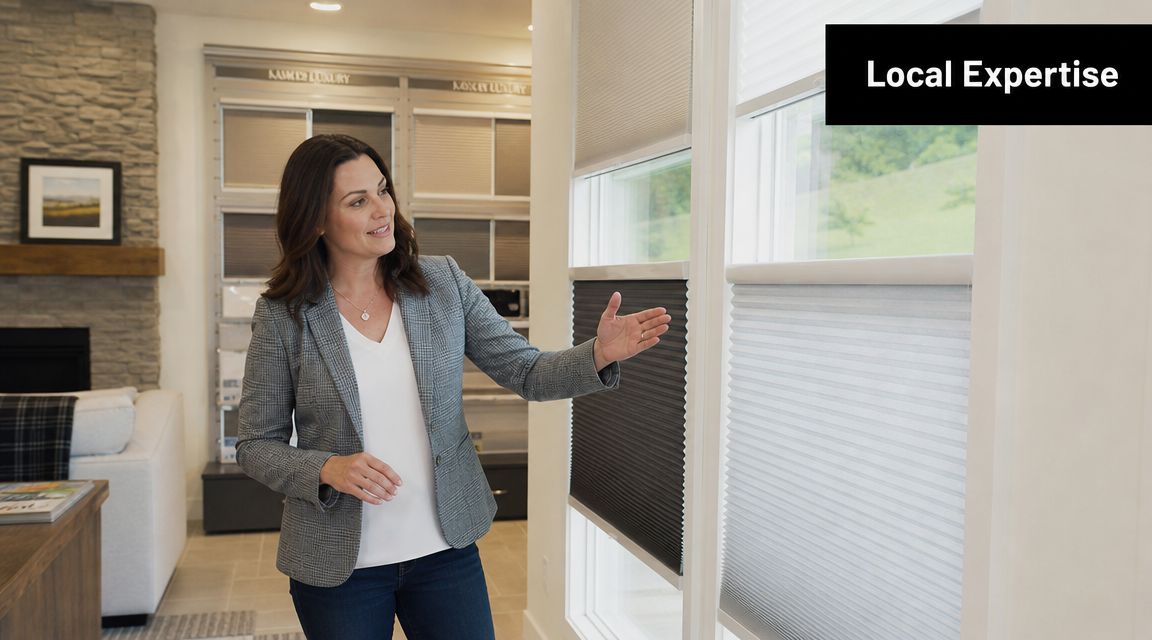
- Local product knowledge: Canadian homes have different comfort concerns than homes in milder climates.
- Custom measuring support: This matters more than flashy website photos.
- Installation service: Especially if you're ordering many windows or want cleaner finishes.
- Clear warranty details: You should know what's covered before you buy.
- Safety compliance awareness: This isn't optional for family homes.
Store-bought products can work in some situations, but custom-fit shades usually solve more problems at once. If you're comparing those approaches, this article on custom window coverings versus store-bought blinds in London, Ontario covers the trade-offs clearly.
Why safety and compliance belong on your checklist
In Canada, window coverings are regulated consumer products, not just décor items. That point became very clear in a recent federal recall.
Health Canada reported that Springs cellular shades sold in Canada did not meet the Corded Window Coverings Regulations because bottom-rail end caps could release small parts that posed a choking hazard to young children. The recall covered approximately 37,723 units sold in Canada from January 2025 to April 2026, and as of May 19, 2026, no incidents or injuries had been reported in Canada, according to the Health Canada recall notice for Springs cellular shades.
That's a useful reminder to ask better questions before you buy:
- Is the product designed with current Canadian safety requirements in mind?
- Is cordless available or standard?
- Can the seller explain the lift system clearly?
- Will someone verify the actual installed setup, not just the catalogue spec?
For local buyers, one option in this category is Blinds Hut, a London, Ontario window coverings company that offers Canadian-made custom blinds and shades, in-home consultations, measuring, and installation. That type of end-to-end service tends to matter most when you want the finished product to perform as intended, not just arrive in a box.
Common Questions About Cellular Shades
Are cellular shades hard to clean
Usually, no. Most homeowners handle routine care with light dusting or gentle vacuuming using a brush attachment. The key is to treat the fabric softly so the cells keep their shape.
Do they work in homes with kids or pets
They can, especially when you choose cordless or other child-conscious operating systems. Durability depends on the fabric, the location, and how much contact the shade gets day to day.
Are they good for condos and rentals
Yes, especially where privacy, glare control, and a cleaner profile matter. They also suit rooms where bulky drapery feels too heavy.
Will they fully block light
Some won't, and some come much closer. Light-filtering fabrics soften daylight, while room-darkening or blackout options are better for bedrooms and media spaces.
Are they worth it for one problem window
Often, yes. A single cold bedroom window or a bright west-facing office can change how a whole room feels.
What should I expect on cost
Cost depends on window size, fabric, cell construction, lift system, and whether you're choosing manual or motorized operation. Custom sizing and professional installation usually cost more than off-the-shelf products, but they also tend to solve fit and performance issues more effectively.
If you want help choosing the right cellular shades for your space, Blinds Hut offers custom window coverings in London, Ontario with in-home consultations, product samples, measuring, and installation, so you can compare options in your actual room before ordering.