
Black Out Blinds Canada: Your 2026 Buyer’s Guide
You're probably here because one room in your house isn't working the way it should. The bedroom gets bright far too early in June, the nursery never feels dark enough for naps, or the front window gives you privacy at night but still leaks light around the edges.
That's usually when homeowners in London start searching for black out blinds Canada options and realise there's a big gap between what looks dark in a showroom and what performs well at home. In our climate, the right blackout setup isn't just about sleep. It also affects comfort beside cold winter glass, summer heat buildup, and how polished the window looks once it's installed.
Table of Contents
- Why Blackout Blinds Are a Game Changer in Canadian Homes
- More Than Just Dark Fabric What Makes a Blind Blackout
- Find Your Perfect Fit Types of Blackout Blinds
- Beyond Darkness Insulation and Energy Savings
- Go Smart with Motorized Blackout Blinds
- Getting It Right Measuring Installation and Cost
- Your London Ontario Blackout Blinds Checklist and FAQs
Why Blackout Blinds Are a Game Changer in Canadian Homes
A lot of people first think about blackout blinds after a rough stretch of sleep. In summer, sunrise shows up early. In winter, headlights, porch lights, and reflected snow glare can still turn a bedroom into a brighter space than you want.
That's why blackout blinds solve more than one problem at once. They help create a darker sleeping space, add privacy, and make rooms feel more controlled. Bedrooms and media rooms benefit first, but I've also seen them make a big difference in street-facing offices and TV rooms where glare ruins the space.
There's also the comfort side of it. In Canadian homes, windows are often the weak point in the room. You feel it when you sit beside a window in January or when afternoon sun heats up a west-facing room in July.
Practical rule: If the issue is early light, streetlight glare, or daytime sleeping, standard light-filtering shades usually won't be enough.
Blackout blinds also help you set the room up for how you use it. A nursery may need reliable darkness in the middle of the day. A primary bedroom may need privacy at night and a softer look layered with drapery. A basement theatre may need the closest thing possible to full darkness.
Here's where homeowners often get tripped up:
- They buy by colour. A dark fabric doesn't automatically mean blackout performance.
- They focus only on the shade material. The edge gaps are often the main reason light leaks in.
- They ignore the room orientation. East-facing bedrooms and large south-facing windows usually need a more deliberate setup.
- They underestimate installation. Even a good product can disappoint if the fit is loose or the mount style is wrong.
The payoff is simple. When blackout blinds are chosen for the room, the window size, and the way the home handles seasonal light, the space feels calmer and easier to live in.
More Than Just Dark Fabric What Makes a Blind Blackout
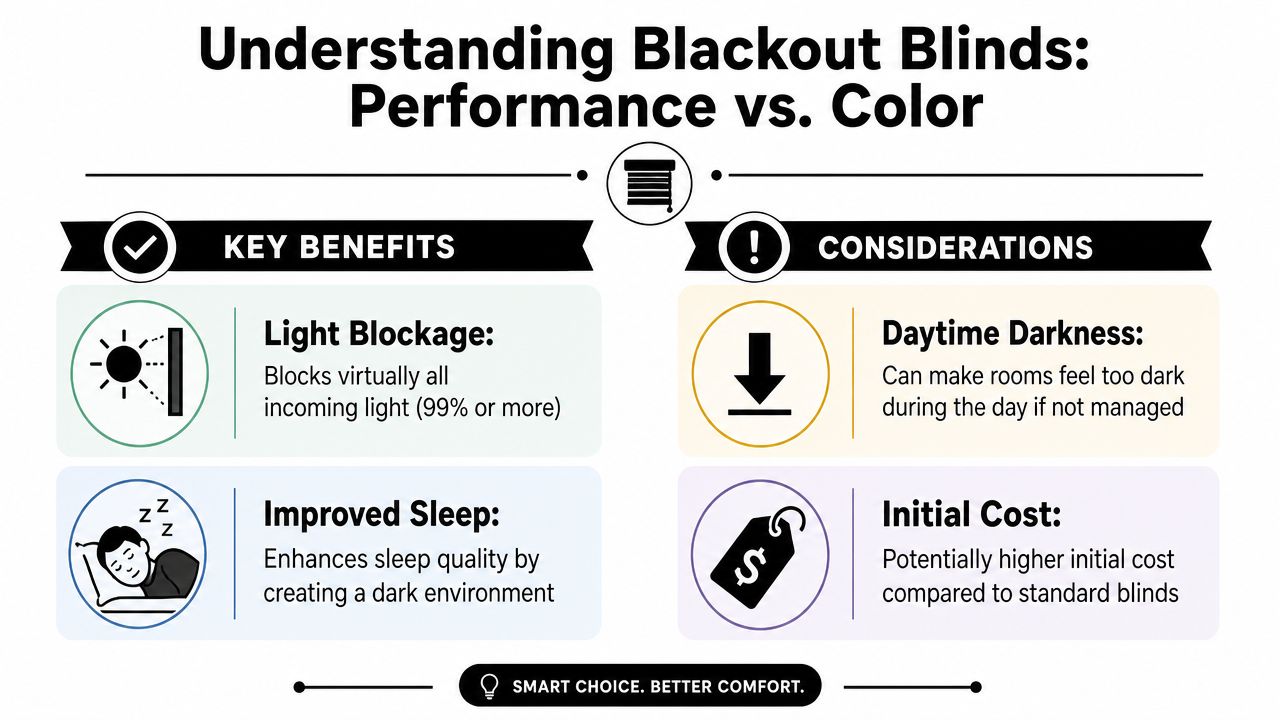
“Blackout” gets used loosely in this industry, so it helps to be clear. A blackout blind isn't just a dark blind. It's a window covering built to stop light as completely as possible, and in Canada that category is designed to block up to 100% of incoming light according to Norman Canada's blackout shades guide.
That's why blackout and room-darkening aren't the same thing. Room-darkening products reduce brightness. Blackout products are for homeowners who want the strongest level of light control and privacy.
Fabric matters, but fit matters more
The fabric still matters. True blackout materials are opaque, often with a backing or construction that stops light from passing through the cloth itself. But homeowners are often surprised that the fabric can perform perfectly while the room still isn't dark.
That usually comes down to gaps.
Light can sneak in from the sides, the top, and the bottom if the blind isn't designed and installed with blackout performance in mind. This is especially noticeable on inside mounts, wide windows, and any room where outdoor light is strong.
Here's a simple perspective:
- Room-darkening blind: cuts brightness
- Blackout fabric: blocks light through the material
- Blackout system: manages the material plus the perimeter gaps
The blind can be blackout. The installation can still let light in.
A practical note on the history
Blackout products have a practical history, not a decorative one. A major milestone came from the British blackout regulations of 1939, when blackout fabrics were used during World War II to stop light from escaping homes at night, as noted by Bali Blinds in its history of blackout shades.
That origin still explains how these products are designed today. The goal wasn't “make the room a bit dimmer.” The goal was to stop visible light from getting through.
So when you're shopping, don't ask only, “Is this fabric dark?” Ask better questions:
- Does it block light through the material?
- How much edge light should I expect with this mount style?
- Is this meant for a bedroom, media room, or general privacy?
- Can the system be upgraded for tighter perimeter control?
That's the difference between a blind that looks blackout on a sample card and one that performs like blackout in a real home.
Find Your Perfect Fit Types of Blackout Blinds
Different rooms need different blackout solutions. The right choice depends on whether you care most about total darkness, insulation, appearance, or flexibility through the day.
Here's a practical comparison homeowners can use when narrowing it down.
| Blind Type | Light Control | Insulation Value | Best For |
|---|---|---|---|
| Roller Shade | Strong when paired with blackout fabric, but edge gaps matter | Moderate | Bedrooms, offices, simple modern spaces |
| Cellular Shade | Strong light control with a softer finished look | Higher than most basic shade styles | Bedrooms, nurseries, colder rooms |
| Zebra Blind | Better for flexible privacy than true blackout performance | Moderate | Living rooms, multi-use spaces |
Roller shades for a clean modern look
Blackout roller shades are often the first thing people picture. They're straightforward, low-profile, and work well in modern homes, condos, and renovated bedrooms.
Their strength is simplicity. You get one clean panel, easy operation, and lots of fabric choices. They're a solid fit for people who want a neat appearance without a lot of visual bulk.
The trade-off is usually at the edges. If someone wants near-total darkness, a basic roller shade with standard side gaps may not satisfy them, especially in a bright east-facing room.
Good use cases for roller blackout shades include:
- Primary bedrooms where a minimal look matters
- Home offices that need glare control during the day
- Basement rooms where outside light is already limited
Cellular shades for comfort near the glass
Cellular shades, also called honeycomb shades, are the option I bring up when the homeowner's complaint includes both light and temperature. The cellular structure adds a softer, more insulated feel at the window.
They suit Canadian homes well because they don't just cover the opening. They also create another layer between the room and the glass. In bedrooms with older windows, that can make the space feel more comfortable, especially near the bed.
They're often the strongest practical choice when the goal is balanced performance:
- darker room
- cleaner finished look
- better comfort in winter and summer
If a room feels cold even after the furnace is running well, I'd look hard at a blackout cellular option before assuming the issue is only the HVAC system.
Zebra blinds and where they fit
Zebra blinds are popular because they give you more control between view, privacy, and filtered light. They look sharp and work well in contemporary spaces.
They're not usually my first recommendation for someone chasing the deepest blackout result. They're better for rooms where flexibility matters more than full darkness. A living room, dining area, or front office can benefit from that day-to-night adjustability.
That doesn't make them the wrong choice. It just means they solve a different problem.
A useful way to decide is to match the room to the blind:
- Need real sleep darkness: lean roller blackout or blackout cellular
- Need comfort beside large windows: cellular usually earns a closer look
- Need daytime flexibility and modern style: zebra may fit better
- Need a polished layered look: pair the blind with drapery for extra softness and more light control
For homeowners in London, Ontario, this is where seeing samples at home matters. Wall colour, window depth, trim style, and outdoor exposure change how each product feels once it's in the room.
Beyond Darkness Insulation and Energy Savings
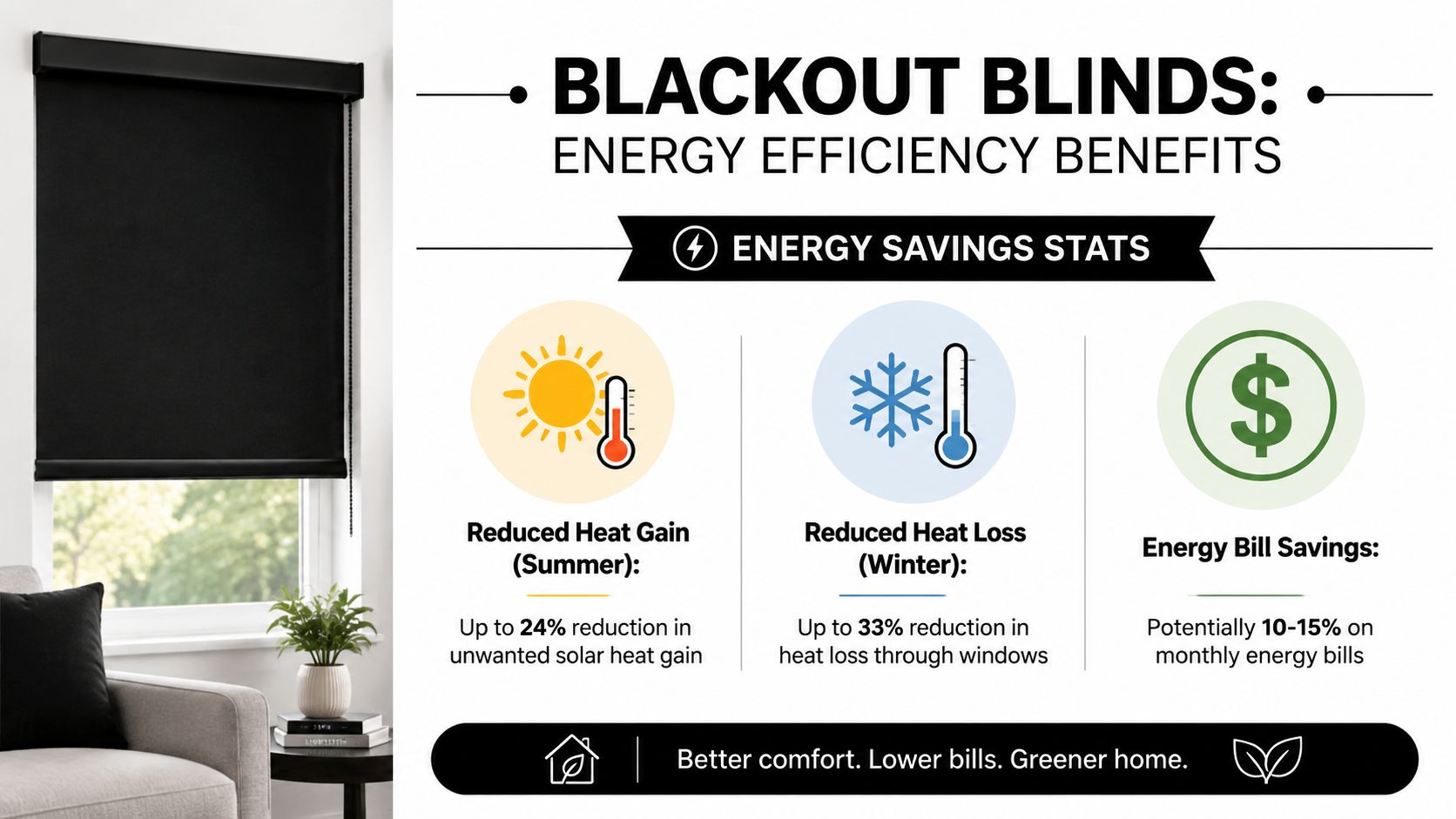
A blackout blind doesn't replace a good window, but it can help the room feel more stable. That matters in Southwestern Ontario, where the same window can feel drafty in winter and harshly hot in summer.
The key point is this. Energy performance depends less on the word “blackout” and more on the way the blind is built, fitted, and installed. This Canadian guide discussing Natural Resources Canada and ENERGY STAR Canada notes that windows are a major source of heat loss in homes and that better window coverings can improve comfort and reduce heating and cooling demand, but actual results depend heavily on fit, fabric, and installation quality.
What blackout blinds can do in a Canadian home
In real homes, homeowners notice comfort first. The room feels less exposed to solar gain in the afternoon. The bed beside the window feels less chilly at night. The TV room holds a more controlled environment during the day.
That's the practical value. Better comfort often comes before any bill-related savings you may or may not notice.
A few honest expectations help:
- They can reduce heat movement at the window. That matters in both heating and cooling seasons.
- They won't fix bad seals or failed window units. If the window itself has major issues, the blind can only do so much.
- They perform best when fitted tightly. Loose sides and poor mounting reduce both darkening and thermal benefit.
- They're strongest as part of a full comfort strategy. Good windows, decent sealing, and well-chosen coverings work together.
For homeowners comparing options, this is also why custom blinds are often worth a closer look. A product that fits the opening tends to perform more predictably than an off-the-shelf blind trimmed to “close enough.”
What improves performance the most
The most important upgrade for blackout performance isn't always a thicker fabric. In Canadian blackout-shade guidance, the biggest technical improvement often comes from perimeter light control. Guard Blinds' total blackout system overview explains that side-channel systems can eliminate edge leakage by trapping the shade within tracks, and dual-layer honeycomb construction adds a reflective thermal barrier that helps with both room darkening and insulation.
That matters for two reasons.
First, side channels control the weak spots where light usually leaks in. Second, they help the system act more like a sealed covering at the edges instead of a panel hanging in front of the glass.
Better blackout usually comes from controlling the perimeter, not just upgrading the fabric.
If someone in London asks whether blackout blinds are mainly an energy product or mainly a comfort product, I'd answer this way. They are usually a comfort-first upgrade with energy benefits that depend on the exact product and fit. That's a more useful answer than generic “energy efficient” marketing.
Go Smart with Motorized Blackout Blinds
Motorization changes the day-to-day experience more than anticipated. It's not only about tech. It's about using the blackout blind properly every day instead of leaving it half-open because the window is awkward to reach.
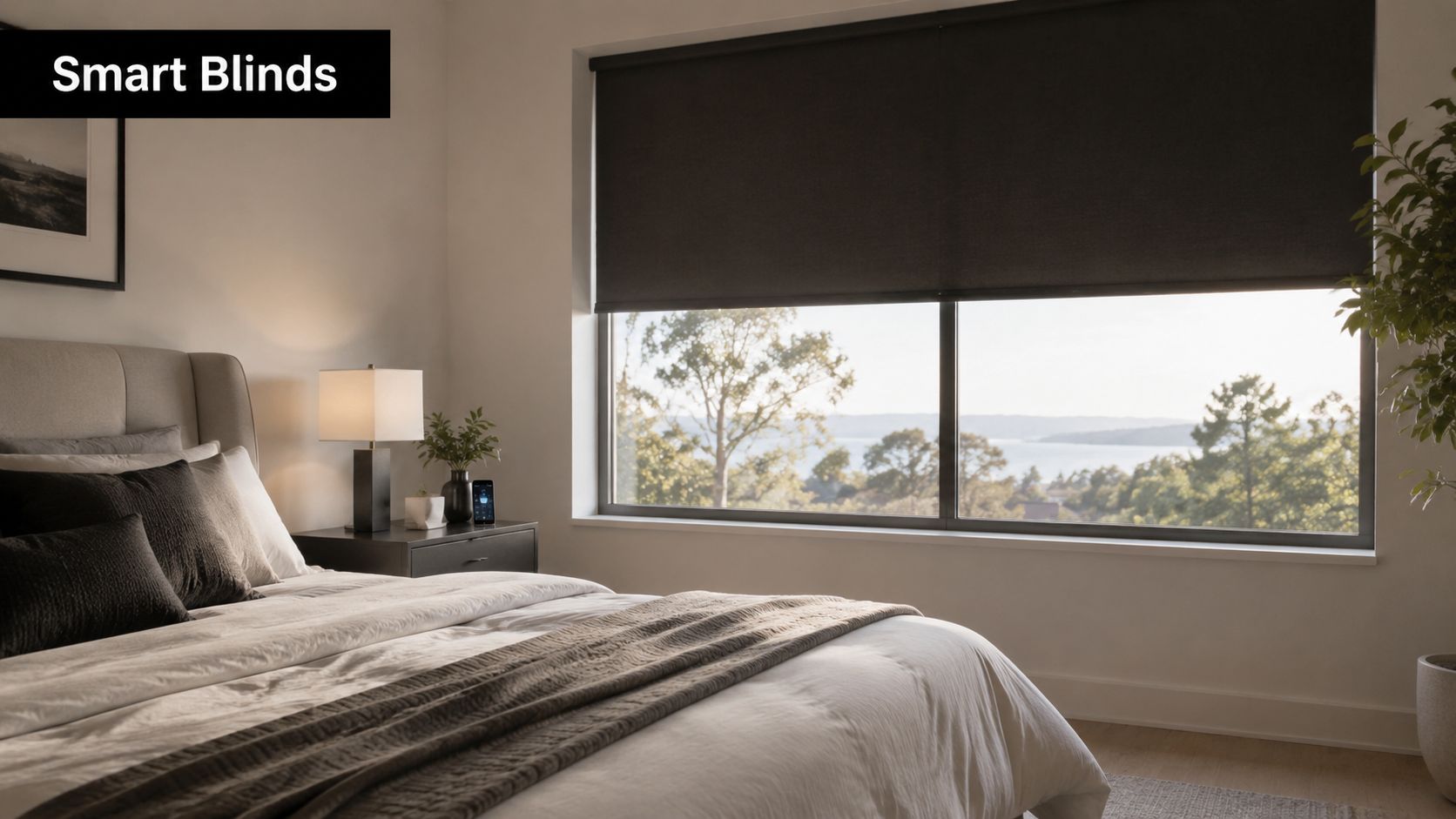
The biggest win is consistency. A hard-to-reach blind over stairs, a tall foyer window, or a bank of bedroom windows is much easier to manage when one button handles the whole setup. Homeowners also like removing dangling cords in kids' rooms and cleaner-looking spaces.
Where motorization makes the biggest difference
Motorized blackout blinds make the most sense when the manual version is likely to be annoying in daily use.
That usually includes:
- Tall windows where lifting and lowering by hand gets old fast
- Wide bedroom windows where you want even movement across multiple shades
- Nurseries and kids' rooms where cordless operation is a safer and tidier choice
- Media rooms where one tap can darken the room before a movie starts
There's also the scheduling side. If you want the room dark for sleep and bright in the morning, programmed operation makes that automatic. Homeowners considering connected-home features can look at smart blinds options available in Canada to see how app control, remotes, and voice integration fit different rooms.
A short demo helps more than a spec sheet:
Who should seriously consider the upgrade
Not every room needs motorization. A small guest room window you adjust twice a month probably doesn't justify it.
But some households should consider it early instead of treating it as a luxury add-on:
- Shift workers who need reliable blackout during daylight hours
- Older homeowners who want easier daily operation
- Anyone renovating a primary bedroom and aiming for a cleaner finish
- Homes with multiple blackout blinds in one room where synchronized movement improves usability
The main trade-off is cost and complexity. You're adding motors, controls, and planning. Still, when the room depends on regular blackout performance, motorization often makes the blind easier to live with and easier to use the way it was intended.
Getting It Right Measuring Installation and Cost
A blackout blind can have great material and still disappoint if the measurements are off. Most complaints I hear about “blackout not working” are really fit problems.
The issue is simple. Even small gaps look large once sunlight hits them. That's why measuring isn't just about making the blind fit in the opening. It's about deciding how the blind will sit against the window and where light can escape.
Inside mount versus outside mount
Inside mount looks clean and built-in. It works well when the window opening is square, deep enough, and you're comfortable accepting some edge light unless the system is specifically designed to manage it.
Outside mount often gives you a better shot at stronger darkening because the blind can overlap the opening. That extra coverage helps reduce light leakage around the sides and top.
A practical way to compare them:
- Inside mount: cleaner architectural look, but usually more sensitive to edge gaps
- Outside mount: better coverage for blackout goals, but more visually prominent
- Layered setup: useful when you want function from the shade and softness from drapery
If you're weighing DIY against professional help, custom blind installation guidance like this is worth reviewing before you order. It gives you a clearer sense of what has to line up for a neat result.
Measure the actual window. Then measure the light problem.
What affects the final price
Price usually moves based on the same few factors. Larger windows cost more than smaller ones. Specialized blackout materials can cost more than light-filtering fabrics. Motorization adds another layer. So do upgraded cassettes, side channels, and premium control systems.
Installation can also be worth paying for if the room is sensitive to light. Bedrooms, nurseries, and media spaces don't leave much room for sloppy brackets or uneven alignment.
A few cost questions to ask before ordering:
- What mount style gives me the result I want?
- Am I paying for blackout fabric only, or a fuller blackout system?
- Does this quote include measurement and installation?
- What parts are covered under warranty, and for how long?
The old purpose behind blackout products was practical from the start. As noted earlier, the concept traces back to the British blackout regulations of wartime Britain. That same logic still applies today. Performance depends on stopping light where it wants to escape, not just hanging a darker fabric over the opening.
For local buyers, this is one place where Blinds Hut is a practical option to compare because the company offers in-home consultation, measurement, and installation in London, Ontario. That kind of service is useful when the goal is a clean fit rather than guessing from online dimensions.
Your London Ontario Blackout Blinds Checklist and FAQs
A London bedroom can feel fine in October, then start leaking early sunrise in June and cold off the glass in January. That is usually when blackout blinds stop being a style decision and turn into a practical one.
The best results come from matching the blind to the room, the window, and our local seasons. A nursery on the east side of the house needs something different from a basement media room. A drafty older window may also need a different setup than a newer, tighter opening.
Local buying checklist
- Start with the actual problem. Morning light, TV glare, shift-work sleep, and street-level privacy all point to slightly different solutions.
- Check the room orientation. East-facing bedrooms usually need stronger light control than shaded north-facing rooms.
- Choose mount style early. Inside mount looks cleaner on many windows, but outside mount often blocks more light around the edges.
- Ask about perimeter control. If you want the darkest result, ask whether side channels or a cassette system can reduce edge leakage.
- Think about winter and summer. In London, the same window can feel cold in February and harshly bright in July.
- View samples at home. Fabric under showroom lighting can look very different once it is on your own wall and facing your own sun exposure.
- Check who is measuring and installing. Blackout products are less forgiving than basic light-filtering shades, so small measuring errors show up quickly.
Common questions from London homeowners
Can blackout blinds make a room completely dark?
Sometimes, but only if the product and installation are right for the opening. Fabric alone does not decide the result. The biggest misses usually come from light escaping around the sides, top, or sill.
Are blackout blinds worth buying for insulation too?
They can help with comfort, especially on windows that feel cold in winter or hot in late-day sun. I would still buy them for light control first, then treat the temperature benefit as a useful extra.
What is the safest option for a kids' room?
Cordless and motorized blinds are usually the cleanest choice. They keep the window area simpler and easier to live with day to day.
Which blackout style works best in a bedroom?
Roller shades suit homeowners who want a clean, minimal look. Cellular blackout shades are often the better fit if the room also struggles with cold glass or summer heat.
Is professional measuring worth it?
For blackout blinds, yes, especially on older London homes where window openings are not always perfectly square. A small gap can be the difference between decent room darkening and a blind that never quite does the job.
If you want help choosing the right blackout setup for your space, Blinds Hut can arrange an in-home consultation in London, Ontario, so you can compare fabrics, mount styles, and light-control options on the actual windows that need fixing.