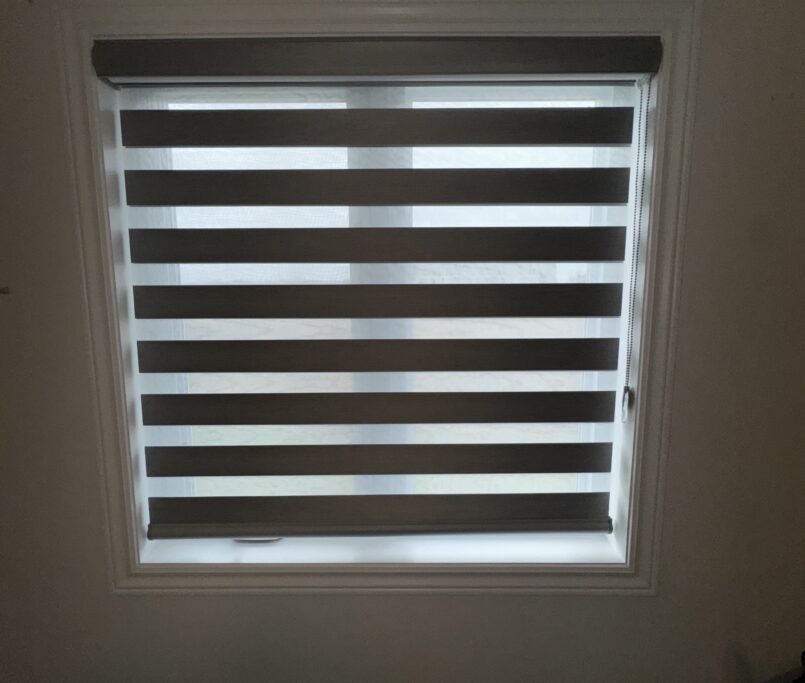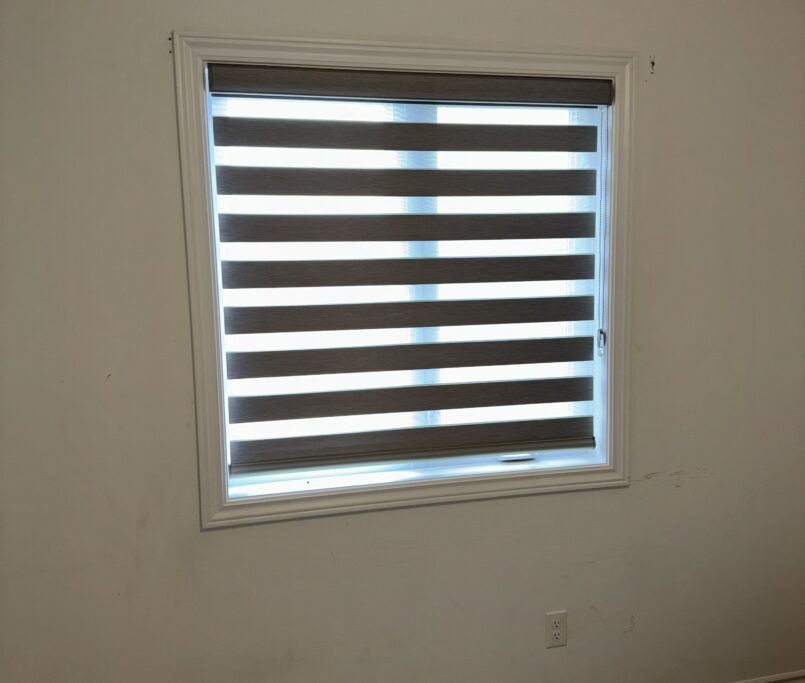

Canadian Custom Shutters a Buyer’s Guide for 2026
You're probably staring at a few bare windows right now, or maybe a set of tired blinds that never looked quite right in the first place. You want something cleaner, better looking, and more permanent, but you also don't want to spend good money on shutters that warp in a bathroom, show gaps in an older frame, or take forever to arrive.
That's where most Ontario homeowners get stuck. They don't need more showroom talk about “timeless style.” They need straight answers about materials, moisture, fit, lead times, and whether Canadian custom shutters make sense for a four-season home.
Table of Contents
- Your Guide to Choosing Custom Shutters
- Shutter Materials Decoded Wood vs Composite vs PVC
- Finding Your Style Shutter Types and Operation
- The Advantage of Canadian Custom Shutters
- Budgeting for Your Custom Shutters
- The Measurement and Installation Process Explained
- How to Choose Your Shutter Supplier
Your Guide to Choosing Custom Shutters
A lot of shutter projects start the same way. A homeowner replaces one room, usually the front room or kitchen, then realises the windows suddenly look finished in a way blinds and curtains never quite managed.
That's because shutters don't read like temporary décor. They feel built in. They frame the glass, clean up the lines of the room, and make the whole window look intentional.
For Ontario homes, that only works when you pick the right shutter for the actual conditions in the house. A bathroom needs a different answer than a dry living room. An old London home with out-of-square trim needs a different installation approach than a new build with perfectly square openings.
Practical rule: Don't choose shutters by colour first. Choose by room conditions, window shape, and how you'll use them every day.
I've seen homeowners get distracted by samples and miss the bigger questions. Will the material hold up through humid summers and dry winters? Will wide louvers make a room feel bigger or just expose too much at night? Is the quote based on real measurements, or a rough estimate that changes later?
Those are the questions that make or break the project.
If you're shopping for Canadian custom shutters, keep your standards high. Ask for room-by-room recommendations, not one blanket solution for the whole house. Good shutters should match the home, not force the home to work around the product.
Shutter Materials Decoded Wood vs Composite vs PVC
The biggest decision isn't white versus off-white. It's wood, composite, or PVC.
Most problems people have with shutters come back to material choice. Pick the wrong one for the room, and no nice finish or clean install will save it.
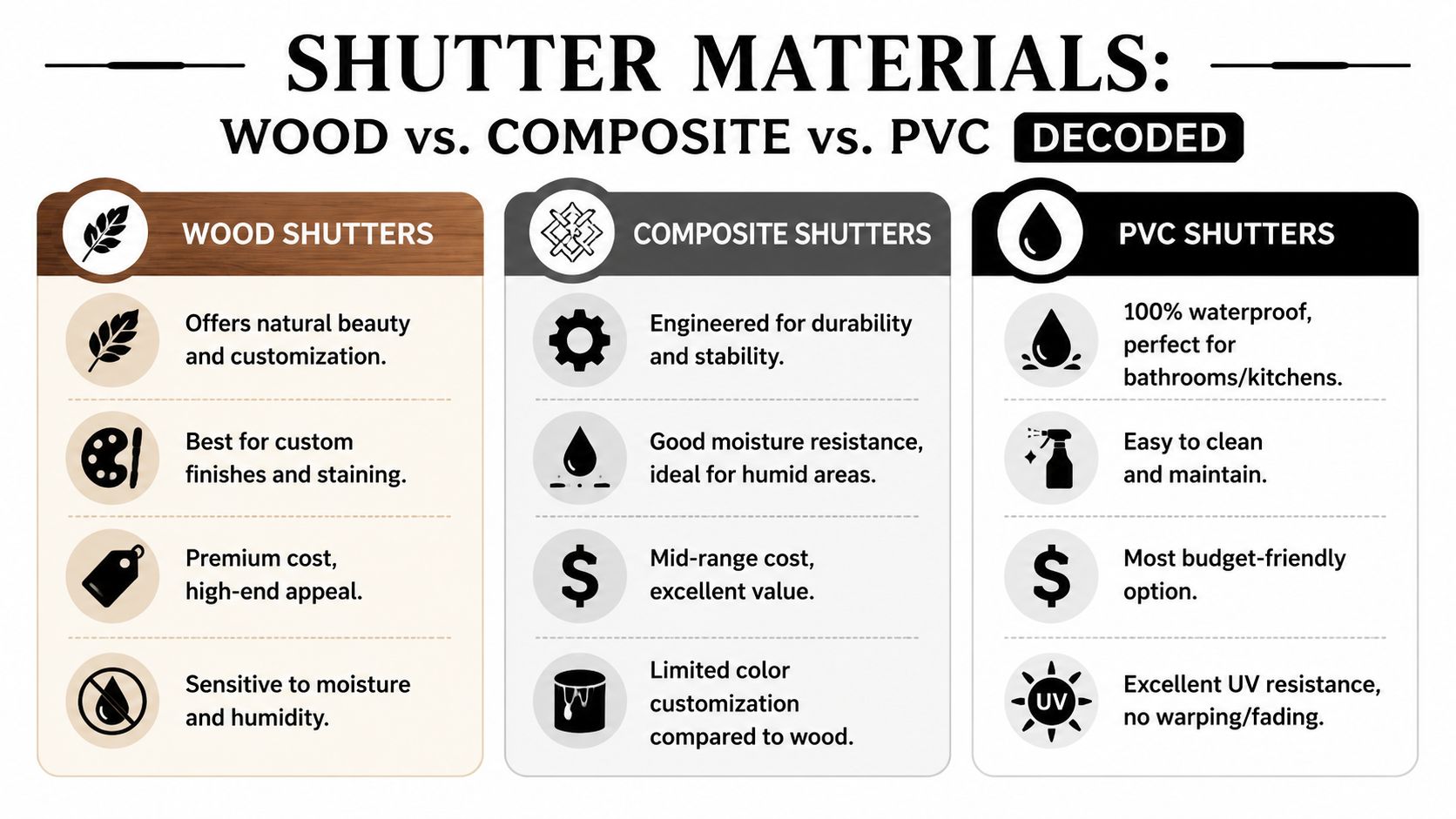
Start with the room, not the brochure
Bathrooms, kitchens, basements, and older homes need more thought. Guidance from custom shutter specialists notes that material choice is critical because wood, composite, and PVC respond differently to moisture, warping risk, and maintenance, especially where humidity swings are more noticeable in older homes and hard-working spaces like baths and kitchens (specialty shutter guidance on material choice).
That lines up with what we see in real homes. A material that looks perfect in a formal dining room can be the wrong call beside a shower or over a sink.
Here's the video I'd have most homeowners watch before making a final material call.
A quick material comparison
| Feature | Wood Shutters | Composite Shutters | PVC Shutters |
|---|---|---|---|
| Overall look | Natural, warm, furniture-like | Clean, solid, slightly less natural | Crisp, simple, practical |
| Best use | Living rooms, bedrooms, formal spaces | Main-floor family spaces, mixed-use rooms | Bathrooms, kitchens, laundry rooms, basements |
| Moisture resistance | Lowest of the three | Better than wood | Strongest choice for wet or steamy areas |
| Custom finish options | Best for paint and stain flexibility | More limited than wood | Usually more limited and simpler |
| Maintenance | Needs more care | Easy to live with | Easiest to clean |
| Budget position | Premium | Mid-range | Usually the most budget-friendly |
| Fit for older homes | Good if the room stays dry and stable | Often the safest middle ground | Excellent where humidity is part of the daily reality |
My honest take on each material
Wood shutters are the nicest-looking option when you want warmth and a more refined finish. If you're doing a front room, office, or primary bedroom and moisture isn't an issue, wood still has a place.
The catch is simple. Ontario homes swing between dry heated winters and humid summer days, and wood notices. I only recommend it when the room conditions support it and the buyer understands they're choosing appearance first.
Composite shutters are where a lot of homeowners land, and for good reason. They give you a solid painted look, better stability, and fewer worries in family spaces where windows get opened, touched, cleaned, and used every day.
Composite is usually the smartest middle-ground choice for an Ontario house. It avoids most of the headaches of wood without looking overly utilitarian.
PVC shutters are the no-nonsense answer for wet spaces. If a bathroom gets steamy daily, or the kitchen window sits over a sink, stop trying to make wood work there. Use PVC and move on.
Some buyers resist that because they think PVC sounds too basic. I think that's backwards. Using the right material in the right room is what makes a shutter plan feel custom.
If you want one simple rule, use this:
- Choose wood if appearance and finish flexibility are the priority, and the room stays dry.
- Choose composite if you want a dependable all-rounder for most of the home.
- Choose PVC if moisture is part of the room's daily life.
Finding Your Style Shutter Types and Operation
Once the material is sorted, style becomes easier. Homeowners then finally get to decide how the shutters will look and move in everyday life.
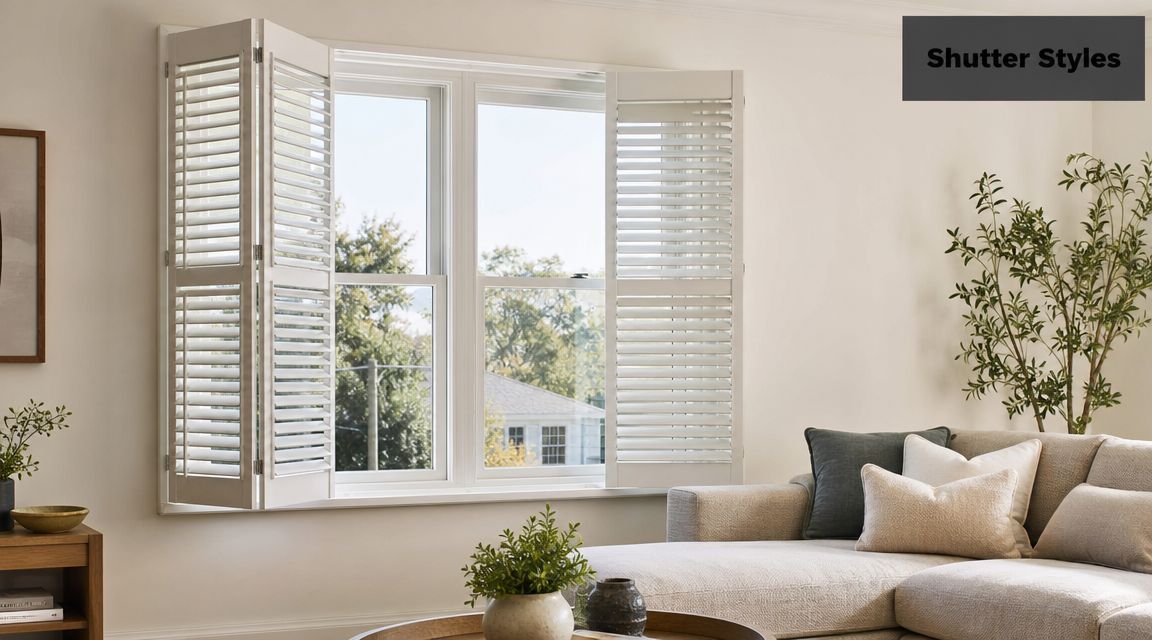
Why louver size matters more than most people think
The biggest style decision is usually louver size. Canadian guidance on California-style shutters notes that these wider slats are commonly around 3.5 to 4.5 inches, and that width helps maximize light and view when open while reducing visual clutter on larger windows (Norman Canada's California shutter guide).
That isn't just a design detail. Wider louvers make a room feel less busy. They also give you better control over the balance between daylight, privacy, and the angle of incoming sun.
For most newer homes and many renovated older ones, I lean toward the wider California look. It feels cleaner, more current, and less chopped up across bigger openings.
If you want more background on style options, Canada plantation shutters are a useful reference point when comparing looks for different window sizes.
Choose operation based on daily use
Not every shutter needs the same operation style.
A front tilt rod is the traditional option. It's visible, classic, and easy to use. If you like that heritage shutter look, it still works well.
A hidden tilt system gives you a cleaner face. That's the one I usually recommend for more modern interiors because the panel looks less interrupted.
Then there's panel configuration. That matters just as much as the slats:
- Standard hinged panels work well on most regular windows and are the simplest to live with.
- Bi-fold panels make sense on wider openings or patio doors where swing space is tight.
- Café-style shutters cover the lower part of the window and leave the top open. They're great for ground-floor privacy without darkening the whole room.
- Specialty shapes like arches or angles can look excellent, but only if the measuring is exact and the room benefits from the shape being highlighted.
Don't choose a shutter style because it looked nice in a showroom bay. Choose the one that fits how you open that window on a Tuesday morning.
A good style choice should solve a daily problem. Better morning light, less street-level exposure, easier cleaning, or a cleaner line across a patio door. That's the standard I'd use.
The Advantage of Canadian Custom Shutters
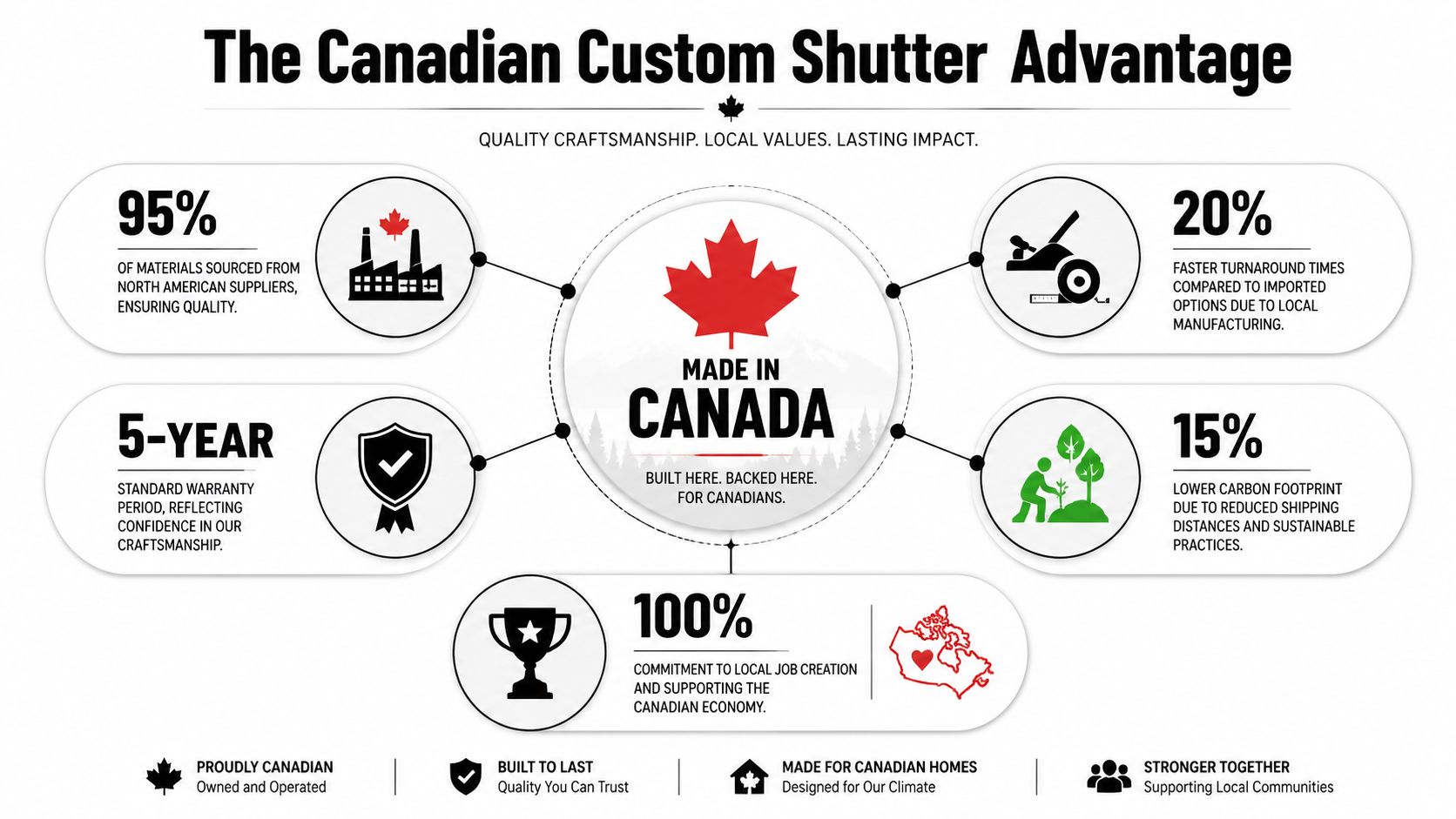
It is February in Ontario. The furnace is running, the windows feel colder at the glass, and any weakness in a window covering shows up fast. That is why Canadian custom shutters deserve a hard look. They are not just a style choice. They need to hold up through dry winter heat, humid summer days, and the expansion and contraction that comes with a real four-season home.
Value shows up in practical ways. Analysts at IBISWorld project Canada's blind and shade manufacturing industry to reach $409.3 million in revenue in 2026 across 326 businesses, which points to an established domestic manufacturing base for custom window coverings, not a small sideline (IBISWorld blind and shade manufacturing in Canada).
What Canadian-made should mean to you
A label alone means very little. Ask where the shutters are built, where the frames are finished, and who handles warranty service in Ontario if a panel drops, a hinge shifts, or a louvre starts binding.
That matters because Ontario homes are rarely identical. New subdivisions, century homes, lake-effect humidity, condo dry air, and older out-of-square openings all put different demands on a shutter. A supplier working with Canadian production should be able to explain which materials are better for a sunny south-facing room, a bathroom, or a drafty older window, and why.
Lead time matters too.
If a shutter is manufactured here, you should get a straight answer on production time, service timing, and replacement parts. That is a real advantage when one panel is damaged or you want to match more windows later without starting from scratch.
Why local production usually leads to a better result
Local production gives you better accountability. The measuring, fabrication, finishing, and service are usually closer together, which lowers the odds of finger-pointing if something is off.
It also helps with consistency. If you order shutters for the main floor now and finish the bedrooms next year, a Canadian supplier has a better shot at matching the colour, louvre size, frame profile, and panel layout. That is a big deal in Ontario homes where projects often happen in stages instead of all at once.
Here are the questions I recommend asking any local installer or dealer:
- Where are these shutters manufactured and finished?
- Which material do you recommend for this room in an Ontario climate, and why?
- How do you handle older windows that are out of square?
- Who comes back for adjustments if the fit changes after installation?
- Can you match this order later if I do the rest of the house in phases?
- What parts are stocked locally if something needs service?
If the answers are vague, keep shopping. Good Canadian custom shutter suppliers know their product, know their installer, and know how the shutter will behave in a real Ontario house. That is the advantage. Confidence before the order, fewer surprises after installation, and a product that fits the home you call home.
Budgeting for Your Custom Shutters
Let's be honest. A common first question concerns price before anything else, and that's fair.
The mistake is expecting one flat answer. Custom shutters are priced by the realities of your windows, not by a generic shelf tag.
What actually changes the quote
Material is the first driver. Wood sits in the premium lane. Composite often lands in the practical middle. PVC is usually the easiest on the budget, especially in rooms where you don't need a furniture-grade finish.
Window size and shape matter just as much. A straightforward rectangular bedroom window is one thing. An arch, angle, bay, or older out-of-square opening takes more labour, more care, and usually more fabrication complexity.
A few other details can push the price around:
- Panel layout: More panels or a more complex split can raise the total.
- Room conditions: Bathrooms and older homes sometimes call for different material choices or installation methods.
- Finish choices: Custom paint or stain flexibility tends to matter most with wood.
- Project size: Whole-home orders often involve more coordination, but they can also create better consistency across the property.
A cheap quote is only cheap until the fit is off, the material is wrong, or the installer starts adding extras after the fact.
Think in years, not just invoice totals
At the North American level, Transparency Market Research values the interior shutters market at US$16.87 billion in 2024 and projects it to reach US$30.73 billion by 2035, with growth tied to residential construction, housing upgrades, product innovation, and pressure to reduce energy costs (North America interior shutters market outlook).
I wouldn't use that as a reason to overspend. I would use it as proof that buyers don't treat shutters like disposable décor. They buy them as a longer-term home upgrade.
That's the right mindset. A good shutter job should improve the room every day you live there. It should look built in, hold up to normal use, and save you from replacing flimsy coverings again in a few years.
If your budget is tight, do the most visible rooms first. Get the front of the house right, then tackle bedrooms or secondary spaces later. That approach usually works better than spreading the budget too thin across every opening.
The Measurement and Installation Process Explained
This is the part homeowners underestimate. They assume the hard part is choosing the shutter. It isn't.
The hard part is making sure the final product fits an actual Ontario home, not a perfectly square drawing on paper.
What should happen before you order
A proper consultation should happen in your home, with samples in your light. White can shift. Room moisture matters. Trim depth matters. Old plaster walls and settled frames matter.
If the installer isn't checking for square, depth, obstructions, and frame condition, the process is already off track. That matters even more in older London homes where no two openings are exactly alike.
Canadian guidance on custom coverings points out that thermal performance depends heavily on glazing type, air leakage, and installation quality, which is why professional fitting matters if you want real comfort gains and not just a decorative upgrade (Canadian guidance on installation quality and airtightness).
For homeowners who want a sense of how professional fitting differs from a DIY mindset, how custom blinds are installed gives a useful look at the level of detail a proper installation process should include.
What installation day should look like
Installation day shouldn't feel chaotic. The installer should arrive with the finished product labelled, organized, and ready for each opening.
You should expect a few basics:
- A final check of each window opening before hardware goes in.
- Careful mounting and levelling so panels hang evenly and close properly.
- Adjustment on site for louver movement, panel alignment, and clean closure.
- Cleanup and walkthrough so you know how to operate and maintain everything.
A good installer also explains what's normal and what isn't. In an older house, tiny irregularities in trim may still exist, but the shutter should look intentional and operate smoothly.
If the installer treats measuring like paperwork, expect problems later. Measuring is the job.
Maintenance is simple once the shutters are in. Regular dusting, a light wipe with the right cleaner for the material, and common-sense handling will keep them looking good. What matters more than fancy maintenance advice is getting the right material and the right fit on day one.
How to Choose Your Shutter Supplier
It usually gets real after the second or third quote. One supplier talks style. Another talks discounts. A good supplier talks about your actual windows, your rooms, and how the shutters will hold up through Ontario winters, humid summers, and everything in between.
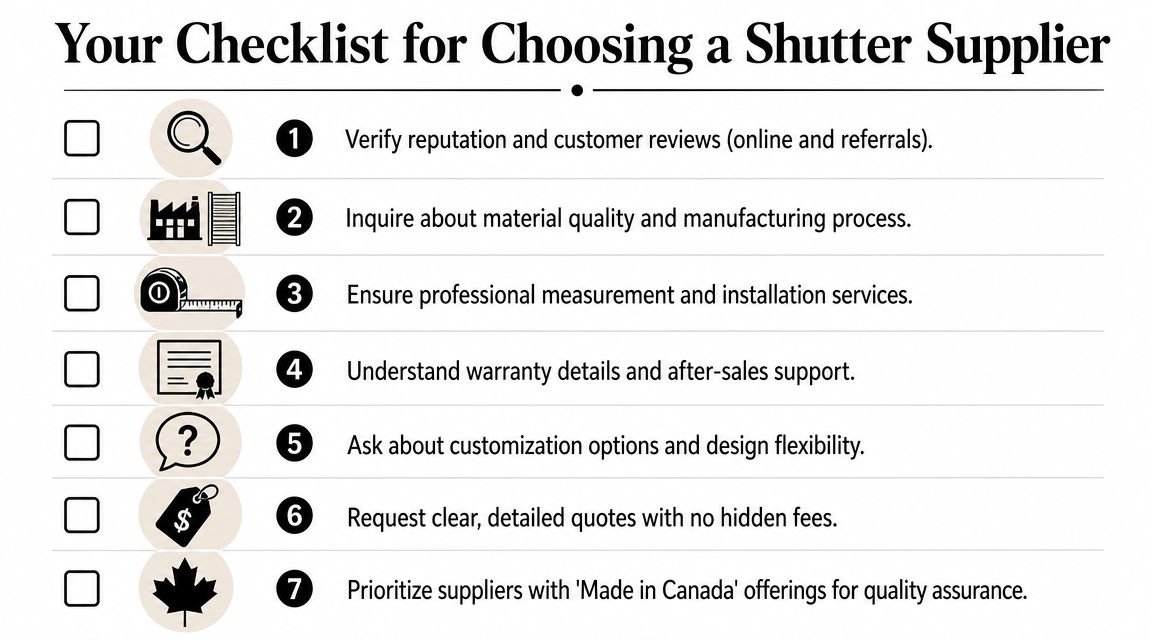
The supplier you choose affects more than price. It affects lead time, fit, service after installation, and whether the material makes sense for the room. If a company cannot explain those basics clearly, keep looking.
Questions worth asking
Use the consultation to test how the supplier thinks.
- Where are these shutters made? “Canadian-made” should mean the shutters are built here, not just ordered through a Canadian dealer. Ask where the plant is, where the parts come from, and what that means for lead times and replacement parts.
- Which material do you recommend for this room, and why? Bathrooms, kitchens, sun-heavy south-facing rooms, and dry main-floor living spaces should not all get the same recommendation.
- Who does the measuring and who does the installation? A tight handoff matters. In older Ontario homes, small measuring misses turn into crooked reveals, tight panel clearance, or louvers that never sit quite right.
- How do you handle out-of-square windows or uneven trim? If they work in real local housing stock, they should answer this without blinking.
- What is included in the quote? Get a clear list: site visit, measuring, installation, adjustments, and removal of old coverings.
- What happens if something arrives wrong or needs service later? You want a straight service policy, not a vague promise.
If you are still weighing custom against off-the-shelf options, the difference between custom window coverings and store-bought blinds in London, Ontario gives a practical comparison of fit, finish, and long-term value.
What a good answer sounds like
Good suppliers answer in specifics. They tell you why they would use composite in a humid bathroom, real wood in a formal dry room, or a different frame approach on an older window with uneven casing. They can explain lead times without dancing around the question. They can also tell you who to call if a panel needs adjustment a year from now.
That matters.
A shutter order is not just a product purchase. It is a made-to-measure job tied to your home, your trim, and your climate.
Red flags I would not ignore
Vague answers are the big one. So are “today only” discounts, one-material-fits-all recommendations, and quotes that feel light on detail.
Be careful with suppliers who talk only about colour and louver size. Appearance matters, but Ontario homes ask more from shutters than that. You need a supplier who understands moisture, sun exposure, seasonal movement, and the quirks of older walls and window frames.
I would also question any company that uses “Canadian-made” as a slogan but cannot explain what that means in practical terms. Ask whether local manufacturing shortens lead times, helps with warranty issues, and makes replacement parts easier to get. Those are the actual benefits.
One local option homeowners in London often compare is Blinds Hut, which offers Canadian-made custom window coverings with in-home consultation, measurement, and installation. The name matters less than the process. Clear recommendations, accurate measuring, clean installation, and reliable follow-up are what you are really buying.