Remote Control Operated Blinds: A Homeowner’s Guide
You're probably reading this because one window in your home has become the annoying one. Maybe it's over the kitchen sink, behind a sofa, or up in a stairwell where opening and closing the blind always feels like more work than it should.
That's usually how the conversation starts. Not with fancy tech talk, but with a daily irritation. Afternoon glare on the TV, cords that never hang right, or a window you just stopped adjusting because it's too awkward to reach.
Remote control operated blinds solve that problem in a simple way. You press a button, the blind moves, and the room feels easier to live in.
Table of Contents
- Tired of Tangled Cords and Awkward Reaching?
- What Exactly Are Remote Control Blinds?
- How Motorized Blinds Work Inside the Tube
- Choosing Your Control Style Remotes Apps and Smart Homes
- The Real Benefits Beyond Just Convenience
- Planning Your Installation Measurement and Power
- Cost Value and Finding Your Local Experts
- Frequently Asked Questions About Motorized Blinds
Tired of Tangled Cords and Awkward Reaching?
A lot of homeowners put up with bad blind setups longer than they should. One blind sticks halfway up. Another has cords that twist together. The high window in the family room never gets touched unless someone grabs a chair.
Those little annoyances wear on you. Morning sun hits the dining table too early, or the west-facing room turns bright and hot right when you're trying to relax.
Remote control operated blinds take those repeat problems off your list. Instead of walking window to window, you tap a remote and adjust the room in seconds.
The kinds of windows that push people toward motorization
Some windows almost ask for motorization.
- Tall foyer windows: They're hard to reach safely and often stay in one position all year.
- Windows behind furniture: If a bed, sofa, or tub blocks access, a manual blind becomes a nuisance fast.
- Wide living room setups: Multiple blinds across one wall look clean, but manually lining them up can be frustrating.
- Daily-use rooms: Bedrooms, media rooms, and home offices benefit most because you adjust light more often.
Practical rule: If you avoid using a blind because it's awkward, that's already a good sign it should be motorized.
The nice part is that this isn't niche home tech anymore. It's just a better operating system for your window coverings, especially in homes where comfort and ease matter more than fighting with cords every day.
What Exactly Are Remote Control Blinds?
Remote control blinds are window coverings with a built-in motor, so you open or close them by pressing a button instead of pulling a cord or chain. For homeowners, that usually means less daily fuss and a cleaner finish around the window.
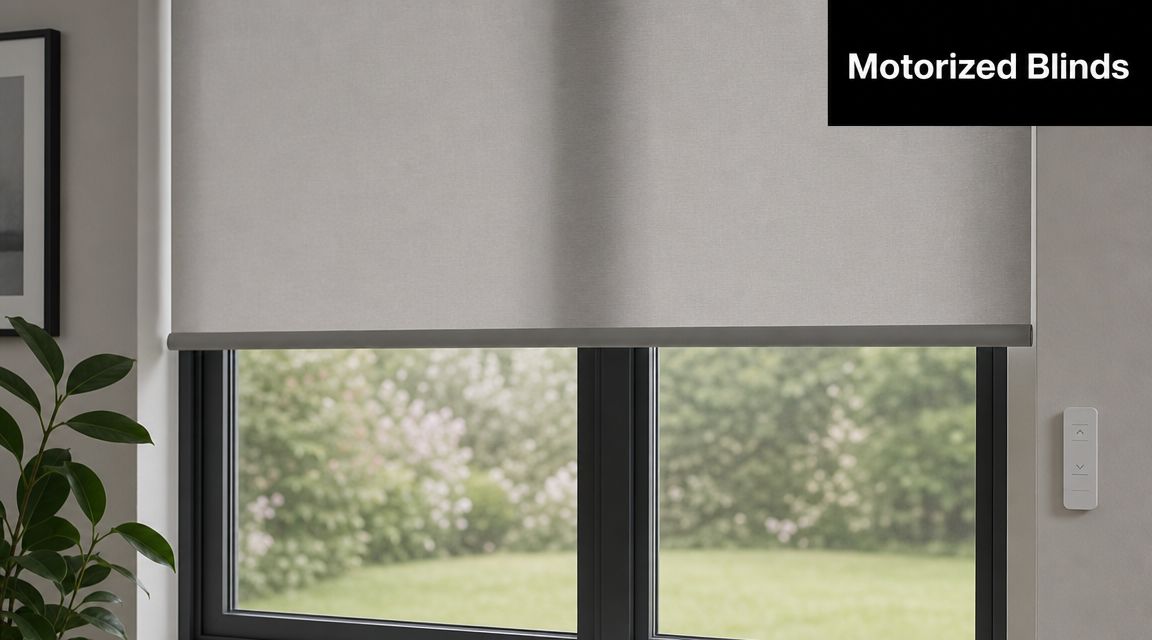
From the room, they often look much like a standard blind. The difference is hidden in the headrail or roller tube, where the motor sits out of sight. That matters if you like a tidy, low-profile look and do not want extra hardware hanging off the side.
What changes from a regular blind
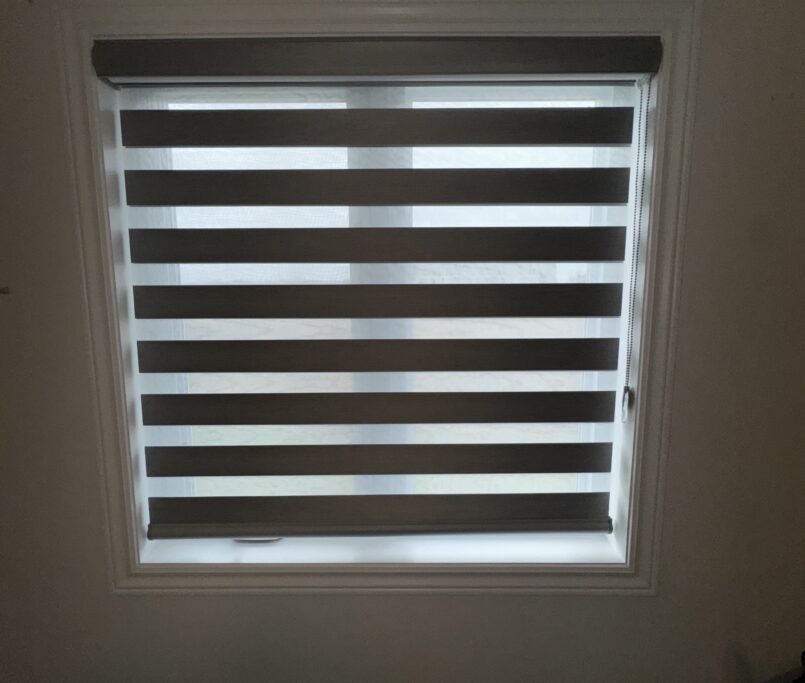
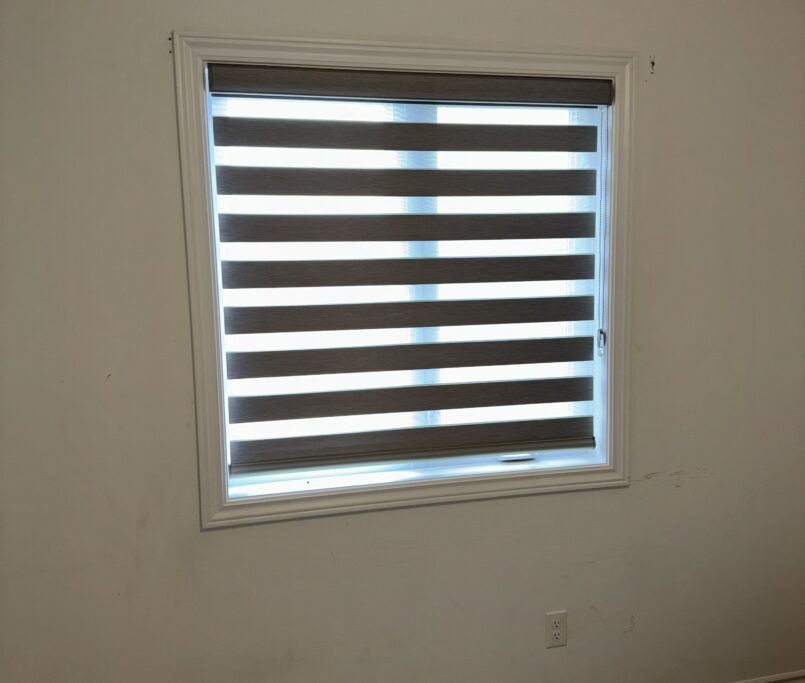
The fabric, colour, and overall style can still be very familiar. Roller shades, zebra blinds, honeycomb shades, and some drapery systems can all be motorized, depending on the product line and window size.
What changes is how the blind operates and how consistent it feels day to day.
- Manual blinds: You raise and lower them by hand with a cord, chain, or cordless lift system.
- Remote control blinds: The motor handles the movement after you press a button.
- Smart-enabled blinds: The same motor can also work through an app, voice assistant, or schedule if you want that extra layer of control.
That distinction matters in real homes. Some London, Ontario homeowners want one handheld remote for the bedroom and living room and nothing more. Others want their blinds to close at sunset or open gradually in the morning. Both are motorized. The setup just changes based on how simple or connected you want the system to be.
A quick look at a motorized setup helps make it feel less abstract:
What homeowners usually misunderstand at first
A lot of people assume remote control blinds are only about convenience. In practice, they are also about access, consistency, and getting the blind used the way it should be used. A hard-to-reach blind often stays half open for months. A motorized one gets adjusted properly because it is easy.
They are also not all the same.
Some systems are battery powered, which can be a smart fit for finished homes where you do not want wiring work. Others are hardwired, which makes sense in renovations, new builds, or large projects with several windows on one control. There is no universal best option. The right choice depends on window height, usage, budget, and whether you want the cleanest long-term power setup or the simplest install.
That is usually the point where professional advice saves people money. The blind has to be sized properly, the motor has to match the shade, and the control setup has to suit how the room is used. If those pieces are off, the product can still work, but it will not feel as smooth or reliable as it should.
How Motorized Blinds Work Inside the Tube
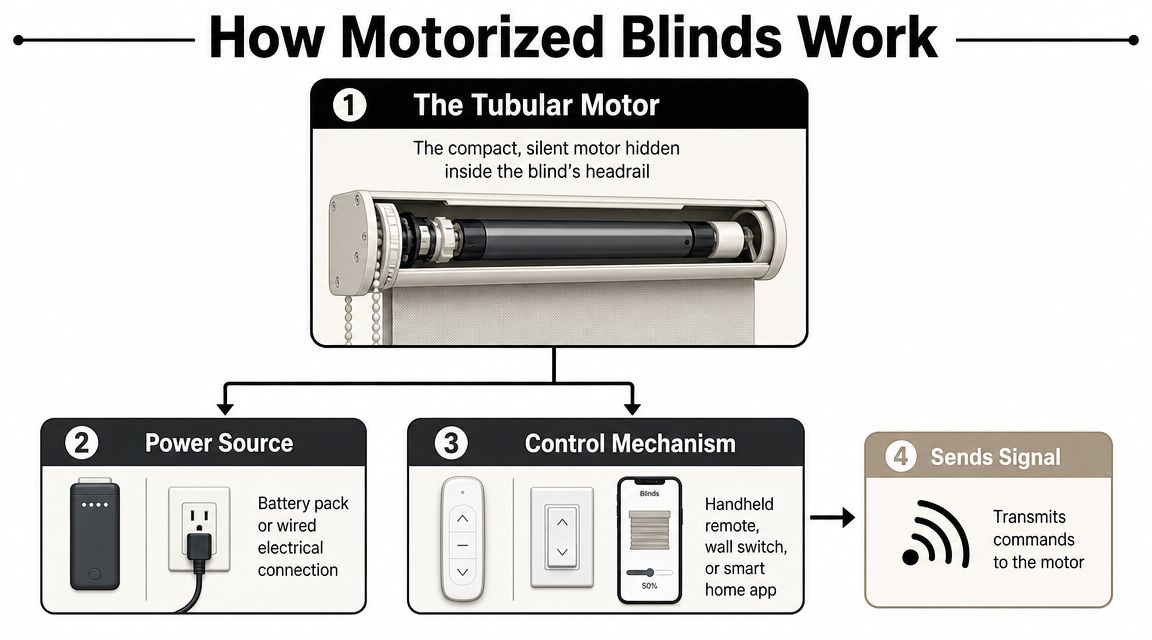
The working part of a motorized blind is usually a tubular motor. It sits inside the roller tube at the top of the shade and turns that tube when it gets a command. As the tube rotates, the fabric rolls up or down.
That's the core idea. Small motor, hidden location, controlled movement.
The three parts that matter most
When homeowners ask what they're really paying for, I usually break it into three pieces.
The motor
This is the unit that does the lifting. It has to match the size and weight of the blind, otherwise movement can feel strained or uneven.The power source
Some systems use a battery setup. Others use low-voltage wiring. The right choice depends on the window location, access, and whether power was planned during renovation.The control method
The motor receives instructions from a remote, wall control, or smart system. The user experience depends a lot on how simple that control feels in daily use.
Why installation accuracy matters
The quality of the setup greatly influences whether a blind operates smoothly or fussily. Motorized systems are less forgiving of sloppy setup than manual ones.
One installation example shows the cable should exit the wall at about 77 mm in from the bracket side edge and 26 mm down from the top edge, with the cable tied away from the fabric. The same example also shows lower-limit setting stored electronically by holding the remote's set button for about 4 seconds, all outlined in this motorized blind installation walkthrough.
If cable routing is wrong, the fabric can rub. If brackets are out of alignment, the motor can carry side-load it wasn't meant to handle. That's when homeowners start hearing extra noise, seeing uneven roll-up, or wondering why one side never stops exactly where it should.
Motorized blinds don't usually fail because the idea is bad. They fail because the setup was casual.
What works and what doesn't
A properly sized motor, straight brackets, clean wiring path, and precise limit setting usually give you the quiet, even motion people expect. That's what works.
What doesn't work is treating motorization like a basic DIY blind swap. The tolerances are tighter, and the stopping points matter. A manual blind can hide a rough install for a while. A motorized one usually tells on it right away.
Choosing Your Control Style Remotes Apps and Smart Homes
Not every homeowner wants the same level of tech. Some want one handheld remote and that's it. Others want to control blinds from the cottage, set schedules, or tie them into voice commands.
The smartest choice is usually the one you'll use every day.
A simple way to compare your options
| Control Method | Best For | Key Feature |
|---|---|---|
| Remote control | Homeowners who want straightforward daily use | Button-based control without needing an app |
| App control | People who want access from their phone | Adjustments and scheduling from a mobile device |
| Smart-home integration | Households already using connected devices | Voice commands and automation with other systems |
Good for most homes
A dedicated remote is the easiest entry point. It's familiar, quick, and usually the least complicated option in real life.
If your main goal is to open bedroom blinds in the morning, lower a media room shade at night, or operate a hard-to-reach window, remote-only control often does the job nicely. It avoids extra setup and keeps the system focused.
Better for routine-based households
App control makes more sense when you like routines. Some people want blinds to follow a schedule or be adjusted while they're away from home.
This is also where buyers start comparing systems more carefully. Some app-based options feel smooth. Others feel like they added software before they nailed the basics.
Buy for the control method you'll use when you're half awake on a Tuesday morning, not the one that sounds impressive in a showroom.
For a broader look at connected options, this guide to smart blinds in Canada is a useful next read.
Best for fully connected homes
Voice control and automation appeal to homeowners who already use smart speakers, scenes, or routines. In the right setup, saying “close the living room blinds” is convenient.
But more integration also means more decision points. You'll want to ask how the blinds behave if the app is down, the internet is spotty, or you want a faster backup method. In many homes, a remote plus optional smart features is the sweet spot.
The Real Benefits Beyond Just Convenience
Convenience gets the attention first. What keeps homeowners happy six months later is usually simpler than that. The blinds are easier to live with, easier to reach, and easier to trust in the spots that used to be annoying every day.
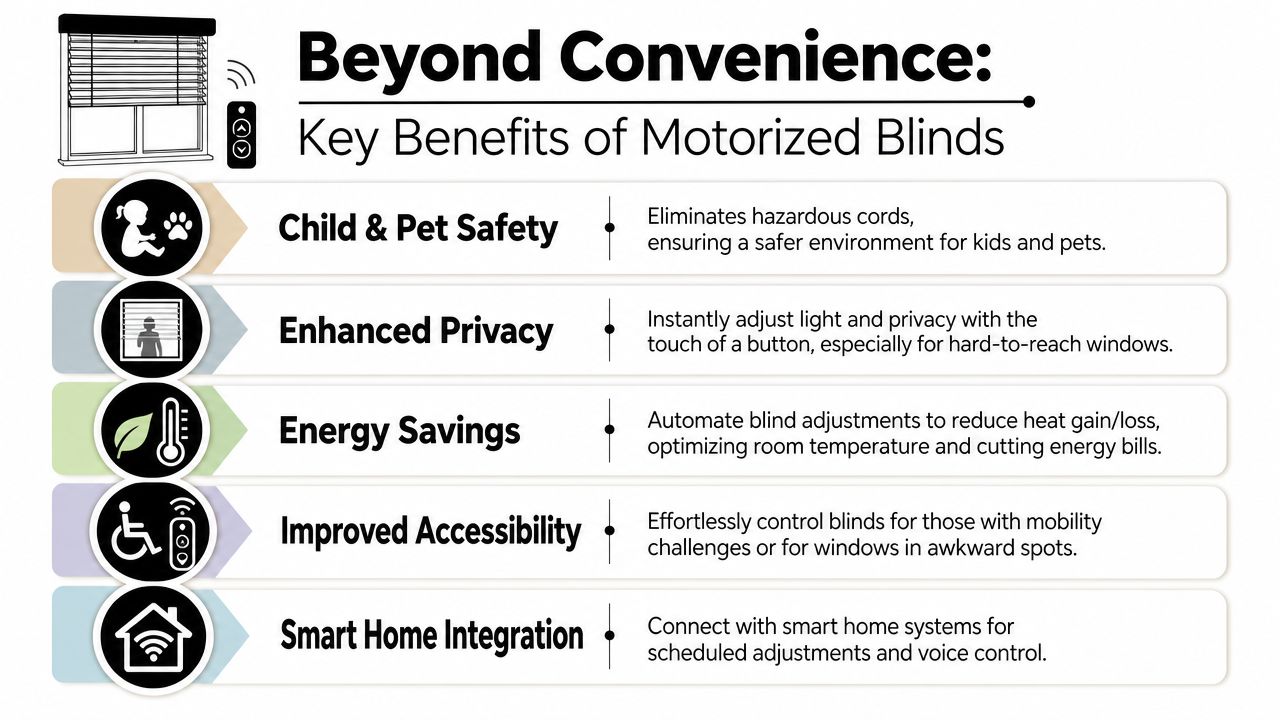
In London homes, I see the strongest payoff in rooms with one clear problem to solve. A tall foyer window. A bedroom where blackout matters. A family room that gets blasted with late afternoon sun. In those cases, motorization is less about novelty and more about making the window function properly.
The benefits homeowners notice most
- Safer operation: No dangling lift cords is a meaningful upgrade in homes with children or pets.
- Better privacy control: Street-facing or closely spaced windows are faster to manage, especially at night.
- Easier access: High, deep-set, or furniture-blocked windows become practical to use again.
- More reliable light control: People are more likely to adjust the blinds when the control is easy, so glare and heat stay under better control.
- Cleaner appearance: Cord-free blinds usually look tidier and suit newer renovations well.
There is also a durability point that gets missed. Blinds that are hard to reach often get tugged unevenly, left half-open, or ignored altogether. A properly installed motorized unit tends to get used the way it was meant to be used, which can help it wear more evenly over time.
Where the value shows up fastest
Motorization earns its keep quickest where a manual blind is awkward enough that people stop using it properly. That often means large windows, grouped windows, or any opening behind a sofa, tub, kitchen table, or built-in bench.
Bedrooms are another strong case. A remote control blackout shade is not just easier at bedtime. It also gives you more consistent privacy and light blocking because the blind gets closed every night instead of only when someone remembers.
Good results depend on good planning. If you are still comparing fit, bracket placement, and mounting choices, this guide on how to install custom blinds properly helps explain what affects performance before you order.
If one window needs better privacy, easier access, and more consistent light control, motorization usually has a practical case on its own. Smart features are optional. Everyday usability is the part that lasts.
Planning Your Installation Measurement and Power
The planning stage is where good motorized projects stay easy. Most mistakes happen before the blind ever goes on the wall. Wrong measurements, rushed power decisions, and poor bracket placement can all create problems later.
Two things matter most early on. Fit and power.
Start with measurement, not fabric
Homeowners often focus on colour first. That's understandable, but fit drives the final result.
With motorized blinds, accurate measurement matters for more than appearance. A poor fit can affect privacy gaps, mounting stability, and how cleanly the blind operates within the opening.
A productive consultation should answer questions like these:
- Inside or outside mount: Which option gives better coverage and cleaner operation for the window shape?
- Obstructions: Is there trim, a crank, a handle, or tile detail that changes the bracket position?
- Window use: Will the blind be adjusted daily, occasionally, or only at certain times?
- Grouping: Should multiple blinds line up visually and operate together?
If you're comparing prep steps before ordering, this article on how to install custom blinds covers the basics well.
Battery or wired power
This choice affects both installation and long-term use. There isn't one perfect answer for every room.
Battery-powered systems are usually easier to add in existing homes because you don't need to open walls. They're often the practical choice for retrofit projects.
Wired systems make more sense when you're renovating, building new, or already planning electrical work. They keep power continuous, but they demand earlier coordination.
Questions worth asking before you order
Instead of chasing features first, ask the practical questions.
- How accessible is the window after furniture is in place?
- Will I be happy charging or servicing this setup if needed?
- Is this a simple remote-control project or part of a larger smart-home plan?
- Who is setting limits, aligning brackets, and testing final operation?
Those answers usually point to the right system faster than brochures do.
Cost Value and Finding Your Local Experts
Motorization is an upgrade. It adds function, cleaner operation, and a more polished experience, but it also adds cost, so it helps to go in with realistic expectations.
According to installed motorized blind pricing details, motorized blinds typically cost $200 to $300 more per window than manual blinds, with an average installed cost of $400 to $600 per window. The same source notes a typical service life of up to 10 years.
What that cost is really buying
You're not only paying for a motor. You're paying for a custom blind system that has to fit properly, operate smoothly, and stop where it should every time.
That value tends to show up in a few places:
- Daily ease: The blind gets used instead of ignored.
- Cleaner finish: No hanging cords and less visual clutter.
- Better fit for difficult windows: Tall, wide, or obstructed windows become easier to live with.
- Longer-term satisfaction: A properly installed system usually feels worth it longer than a cheap workaround.
Why the installer matters as much as the product
A good motor paired with weak installation can still be disappointing. Brackets, alignment, programming, and final testing all affect how polished the system feels once the job is done.
That's why many homeowners prefer a local company that handles measuring, product selection, installation, and service in one chain of responsibility. For example, motorized blinds in London, ON with smart control options show the kind of local offering available when you want both the product and the fitting handled together. Blinds Hut is one such option in London, Ontario, offering custom motorized blinds with in-home consultation and installation.
Frequently Asked Questions About Motorized Blinds
A lot of homeowners get to this stage with the same concern. They are not wondering whether motorized blinds exist. They are wondering whether they will still like the decision six months after installation, once the novelty wears off and the blinds just need to work.
That is the right way to look at it.
Straight answers to common concerns
| Question | Answer |
|---|---|
| Are motorized blinds reliable? | Yes, if the motor, shade size, power setup, and controls are matched properly to the window. Problems usually come from poor measuring, weak installation, or choosing a control system that is more complicated than the household actually wants. |
| What happens during internet issues? | It depends on the controls you choose. Many remote-based systems still operate locally, while app and voice features may be limited until internet service returns. Ask for a clear answer before you buy. |
| What happens during a power issue? | Battery-powered and hardwired systems do not behave the same way. Some products pause until power is restored. Others depend on battery condition. This should be explained during the quote, not after installation. |
| Are remotes simpler than smart-home systems? | Usually, yes. A dedicated remote is often the easiest option to live with day to day, especially for households that want dependable operation without extra setup. |
| Can high or awkward windows be motorized? | Yes. In fact, those are often the windows where motorization makes the most sense because daily access is inconvenient or unsafe. |
| Is professional installation worth it? | For most homes, yes. Motorized blinds need accurate measuring, proper bracket placement, clean programming, and final testing. A small setup mistake can affect how the whole system feels. |
The biggest reliability question
The question I hear most often is simple. What still works when something goes wrong?
That usually means internet service is down, a battery needs charging, or the homeowner is trying to decide between a basic remote and a more connected system. In general, simpler control setups tend to have fewer points of failure. Hunter Douglas outlines the range of control choices in this Hunter Douglas overview of motorization options, but that kind of manufacturer page is still only a starting point. The practical question is how the blinds will behave in your house, with your power setup, after the installer leaves.
I usually suggest separating the decision into two parts. First, how do you want to use the blinds on a normal day? Second, what backup do you want if the app, Wi-Fi, or voice assistant is unavailable?
The more connected the setup, the more specific your questions should be about fallback control.
A good shortlist of questions for any quote
Bring these into the conversation with any dealer or installer:
- How is the blind powered, and what maintenance does that power method need?
- Will the remote still operate the blind if the internet is down?
- If I choose app or voice control, what is the backup method?
- Who handles programming, limit setting, and final testing on install day?
- If one blind stops responding later, who comes back to diagnose it?
Those answers usually tell you more than a long feature list. They also help you compare quotes properly, because two motorized blind systems can look similar on paper and feel very different in daily use.
If you're weighing remote control operated blinds for your home in London, Ontario, Blinds Hut is a practical place to start. They offer custom window coverings, in-home consultation, measurement, and installation, which makes it easier to compare motorized options based on your windows, your layout, and how you want the blinds to work day to day.