Solar Shades Canada: Your 2026 Buying Guide
The sun is pouring into your living room, which sounds nice until it hits the TV, warms up the sofa, and leaves a bright strip across the floor you just paid to refinish. By late afternoon, the room feels hotter than the rest of the house, and the only quick fix is closing heavy drapes and giving up your daylight.
That's the moment many homeowners start looking at solar shades in Canada. They want glare control and UV protection, but they don't want to lose the view, and they definitely don't want to guess wrong on privacy once the sun goes down.
Table of Contents
- Your Solution to the Sunny Day Dilemma
- What Exactly Are Solar Shades
- Decoding Openness The Key to Perfect Light Control
- Why Solar Shades Are a Smart Choice for Canadian Homes
- Upgrading Your Shades Motorization and Smart Homes
- Your Solar Shade Project Guide from Start to Finish
- Finding a Trusted Window Covering Partner in Canada
Your Solution to the Sunny Day Dilemma
A lot of people don't start with style. They start with frustration.
It's the west-facing family room that turns blinding in the evening. It's the condo window that lets in great daylight all morning, then makes work calls awkward because you're squinting at the screen. It's the dining area that looks beautiful at noon and harsh by three o'clock.
Solar shades usually come into the conversation when homeowners want a middle ground. They don't want blackout darkness in the middle of the day, but they're done fighting glare and watching sun exposure take a toll on floors, furniture, and artwork.
In Canadian homes, that balancing act matters more than generic product pages suggest. A sunny room in Southern Ontario doesn't behave the same way all year, and a shade that feels perfect on a bright July afternoon can feel too closed off on a grey winter morning.
Practical rule: The best solar shade isn't the one that blocks the most light. It's the one that controls the problem you actually have without creating a new one.
That's why the right conversation isn't just “Do solar shades work?” It's “What room is causing trouble, what direction does it face, and what do you still want to keep?” Sometimes the answer is glare reduction with a preserved view. Sometimes it's stronger UV control. Sometimes it's daytime comfort plus a second layer for evening privacy.
If you're shopping for solar shades in Canada, those trade-offs matter more than the display wall at a big-box store.
What Exactly Are Solar Shades
Solar shades are roller shades made with a woven screen fabric that filters sunlight while keeping the room visually open.
That construction is what sets them apart from a regular light-filtering roller shade. A standard roller fabric usually softens brightness and adds softness to a room. A solar shade is built for a more specific job: cutting glare, reducing UV exposure, and preserving an outside view as much as possible. If you want a fuller comparison with other light-filtering options, our guide to light-filtering roller shades explains where each style fits.
In real homes, that difference shows up fast. A kitchen with strong morning sun, a home office facing west, or a condo living room with floor-to-ceiling glass all ask for daylight control without making the space feel shut in.
What they do well
Solar shades are a strong fit when the room needs better function during the day:
- Reduce screen glare: Helpful for TVs, laptops, tablets, and phones in bright rooms.
- Limit UV exposure: They help slow fading on hardwood, upholstery, rugs, and artwork.
- Keep daylight in the room: You still get natural light instead of turning the space dim at noon.
- Maintain a clean look: The profile is simple and works well in condos, newer builds, and updated older homes.
That combination is why many Canadian homeowners choose them for living areas, kitchens, and offices instead of bedrooms.
What they are not
Solar shades are not the right answer for every window.
They do not create blackout darkness. For bedrooms, nurseries, or media rooms, blackout shades or a layered setup usually make more sense. They also do not guarantee privacy after dark. In daylight, the fabric can obscure the view from outside reasonably well, depending on the weave and the light conditions. Once interior lights are on at night, people outside may see silhouettes or more.
That last point gets missed all the time in dense suburbs and newer Ontario developments where homes sit close together. Homeowners often love the daytime view and light control, then realize they still want drapery, side panels, or a secondary privacy shade for the evening.
Solar shades work best when the goal is daytime glare control, UV protection, and a brighter room that still feels open.
In Canadian homes, the practical question is rarely just "Do they block sun?" The better question is whether they solve the daytime problem without creating a nighttime privacy problem or making winter days feel too closed off. That is where proper fabric selection makes the difference.
Decoding Openness The Key to Perfect Light Control
A south-facing family room in July and that same room in January do not ask for the same shade. That is why openness matters so much in Canadian homes.
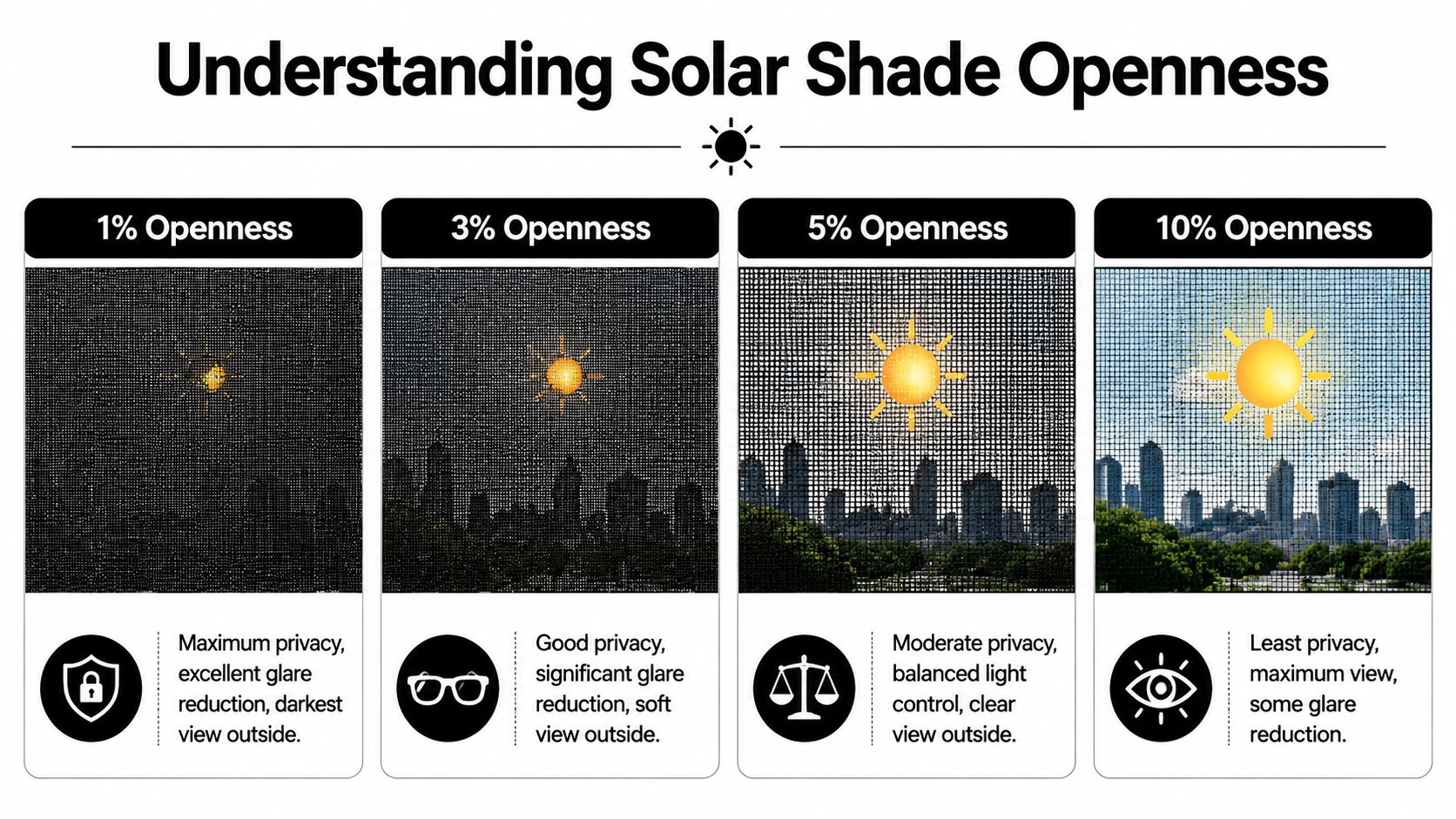
Openness is the percentage of the fabric that remains open in the weave. It affects three things homeowners notice right away. How much glare gets through, how clear the view stays, and how exposed the room feels during the day. Lower percentages give stronger sun control and a tighter view out. Higher percentages let in more daylight and preserve more of the view, but they also give up some glare control and daytime privacy.
A lot of poor shade choices start with a small swatch at the kitchen table. The sample can look great on its own, then behave very differently once it covers a large west-facing window at 4 p.m.
Here's a visual comparison that makes the difference easier to spot.
What openness really means
Lower openness means a tighter weave. The room feels calmer, screens are easier to read, and harsh afternoon sun is easier to manage. The trade-off is a flatter, darker view to the outside.
Higher openness means a looser weave. You keep more connection to the yard, street, or ravine view, and the room stays brighter on grey winter days. The trade-off is that sunny exposures can still feel sharp, especially in rooms with large glass or reflective flooring.
Here is the practical version homeowners usually need:
| Openness | What it feels like in a room | Best fit |
|---|---|---|
| 1% | Dense, strong glare control, darkest view out | Media rooms, harsh west sun, rooms where comfort matters more than view |
| 3% | Strong control with a softer outside view | Home offices, family rooms, street-facing windows |
| 5% | Balanced and versatile | Living rooms, kitchens, general-use spaces |
| 10% | Brightest feel and clearest view | Scenic windows, lighter exposures, rooms where view comes first |
The UV story follows the same pattern. Tighter weaves generally block more UV, while more open weaves keep a clearer sightline outdoors. For many homeowners, that becomes a balancing act between protecting floors and furniture and keeping the room feeling open.
A short walkthrough can also help if you want to see the concept in action:
How to choose the right openness by room
Room use should drive the choice.
- For a west-facing bedroom: Lower openness helps with late-day glare and heat, but many bedrooms still need blackout shades or a second layer if sleep is the priority.
- For a kitchen: A more open fabric often works well because the room benefits from daylight, especially through long Canadian winters.
- For a home office: Mid-range openness is usually the safest choice. It cuts screen glare without making the room feel closed in.
- For large front windows: Privacy often matters more than homeowners expect, particularly in newer subdivisions where houses are close together. A tighter fabric usually gives a better result.
Southern Ontario homes often need a different answer on each elevation. I rarely recommend one openness across the whole house unless the layout and exposure are unusually consistent. Front windows, rear yard windows, and upper-storey office windows often perform best with different fabrics.
If you're comparing solar shades with softer light-filtering products, this guide to light filtering roller shades is useful for understanding where each option fits.
The best choice usually comes down to one honest question. Is the bigger priority reducing glare, keeping the view, or protecting privacy in a close neighbourhood. Once that is clear, the right openness is usually easy to narrow down.
Why Solar Shades Are a Smart Choice for Canadian Homes
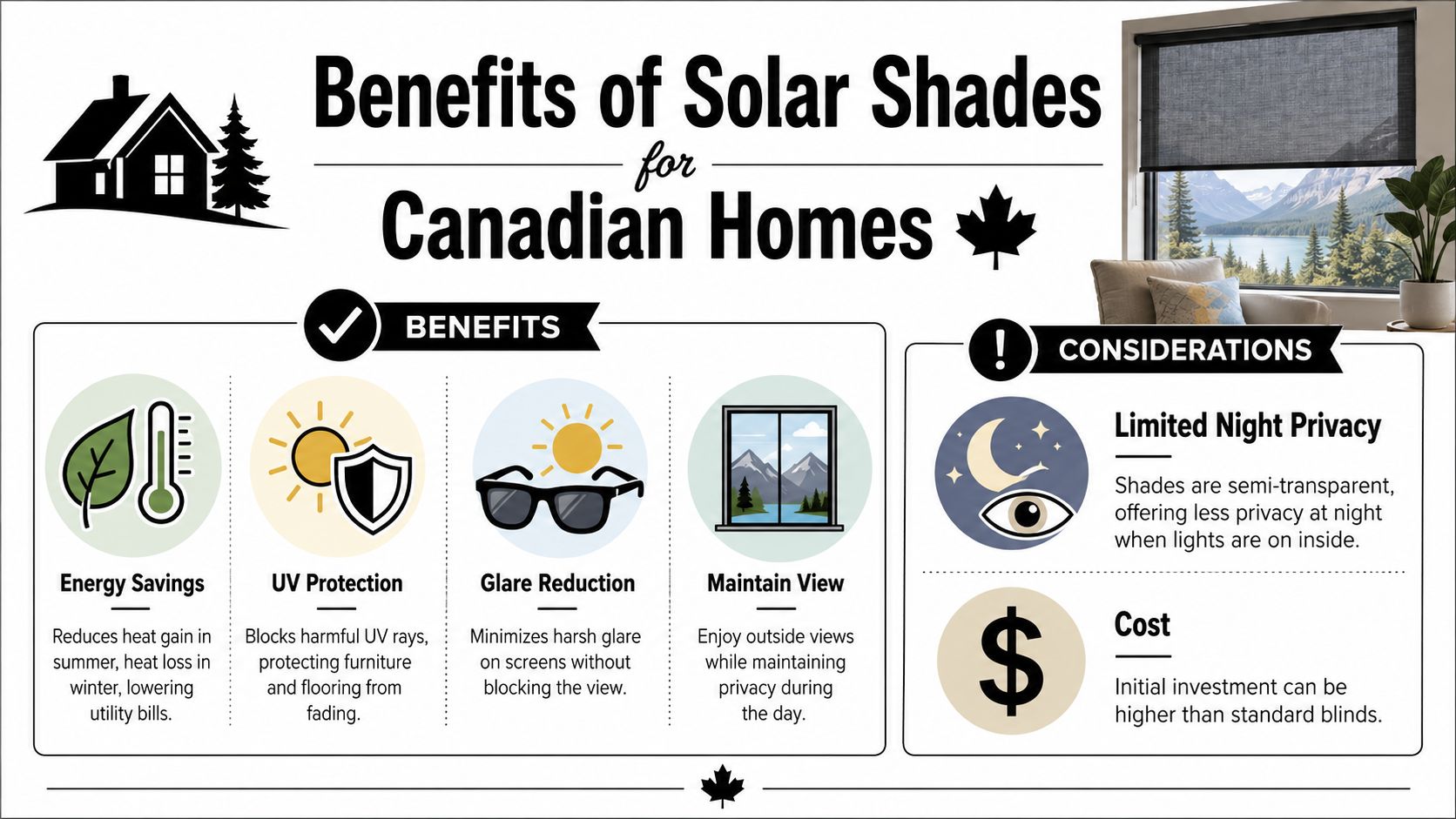
A bright January morning and a hot August afternoon can hit the same Southern Ontario window in completely different ways. That is why solar shades work well in Canadian homes. They cut glare and soften heat gain without blocking the room off the way heavier treatments often do.
The summer benefit homeowners notice first
The first thing homeowners typically notice is that the room feels easier to be in.
Light still comes through, but it is calmer. Screen glare drops. Harsh afternoon sun feels less intense, especially in west-facing living rooms, breakfast areas, and upstairs offices that heat up fast.
That comfort improvement matters, but it helps to be clear about the trade-off. Interior solar shades reduce glare, protect floors and furnishings from direct sun, and make bright rooms more usable through the day. They do not stop solar heat as effectively as an exterior shading product mounted outside the glass.
In real homes, that usually means solar shades are an excellent comfort product first. They help manage the effects of sun that has already reached the window. If a room has severe heat build-up, the best answer may involve more than one step, such as better glazing, film, exterior shading, or a layered window treatment plan.
The privacy trade-off retailers often skip
This is the part many homeowners in newer subdivisions and condo buildings need explained properly.
During the day, solar shades often do a good job preserving the view while limiting how much people outside can see in. At night, the balance changes. Once interior lights are on, a more open fabric can leave the room more exposed than expected, which The Shade Store explains in its overview of solar shades and nighttime privacy.
That matters in Canada because privacy needs are rarely the same on every side of the house. A front room facing a close sidewalk in London, Oakville, or a newer GTA subdivision usually needs a different setup than a rear family room backing onto a private yard.
A practical rule of thumb:
- Daytime privacy: Usually good, especially with tighter fabrics and direct daylight outside.
- Nighttime privacy: Often limited once indoor lighting is brighter than the exterior.
- Best answer for close neighbours: Layer solar shades with drapery or add a second shade if evening privacy matters every day.
That layered approach is often the honest recommendation, not an upsell. It lets homeowners keep daylight and outside views during the day, then get the privacy needed after dark. If convenience is part of the plan too, pairing solar shades with motorized smart blinds for Canadian homes can make those day-to-night adjustments much easier to keep up with.
Upgrading Your Shades Motorization and Smart Homes
A west-facing family room in July tells the story quickly. The sun starts heating the glass in the afternoon, glare builds on the TV, and the shade that was supposed to help stays half-open because nobody wants to walk over and adjust it again.
That is where motorization earns its keep in a Canadian home. Solar shades work best when they are used properly through the day, not left in one position for weeks. In rooms with repeat sun exposure, scheduled operation often matters more than the app itself.
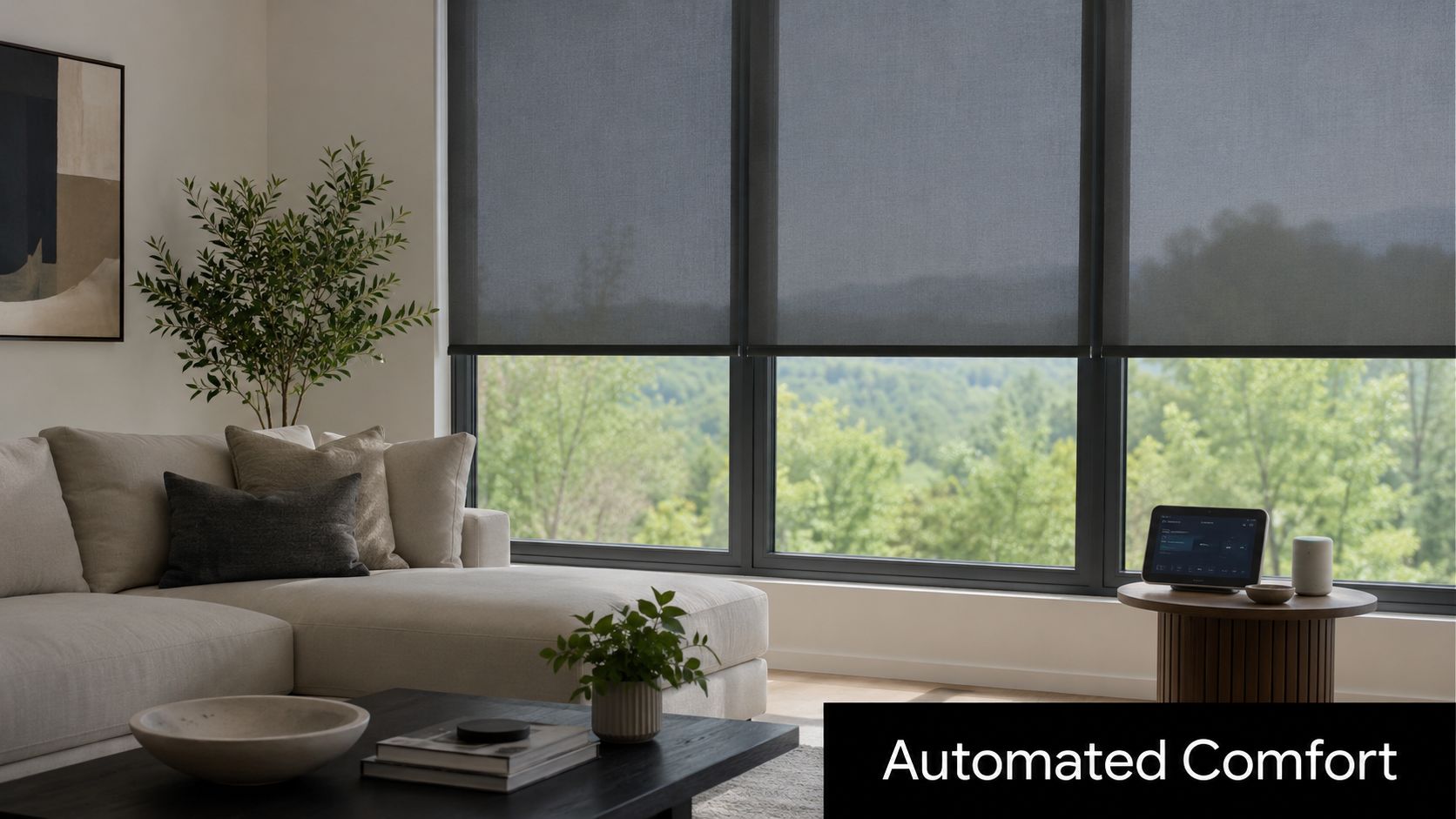
Where motorization makes the biggest difference
The best candidates are usually the windows people avoid touching now. Tall foyer glass, stairwell windows, wide patio doors, and large banks of living room windows all fall into that category. Manual shades can still suit smaller bedrooms or a single office window, but big or awkward openings are where motorization starts paying for itself in day-to-day use.
It also helps with a very Canadian balancing act. In summer, scheduled lowering can cut glare and heat gain before a room gets uncomfortable. In winter, the same shades can be set to stay up longer and let in useful daylight. Big-box displays rarely explain that seasonal trade-off, but it matters in places like Southern Ontario where the sun feels very different in January than it does in August.
A few situations where homeowners usually notice the benefit right away:
- Hard-to-reach windows: Better for high glass, tubs, kitchen counters, or furniture layouts that block easy access.
- Wide window groupings: Keeps multiple shades aligned instead of slightly uneven across the same wall.
- Rooms with predictable afternoon sun: Lets the shade lower before glare and overheating become a daily irritation.
- Busy family spaces: Makes operation simple for everyone, including kids, grandparents, and guests.
Homeowners comparing control options can get a clearer sense of what is available in these motorized smart blinds for Canadian homes, especially if they are deciding between remote control, app control, and scheduled automation.
Why cordless matters beyond convenience
Safety is part of the decision too.
Health Canada has warned about the risk posed by accessible window covering cords, particularly in homes with young children. That makes cordless and motorized operation more than a comfort upgrade. It removes a known hazard while also making the shade easier to use every day.
For family homes, that combination is usually the strongest argument. Cleaner lines are a nice bonus. Safer, more consistent operation is the main reason many homeowners choose it.
Your Solar Shade Project Guide from Start to Finish
It usually starts the same way. The west-facing room gets too bright by mid-afternoon, screens wash out, and furniture near the glass takes the worst of the sun. By the time many homeowners start shopping, they already know they want relief. What they often do not know yet is which details will decide whether the finished shade feels right in January, in July, and after a few years of daily use.
Homeowners often focus on colour first. In practice, the better order is fit, openness, mount style, then fabric appearance. A solar shade that looks great on a sample card can still disappoint if it leaves too much light gap, sits awkwardly over trim, or gives up more privacy than expected at night in a close subdivision.

Start with the window, not the fabric sample
Each opening brings its own limits. Frame depth, trim projection, window cranks, nearby patio doors, and the direction of the sun all affect the final setup. In Southern Ontario, I also look at seasonal use. Some rooms need stronger glare control for summer afternoons, while others benefit from keeping more daylight through the shorter winter days.
That is why measuring comes first. Accurate measurements decide whether an inside mount will sit neatly, whether an outside mount will control light gaps better, and whether grouped windows will line up cleanly across the wall. If you are comparing service levels, professional blinds fitting services in London, Ontario usually make the difference between a shade that merely covers the glass and one that looks properly finished.
A reliable process usually looks like this:
- Define the room problem. Glare, heat gain, UV exposure, daytime privacy, and nighttime privacy are different issues. One shade does not solve all of them equally well.
- Measure the actual opening and surrounding trim. Custom shades leave little room for guesswork.
- Choose openness by room, not by whole house. A street-facing living room, a backyard office, and a sunroom often need different fabric percentages.
- Decide on the mount. Inside mount gives a cleaner built-in look. Outside mount often improves coverage and can be the better choice when privacy or light control matters more.
- Confirm operation and bracket placement. This matters more on large windows, door-adjacent windows, and multi-shade layouts.
- Install square and level. Even a good shade looks wrong if the hem bars do not align.
What changes the final setup
Price and performance usually shift because of a few practical choices.
- Window size: Larger shades need more fabric and sometimes a heavier-duty operating system.
- Fabric openness and colour: These affect glare control, view-through, and how much heat and light enter the room.
- Mount style: Inside mount looks fitted. Outside mount can reduce side gaps and handle shallow frames better.
- Room conditions: Dense neighbourhoods, TV rooms, corner windows, and sliding doors all change the recommendation.
- Operation type: Manual, cordless, and motorized options each suit different window sizes and daily routines.
Canadian homeowners also tend to notice the long-term side of the decision. Window coverings are rarely replaced as casually as paint or decor accessories, so it makes sense to choose with durability, serviceability, and year-round comfort in mind, as noted earlier.
The best results come from treating solar shades as part of how the room works, not just how the window looks. That is the difference between a shade that solves a sunny-day problem and one that still feels like the right choice after a few Ontario summers and winters.
Finding a Trusted Window Covering Partner in Canada
The product matters. The person guiding the project matters just as much.
A good window covering partner doesn't start by pushing the most expensive option. They ask how the room is used, what the sun is doing, whether privacy is a daytime issue or an evening issue, and how much convenience you want.
What to look for before you book
A trustworthy provider usually offers a few things that reduce risk right away:
- In-home consultation: Samples look different in your own light than they do in a showroom.
- Precise measuring: Custom shades leave little room for guesswork.
- Clear trade-off advice: You want someone who will say when a solar shade is the wrong answer for a bedroom or street-facing room.
- Professional installation: Clean brackets, level lines, and smooth operation make a visible difference.
One good benchmark is whether they can explain why one room should get a different solution than another. If every window gets the same recommendation, the advice probably isn't specific enough.
Why local guidance matters
Canadian homes vary more than many online guides account for. Older trim details, newer oversized windows, dense suburban sightlines, condo privacy issues, and changing seasonal light all affect what works.
That's where a local specialist often has an edge. They've seen the same neighbourhood layouts, the same west-facing family rooms, and the same “looks great by day, too exposed at night” complaints before.
If you're comparing providers, it helps to review what strong blinds fitting services in London, Ontario should include, from measurement to finishing details.
The right partner should leave you with fewer surprises, not more. That's the standard worth looking for.
If you're ready to get advice that fits your actual rooms, Blinds Hut offers in-home consultations, custom-made Canadian window coverings, and professional installation for homeowners in London, Ontario. It's a practical way to choose solar shades with the right openness, privacy plan, and finish the first time.