
Vertical Blinds Canada: Your 2026 Guide to Stylish Homes
If you're looking at a patio door, a wide living room window, or an awkward renovation opening and wondering whether vertical blinds still make sense, you're not alone. A lot of Canadian homeowners like the function of verticals but worry they'll look dated, feel flimsy, or be the wrong choice now that motorized shades and sleeker options are everywhere.
That hesitation is fair. Vertical blinds can still be the right answer, but only in the right room, with the right material, and with measurements done properly.
Table of Contents
- Are Vertical Blinds a Good Choice in 2026?
- Choosing Your Vertical Blind Material
- How to Measure for a Perfect Fit
- What Do Vertical Blinds Cost in Canada?
- Modern Upgrades for Your Vertical Blinds
- Finding a Canadian Supplier and Installer
Are Vertical Blinds a Good Choice in 2026?
Yes, sometimes. No, not everywhere.
The big mistake is treating vertical blinds as either outdated or universally practical. They're still a strong choice for wide sliding doors and budget-conscious coverage, even as more homeowners look at motorized and other modern treatments for safety and convenience, a shift visible in Canadian patio-door blind catalogues.
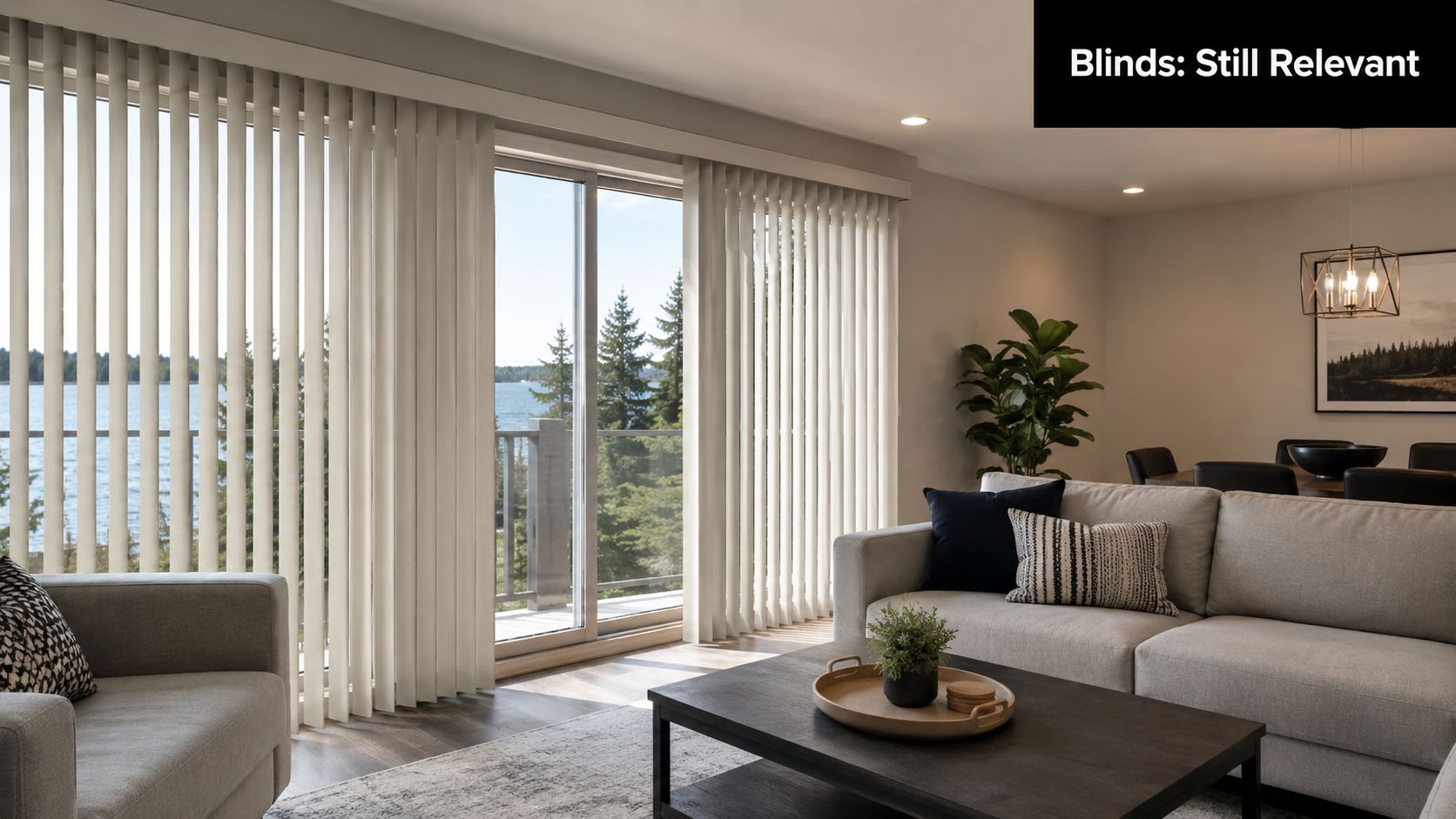
For many homes in Ontario, that's the heart of the decision. A patio door needs coverage that moves with the opening, gives privacy at night, and doesn't turn everyday use into a hassle.
Where vertical blinds still make the most sense
Vertical blinds shine when the opening is wide and used often. Sliding glass doors, walkouts, basement patio doors, and broad family-room windows are still the most natural fit.
They also make sense when you want practical light control without covering the entire wall with a heavier treatment. If you tilt the vanes instead of fully opening them, you can manage glare and privacy without losing all your daylight.
Practical rule: If the opening gets used like a doorway, vertical blinds usually feel easier to live with than many side-by-side shade solutions.
That said, not every modern room benefits from them. In a formal sitting room, a compact bedroom window, or a minimal interior with clean-lined roller shades elsewhere, verticals can feel like the wrong language for the space.
Why the old reputation doesn't always apply
A lot of the "vertical blinds are dated" talk comes from older systems. People remember noisy tracks, brittle vanes, yellowed PVC, and clunky controls.
Today's options are broader than that. You can still choose a simple vinyl vertical for a rental or back door, but there are also cleaner profiles, better textures, and more refined finishes than many homeowners expect. If you want a quick overview of where they still work well, this guide to the benefits of vertical blinds for your home is a useful starting point.
The honest trade-off
Vertical blinds are not the most discreet treatment. When fully stacked, they still occupy visual space at one side or split at the middle, depending on the configuration.
They also don't give the same soft, refined look as drapery or the same sleek wall-to-glass effect as some modern shade systems. But for the right opening, they remain one of the easiest products to operate and one of the simplest to service over time.
If you're shopping for Vertical Blinds Canada searches because you need something for a sliding door, you're asking a good question. If you're shopping for a dramatic design statement, another product may suit you better.
Choosing Your Vertical Blind Material
Material matters more than most homeowners expect. The same opening can perform very differently depending on whether you choose vinyl, fabric, or faux wood.
That becomes even more important on large openings. Some Canadian retail specs show vertical blinds can be built up to 188 inches wide and 144 inches high, which is why stability, weight, and how the vanes hang matter so much on bigger spans, as shown in this Canadian vertical blind product specification.
Vertical Blind Material Comparison
| Material | Best For | Durability | Maintenance |
|---|---|---|---|
| Vinyl | Patio doors, rentals, busy family rooms | Strong for everyday use | Easy to wipe clean |
| Fabric | Living rooms, dining rooms, softer interiors | Good, but depends on use and exposure | Needs gentler cleaning |
| Faux wood | Rooms where you want a more substantial look | Solid feel, but heavier in operation | Usually simple to dust and wipe |
Vinyl works hard
Vinyl is still the workhorse. It's usually the first material I suggest for homes with kids, pets, heavy traffic, or a patio door that gets opened all day long.
It handles moisture and everyday mess better than softer materials, and it doesn't ask for much maintenance. For practical households, that's often enough to make the decision.
A vinyl vertical also tends to suit landlords and property managers who want a straightforward product that's easy to clean between tenants. It won't fool anyone into thinking it's linen or woven fabric, but that's not the job.
Fabric softens the room
Fabric vertical blinds make more sense when the room needs a softer finish. They can feel less utilitarian and sit better in spaces where aesthetics matter as much as coverage.
They can also help reduce the stark look some people associate with traditional verticals. If you're comparing options, these vertical fabric blinds show the kind of direction many homeowners choose when they want a warmer look.
Fabric is often the fix for people who like the function of vertical blinds but don't like the office-style look of older vinyl systems.
The trade-off is care. Fabric can need more thoughtful cleaning, and it's not always the best pick right beside a muddy backyard entry or a high-splash kitchen door.
Faux wood changes the look
Faux wood verticals are for homeowners who want more visual weight. They can coordinate better with trim, floors, and other wood-look finishes in the home.
They also tend to look more deliberate in transitional or traditional interiors. But they aren't always the first pick for every extra-wide opening because added weight can affect how the system feels in daily use.
If the opening is very large, ask how the material affects the headrail, the stack, and how smoothly the vanes travel. On wide spans, performance matters as much as appearance.
How to Measure for a Perfect Fit
Most vertical blind problems start before installation. The blind isn't "bad." The opening just wasn't measured with enough care.
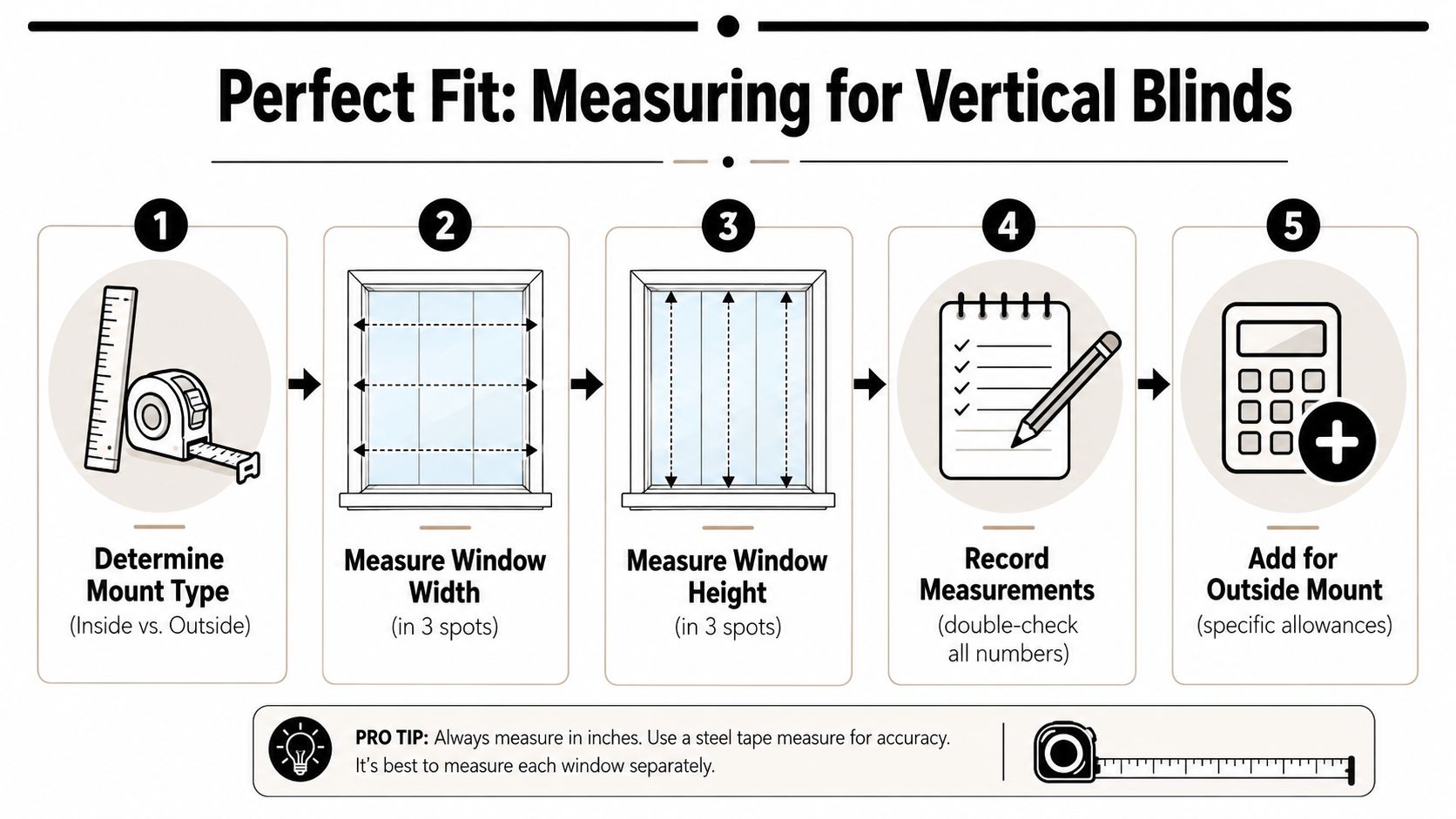
For Canadian custom orders, vertical blinds are typically made to the nearest 1/8 inch, and installers take width measurements at the top, middle, and bottom, then use the narrowest number so the blind doesn't bind in the opening, according to this vertical blind measuring guide.
Inside mount basics
Inside mount means the blind sits within the window opening. It can look neat, but only if the opening is square enough and deep enough to handle the product.
Measure width in three places: top, middle, and bottom. Write down all three, then use the smallest one.
Height also needs three measurements: left, centre, and right. Use the longest one for height.
Why this matters is simple. Drywall, trim, and framing are rarely perfect, especially in older homes and renovated spaces. If the blind is even a bit too wide, it can rub or bind. If it's too small, you'll notice gaps, more light leak, and weaker privacy.
Outside mount and tricky openings
Outside mount gives you more forgiveness. It usually works better when the frame is uneven, the opening is shallow, or you want better coverage around the glass.
For outside mount, the exact add-on depends on the product and the space around the opening. You need enough overlap to block light more effectively and enough room for the vanes to clear handles, trim, and nearby obstructions.
Use this simple checklist before ordering:
- Decide the mount first: Don't measure until you know whether you're mounting inside or outside.
- Check for obstacles: Door handles, locks, trim projections, and nearby walls change what will work.
- Record every number clearly: One transposed fraction can ruin a custom order.
- Look at the floor line: On doors, an uneven floor can affect how the vanes hang.
Small measuring mistakes become big visual problems on vertical blinds because the eye follows the full height of the product.
Non-standard openings need extra caution. If the window is angled, has sidelights, or doesn't form a clean rectangle, a basic tape-measure routine usually isn't enough. That's when professional measuring saves frustration.
What Do Vertical Blinds Cost in Canada?
There isn't one price for vertical blinds in Canada because the quote depends on a stack of choices. Material, width, height, control style, and installation all affect the final number.
What you can say with confidence is that this is a mature Canadian category. The country's blind and shade manufacturing sector was estimated at $409.3 million in revenue across 326 businesses in 2026, according to this Canadian industry profile for blind and shade manufacturing. In a market like that, factory-direct pricing can offer real value, but the lowest sticker price still isn't always the best buy.
What moves the quote up or down
Size is usually the biggest driver. A wide patio door uses more material and puts more demand on the headrail and operating system than a smaller opening.
Material comes next. Basic vinyl is often the entry point. Fabric and more decorative finishes usually move the quote upward because the look is different and the build may be more specialised.
Then there are the add-ons homeowners forget to ask about:
- Stack style: Left, right, or split stack changes how the blind opens and how much clear access you keep.
- Valance choices: A cleaner finished look can add to the total.
- Control upgrades: Manual wand systems and motorized systems don't live in the same pricing lane.
- Installation conditions: High openings, difficult access, and old brackets to remove can change labour time.
Custom versus off-the-shelf
Off-the-shelf verticals can work for standard openings where the homeowner is comfortable compromising a little on fit. That's often fine in a basic rental refresh or a secondary space.
Custom vertical blinds cost more because the product is made to the opening, not forced onto it. You aren't only paying for material. You're paying for fewer fit issues, cleaner operation, and a result that looks intentional instead of patched together.
The cheapest blind on day one can become the expensive option if it drags, gaps, looks undersized, or needs replacing sooner because the opening never suited it.
If you're comparing quotes, ask each supplier what the quote includes. Some prices cover only the blind. Others include measuring, installation, old blind removal, and after-sale adjustments.
Modern Upgrades for Your Vertical Blinds
The old image of vertical blinds is badly out of date. The format stayed useful, but the controls and finish options have improved.
Better controls than the old cord-and-chain systems
A lot of homeowners still picture tangled cords and awkward chains. That memory is exactly why some people dismiss verticals too quickly.
Modern systems often rely on simpler wand control, which feels cleaner and easier to manage in daily use. That's especially useful in homes with children, pets, or frequent traffic through a patio door where dangling controls are more nuisance than feature.
The design side has improved too. Vanes can look more shaped, more textured, and less flat than older builder-grade styles, which helps verticals sit more comfortably in updated interiors.
When motorization makes sense
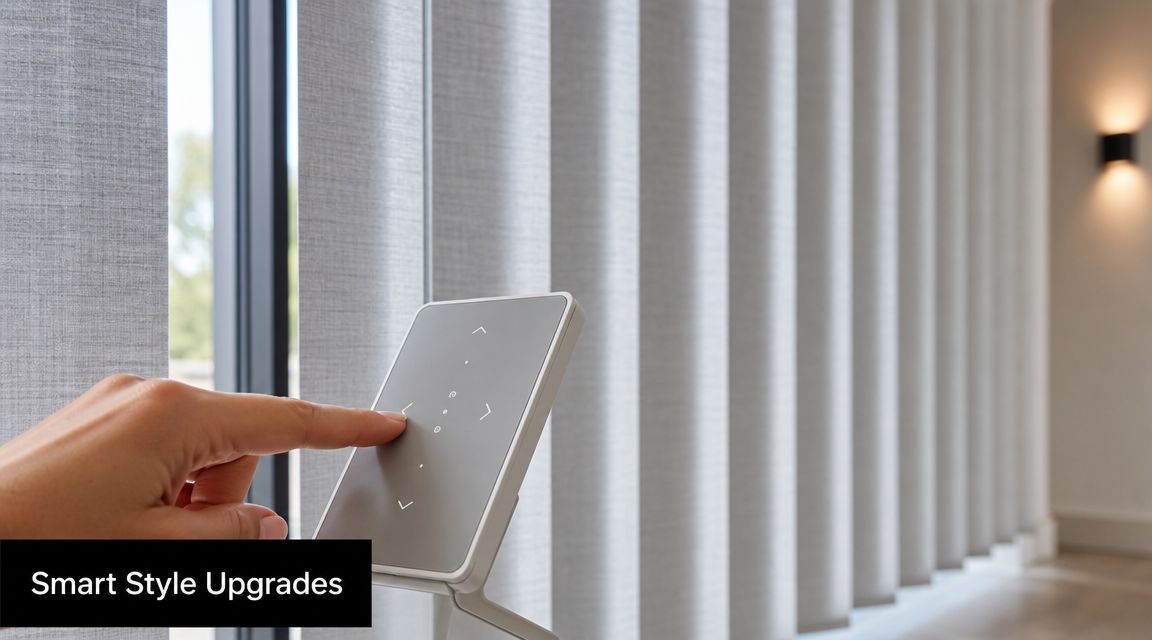
Motorization changes who vertical blinds are for. It makes them more appealing for tall windows, hard-to-reach spaces, and homeowners who want smoother operation with less manual handling.
It also helps in rooms where the blinds get opened and closed several times a day. A product that feels clumsy manually can become much easier to live with once it's automated.
Here's where a modern upgrade is worth serious thought:
- High or awkward openings: Reaching across furniture or over a deep sill gets old fast.
- Frequent patio door use: Easy control matters when the blind moves constantly.
- Family households: Simpler operation is often safer and easier to keep tidy.
- Connected homes: Some buyers want their window coverings to match the rest of their smart setup.
A quick visual helps if you haven't seen newer systems in action:
Motorization isn't always the right spend. For a basic basement slider or a lower-use rental unit, a solid manual system may still be the practical answer.
But if you're dismissing vertical blinds because you remember older hardware, it's worth looking again. In the right setting, a modern control system changes the whole experience.
Finding a Canadian Supplier and Installer
A good product can still disappoint if the supplier measures loosely, oversimplifies the opening, or hands the job to an installer who treats custom work like a standard box-store install. This part matters.
That matters even more with unusual windows. Canadian guidance on angled openings makes it clear that non-standard shapes require specialised measurements and often a custom solution, which is exactly why a qualified local consultant is so useful, as shown in this Canadian guide to angled window treatments.

What to ask during a consultation
A proper consultation should feel specific to your home. The person should ask how you use the door or window, who lives in the home, and whether you care most about privacy, light control, easy cleaning, or appearance.
Bring these questions into the meeting:
- Where is the blind made? If Canadian-made matters to you, ask directly.
- Who is taking final measurements? Sales advice is helpful, but final measurements need accountability.
- What does the warranty cover? Ask about headrails, controls, and any decorative components.
- Who installs it? Subcontracted installation isn't automatically a problem, but you should know who's responsible if adjustments are needed.
- What happens after install? Every supplier sounds good before the order. Ask how service calls work after the job is done.
If you're comparing material options, ask to see something practical like vertical vinyl blinds alongside fabric samples so you can judge not only colour but also weight, texture, and cleanability.
Why local help matters more on custom jobs
Photos don't show everything. They don't show a door handle that projects farther than expected, a sill that's out of level, or trim that leaves almost no room for an inside mount.
Local consultation helps because someone can see those issues before the order goes in. That's also when honest advice matters most. A good consultant should be willing to say, "Verticals will work here," or, just as important, "This opening really wants a different treatment."
A supplier earns trust by steering you away from the wrong product, not by forcing every opening into the same answer.
This is one place where an end-to-end company can simplify things. Blinds Hut offers in-home consultation, product sampling, measurement, and installation through its custom window covering service, which is the kind of process many homeowners prefer when the opening isn't straightforward.
If you're choosing between suppliers, look for clean quoting, clear communication, real samples, and a willingness to explain trade-offs without rushing you. That's usually the difference between a blind that merely covers the glass and one that fits the room perfectly.
If you're weighing options for a patio door, wide window, or custom opening, Blinds Hut is one Canadian option to consider for made-to-measure window coverings, in-home consultations, and professional installation. A quick consultation can tell you whether vertical blinds are the right fit for your space, or whether another treatment will serve you better.